
Mealybug of the genus Trionymus
Trionymus
Description
How to identify
The mealybug genus Trionymus belongs to the family Pseudococcidae, order Hemiptera. These are small, sap-sucking insects that are often found in hidden parts of the plant, such as leaf sheaths or near the soil line.
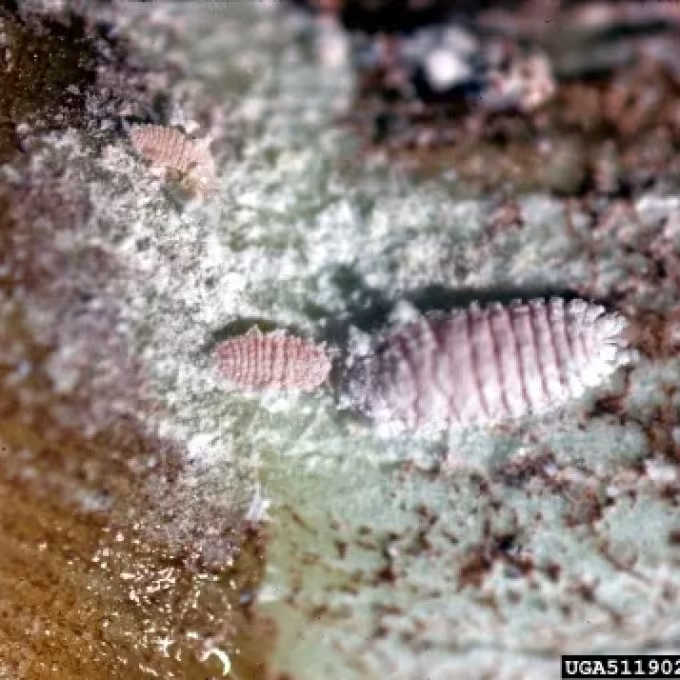
Adult females typically have elongated, soft bodies covered with a white, powdery wax secretion, which serves as a protective layer. They have functional legs, allowing them to move actively across the plant surface.
Identifying the specific species of Trionymus is complex and often requires laboratory analysis. However, the general characteristics of the family are consistent across the genus, making them recognizable to trained personnel.
Because they prefer protected habitats, these pests can easily go unnoticed during the initial stages of colonization, requiring a keen eye for subtle visual cues.
The primary indicators are the presence of white, cotton-like masses and the characteristic secretion of honeydew on the leaves and stems of the infested plants.
What it damages
The primary hosts for Trionymus species are grasses (Poaceae). They are frequently observed causing damage to cereal crops, ornamental grasses, and wild meadow vegetation.
By piercing plant tissues and feeding on sap, these insects significantly drain the plant's nutrient resources. This feeding process stunts plant growth and reduces overall health during critical development phases.
The honeydew excreted by the insects provides an ideal substrate for sooty mold fungi. This mold buildup blocks photosynthesis, further stressing the plant and degrading its physiological functions.
Infested plants often show signs of wilting, chlorosis, and leaf deformation. In cases of severe infestation, the overall yield quality and quantity can be substantially compromised.
Furthermore, some species within the Trionymus genus have been identified as vectors for certain phytopathogenic viruses, posing a secondary, more severe threat to crop health.
When it appears
The activity of Trionymus mealybugs is strongly influenced by environmental conditions, particularly temperature and humidity. Warm, dry weather conditions tend to trigger population explosions.
In greenhouses or controlled indoor environments, these pests can thrive year-round. This creates a constant cycle of overlapping generations that makes eradication efforts particularly challenging.
In outdoor fields, overwintering often occurs in the egg or early nymph stages, hidden beneath plant debris or within the upper layer of the soil, protected by their waxy secretions.
Peak infestation levels usually occur during the active growing season. During this time, populations can grow rapidly if left unchecked by natural predators or human intervention.
Agronomists are advised to initiate field monitoring in early spring, focusing on the stem bases and leaf junctions, where the first signs of spring colonization typically appear.
Signs of infestation
The first sign of infestation is usually the appearance of white, wax-like masses in leaf axils or along the leaf sheaths. These serve as nests for the insect's eggs and nymphs.
Leaves and stems may develop a sticky surface due to honeydew. Over time, this sticky substance becomes coated with black sooty mold, giving the plant a dirty or diseased appearance.
Infested plants often exhibit symptoms of general decline, including yellowing leaves, stunted height, and reduced vigor compared to healthy plants in the same field.
Detailed inspections of the crown or the base of the plant often reveal dense colonies of mealybugs, which prefer to hide away from direct sunlight.
A notable increase in ant activity around the plants can also serve as a behavioral indicator, as ants are often attracted to the sweet honeydew produced by the mealybugs.
Control measures
Effective management begins with robust agronomic practices, including strict weed control to eliminate alternative host plants and well-planned crop rotation cycles.
Biological control, such as the strategic release of natural predators like ladybeetles or parasitoid wasps, is highly recommended to keep populations below economic injury levels.
When populations exceed threshold levels, systemic insecticides are the most effective solution. These must be applied to ensure the active ingredient reaches the hidden colonies where the mealybugs reside.
- Schedule spray applications during dawn or dusk to minimize impact on beneficial pollinators.
- Ensure thorough coverage of the plant base and stem junctions, which are primary colonization sites.
- Repeat treatments at 10–14 day intervals to target newly emerged nymphs and break the life cycle effectively.
Always adhere to local regulations regarding insecticide use to prevent the development of pesticide resistance and ensure the safety of the harvested agricultural product.
Taxonomy
- Latin name
- Trionymus
- Order
- Hemiptera (bugs, aphids, leafhoppers)
- Family
- Pseudococcidae
- EPPO code
- TRINSP
Discussion
No discussions yet — be the first.