
Whipworm
Trichuris vulpis
Description
How to identify
The whipworm (Trichuris vulpis) is a parasitic nematode classified within the class Enoplea, order Trichocephalida, and family Trichuridae.
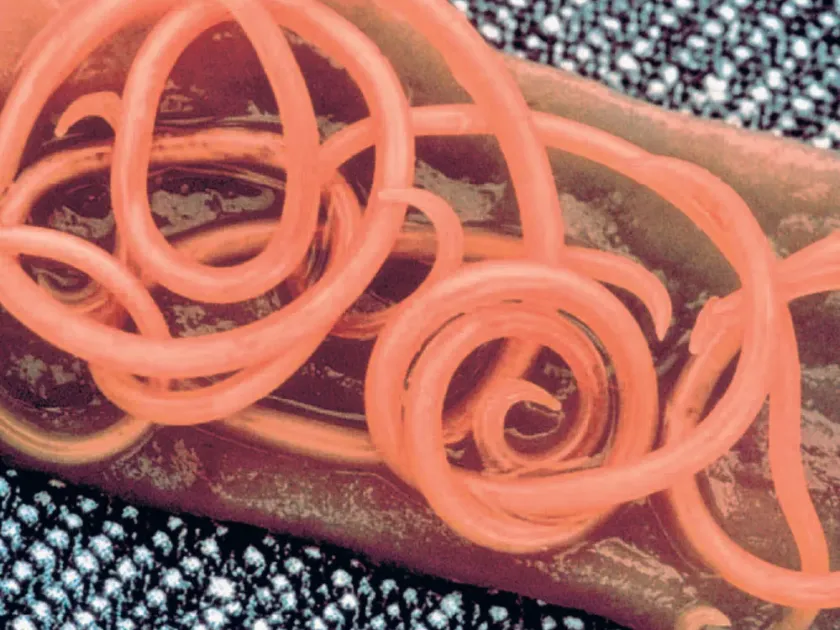
Adult worms are distinctively shaped, characterized by a thread-like anterior end that embeds into tissues and a thicker posterior region.
Males typically measure 45–50 mm in length, while females are generally larger, reaching lengths of up to 70 mm.
The eggs are highly recognizable under a microscope due to their unique barrel-like shape featuring polar plugs at both ends.
This parasite acts as a geohelminth, meaning that the soil serves as a vital stage for the maturation of its infectious larvae.
What it damages
It is critical to clarify that Trichuris vulpis is not a plant pest; it does not consume crops or degrade vegetation directly.
The primary concern is the biological contamination of the soil surface, which compromises the sanitary quality of private gardens, parks, and agricultural land.
High levels of egg concentration in the ground limit the recreational and practical use of the soil, as it poses a significant health risk to animals.
The presence of this parasite indirectly impacts property management by necessitating strict adherence to sanitation protocols in animal-frequented areas.
Neglected soil contamination can lead to persistent environmental issues, as the eggs are notoriously resilient and difficult to eradicate from open spaces.
When it appears
The lifecycle of the whipworm is strictly governed by environmental conditions, particularly soil temperature and moisture levels.
Egg development is most efficient during warm weather, with temperatures ranging from 20 to 30 degrees Celsius promoting rapid maturation.
In temperate climates, whipworm eggs are extremely hardy and can remain viable in the soil for several years, surviving harsh winter conditions.
Spring thaws and increased precipitation typically mark the period of peak infectivity, as environmental moisture assists the migration of larvae.
While biological activity decreases in frozen ground, the parasite remains dormant rather than eliminated, ready to resume activity once temperatures rise.
Signs of infestation
The most obvious indicator of a problem is the presence of animals exhibiting signs of whipworm infection, such as chronic diarrhea or weight loss.
There are no visible signs on plants or specific soil changes that indicate the presence of this nematode, making laboratory soil testing necessary.
High density of animal populations on a specific patch of land is a strong predictor of elevated parasite presence in the local soil profile.
Laboratory examination of soil samples using flotation techniques remains the gold standard for confirming the existence of eggs in a specific area.
Failure to implement sanitation on a contaminated site often leads to the cyclic re-infection of animals inhabiting the area.
Control measures
Effective management begins with rigorous animal health control, including routine deworming and veterinary check-ups for all resident animals.
The immediate removal of animal waste is the most critical cultural practice to prevent the deposition and maturation of eggs in the soil.
Deep cultivation of the soil, including turning the top layer, can bury eggs and interrupt the maturation process by moving them to suboptimal conditions.
In severe cases, targeted soil treatments or the use of soil amendments that alter pH levels may help inhibit the development of larvae.
- Regular monitoring of soil quality via laboratory analysis
- Designated animal waste disposal areas
- Maintaining dry conditions in high-traffic animal zones
- Limiting access to sensitive gardening areas for animals
Taxonomy
- Latin name
- Trichuris vulpis
- Order
- Nematodes
- Family
- Trichuridae
- EPPO code
- TRIUVU
Discussion
No discussions yet — be the first.