
Lilac rustic
Trichordestra lilacina
Description
How to identify
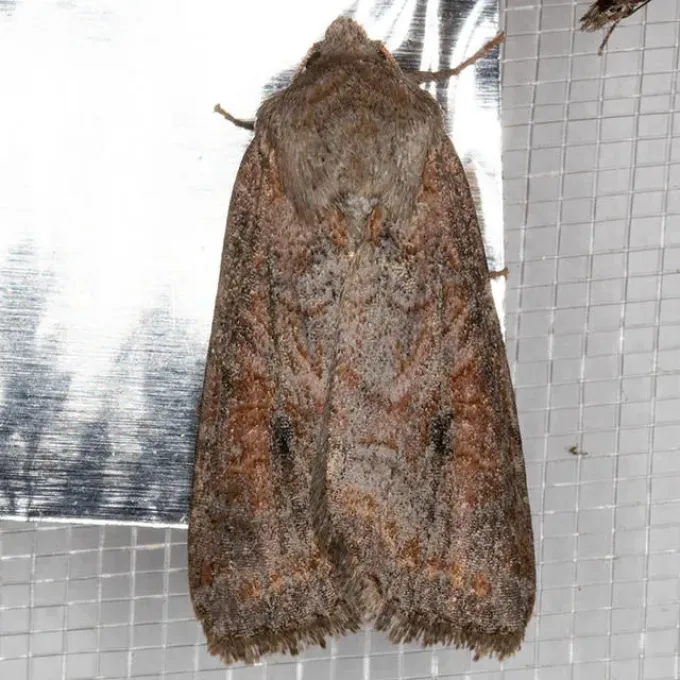
The lilac rustic (Trichordestra lilacina) belongs to the Noctuidae family and the Lepidoptera order. This nocturnal moth has a wingspan of approximately 30–35 mm and is characterized by a greyish-lilac or brownish pattern on its forewings.
Its larvae, or caterpillars, grow up to 40 mm in length. They typically exhibit shades of green or brown, often featuring darker dorsal stripes that help them camouflage perfectly within the host plants.
The life cycle undergoes complete metamorphosis. Adults are nocturnal, preferring to hide during the day, while larvae are primarily responsible for the vegetative damage observed in crops.
The species overwinters in the pupal stage, buried within the soil in a protective cocoon, which ensures survival against harsh winter conditions.
Adult moths emerge in late spring or early summer to mate and lay eggs, starting the cycle of pest proliferation for the upcoming growing season.
What it damages
The primary damage is caused by the caterpillars, which are voracious polyphagous feeders. They exhibit a wide range of host plants, attacking both commercial crops and local weeds.
Vegetable crops, including cabbage, beets, and various legumes, are frequently affected. The larvae consume leaves, which can result in significant reduction of the plant's photosynthetic capacity.
Early-stage larvae feed on the undersides of leaves, causing skeletal damage where only veins remain, while older larvae devour large portions of the leaf tissue.
High infestations can lead to total defoliation, which stunts plant growth, reduces crop yield, and renders harvested produce unmarketable due to direct feeding damage.
When environmental conditions favor the pest, populations can explode, causing economic losses that require immediate management intervention.
When it appears
The emergence of the first generation of adults usually occurs between late spring and early summer, triggered by rising temperatures and soil moisture.
The peak feeding period for larvae typically occurs during the summer months when crop development is at its most vulnerable stage.
Depending on the climate, the lilac rustic may produce one to two generations per year, prolonging the threat period for agricultural fields.
Autumn generations are particularly dangerous for late-harvest vegetable crops, as larvae must feed intensely to store energy for their upcoming overwintering pupation.
Monitoring using light or pheromone traps throughout the growing season is crucial to track population surges and time treatments accurately.
Signs of infestation
The most common sign of infestation is the presence of irregular, ragged holes in the leaves. In the early stages, these may look like small perforations or "windows".
The accumulation of frass (caterpillar excrement) on the foliage or the soil surface underneath the plant is a definitive indicator of the pest's recent activity.
During daylight hours, larvae can often be found by inspecting the base of the plant or hidden within the tightly packed foliage near the crown.
Wilting of leaves or shoots, sometimes accompanied by internal stem feeding, can also signal that the caterpillars have begun damaging more sensitive plant parts.
- Irregular defoliation or leaf windowing.
- Noticeable frass accumulation.
- Visual presence of larvae during nocturnal inspections.
Control measures
Agricultural management should prioritize deep autumn ploughing to expose pupae to frost and predators, effectively reducing the overwintering population.
Weed management is essential, as keeping fields clear of secondary host plants prevents the moth from establishing and breeding in the area before the crop matures.
Biological control agents, such as Trichogramma wasps, can be released to parasitize the moth eggs, offering an eco-friendly way to manage pest numbers.
In cases of heavy infestation, insecticide applications using approved chemical agents are necessary, provided they are applied during the larvae's early growth stages.
Integrated pest management (IPM) practices, including the use of pheromone traps, provide a sustainable approach to monitoring and suppressing the lilac rustic population.
Taxonomy
- Latin name
- Trichordestra lilacina
- Order
- Lepidoptera (butterflies)
- Family
- Noctuidae
- EPPO code
- POLILI
Discussion
No discussions yet — be the first.