
Cabbage moth
Trichoplusia
Description
How to identify
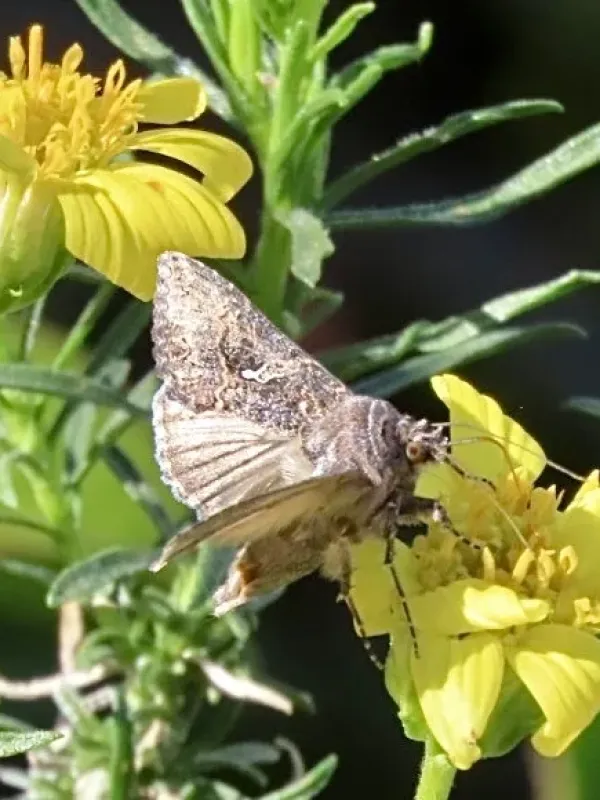
The Cabbage moth (Mamestra brassicae) is a significant agricultural pest belonging to the Noctuidae family. The adult moth has a wingspan of 34–50 mm, with greyish-brown forewings featuring complex wavy patterns that provide effective camouflage.
The larvae, or caterpillars, undergo several instars. Young larvae are light green, but as they develop, their color transitions to a darker green, brown, or even grey. They have a characteristic light dorsal stripe and small hairs covering their bodies.
Pupation occurs in the soil, where the insect overwinters at a depth of 5 to 15 centimeters. The pupae are dark brown, smooth, and have a hard shell, allowing them to survive various soil conditions during the winter months.
Biological development is highly dependent on climate. In favorable conditions, the species can complete two or even three generations per year, with the final generation often posing the greatest threat to late-harvested cabbage varieties.
Adult moths are primarily nocturnal, remaining inactive during the day. They emerge in late spring or early summer, and their activity is typically linked to warm, humid nights which are ideal for mating and egg-laying.
What it damages
The Cabbage moth is a highly polyphagous pest with a broad host range. It primarily targets brassica crops such as cabbage, cauliflower, broccoli, and Brussels sprouts, but also attacks sugar beet, lettuce, spinach, and several solanaceous crops.
Early-instar caterpillars feed on the underside of leaves, causing minor window-like lesions. As they grow larger, their feeding habits become more aggressive, resulting in large, irregular holes that severely compromise the leaf area.
The most destructive behavior occurs when older larvae tunnel deep into the heads of cabbage or lettuce. This interior feeding makes the produce unmarketable and often leads to the development of soft rots caused by bacteria and fungi.
Direct damage to the crop reduces photosynthetic capacity and growth rate. In severe infestations, entire leaves can be skeletonized, leaving only the primary veins, which significantly weakens the plant's overall health and vigor.
Economically, the impact is severe. Beyond yield loss, the contamination of harvested heads with larval frass and the secondary rot caused by larval tunnels necessitate extensive trimming and sorting, further increasing production costs.
Signs of infestation
The initial sign of an infestation is the presence of egg clusters on the undersides of leaves. These clusters contain dozens of small, spherical, pale-colored eggs that are often difficult to spot without careful inspection.
The appearance of irregular holes in the leaves is the most visible sign of caterpillar activity. Observing the plant at dawn or dusk might reveal the caterpillars feeding near the margins of the foliage or within the developing heads.
Presence of frass (caterpillar excrement) on the leaf surface or nestled within the base of leaves is a clear indicator of a pest population. Small, dark, granular deposits are typical signs that caterpillars are present and feeding.
Rotting spots or a foul odor emanating from the center of a cabbage head often indicate that a larva has tunneled inside. This is a late-stage sign, suggesting that the pest has already caused significant damage to the plant tissue.
- Irregular holes in the leaves.
- Clusters of eggs on the underside of foliage.
- Frass pellets on leaves and soil.
- Tunnels within the cabbage heads.
- Secondary bacterial rot infections.
Control measures
Cultural control practices are fundamental. Deep autumn plowing is highly effective in disrupting the pupal overwintering sites, bringing pupae to the surface where they become vulnerable to predators and freezing temperatures.
Maintaining a weed-free environment is crucial, as many wild brassica species act as alternative hosts. Regular scouting of fields during the egg-laying period allows for early detection and manual removal of egg masses if the area is small.
Biological control methods include the use of Bacillus thuringiensis (Bt) sprays, which specifically target the larval stages while remaining safe for most beneficial insects. Releasing egg parasitoids like Trichogramma is also a viable strategy.
Chemical control should be timed to hit the young larvae before they penetrate the heads. Using pheromone traps to monitor adult flight activity helps in precisely scheduling insecticide applications, thereby reducing the total number of sprays needed.
Integrated Pest Management (IPM) requires rotating chemical groups to prevent the development of resistance. Monitoring weather conditions is also essential, as optimal growth conditions for the pest can lead to rapid population spikes.
Taxonomy
- Latin name
- Trichoplusia
- Order
- Lepidoptera (butterflies)
- Family
- Noctuidae
- EPPO code
- TRIPSP
Discussion
No discussions yet — be the first.