
Trichinella
Trichinella
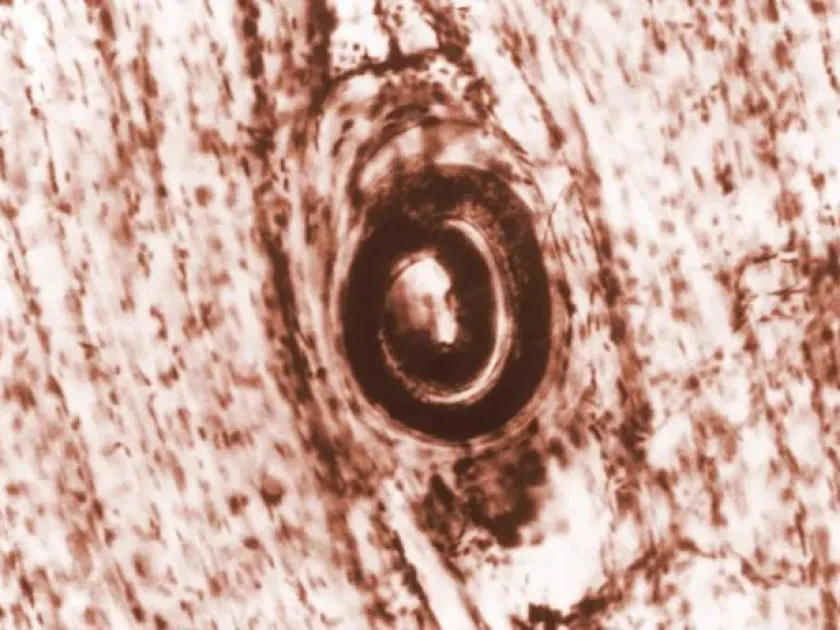
Description
How to identify
Trichinella is a genus of parasitic nematodes that belong to the family Trichinellidae. It is critical to note that Trichinella is not a plant pest.
These organisms are microscopic roundworms that function as intracellular parasites. Their life cycle is strictly dependent on vertebrate hosts, primarily mammals, and they cannot interact with plant tissues.
The morphology of Trichinella is adapted to life within animal muscles. Larvae develop the ability to modify the host muscle cell to form a protective capsule, which facilitates long-term survival.
Unlike phytoparasitic nematodes that attack crops, Trichinella lacks the mouthparts and physiological machinery to digest or penetrate plant cell walls.
In an agronomic context, Trichinella is strictly a subject of veterinary concern. It plays no role in plant pathology or agricultural crop loss.
What it damages
Trichinella does not cause any form of damage to agricultural crops. It does not feed on roots, stems, leaves, or fruits, making it completely irrelevant to crop protection.
The harmful impact of this parasite is exclusive to the livestock industry. Infections in animals lead to reduced productivity and significant public health risks regarding food safety.
Plants are biologically incompatible with this parasite. There are no known mechanisms for Trichinella to survive or reproduce in any part of a botanical ecosystem.
Growers should not confuse this genus with plant-parasitic nematodes, which are a major concern for soil health and yield protection. Trichinella does not inhibit plant growth.
Therefore, there are no documented cases of crop damage, disease symptoms, or yield loss attributed to Trichinella in any global agricultural setting.
Control measures
Management of Trichinella is governed by veterinary protocols rather than agronomic practices. The focus is on biosecurity measures within animal husbandry facilities.
- Implementing strict rodent control programs (deratization).
- Ensuring proper waste management of animal carcasses.
- Mandatory veterinary inspections of meat products.
- Preventing livestock from scavenging on wild carcasses.
Veterinary oversight ensures that meat products entering the food chain are free from larvae, protecting both the agricultural industry and the consumer.
Since the organism does not exist in the plant environment, no pesticides, fungicides, or fertilizers have any effect or purpose in managing Trichinella.
Agronomic strategies such as crop rotation, soil fumigation, or botanical monitoring do not apply to this species, as it is strictly confined to the animal kingdom.
Taxonomy
- Latin name
- Trichinella
- Order
- Nematodes
- Family
- Trichinellidae
- EPPO code
- TRCNSP
Discussion
No discussions yet — be the first.