
Woodlouse
Trachelipus
Description
How to identify
The genus Trachelipus belongs to the order Isopoda and the family Trachelipodidae. These are terrestrial crustaceans that require specific moisture conditions to survive.
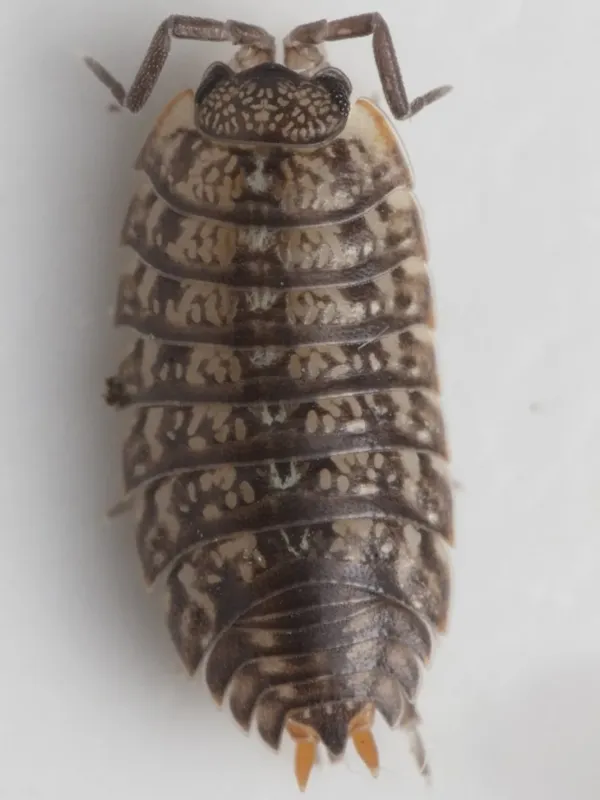
They possess an oval, segmented body that is typically grey or brownish in color, often featuring a distinct mottled pattern on their dorsal plates.
Adult individuals usually measure between 10 and 15 mm in length. They are characterized by having seven pairs of legs and a pair of antennae, which helps them navigate through damp substrates.
Unlike insects, woodlice breathe through gills; therefore, they are strictly dependent on high environmental humidity and avoid direct sunlight and dry air.
They are nocturnal creatures and are most frequently found during the day hiding under rocks, decaying wood, or damp leaf litter in the garden or greenhouse.
What it damages
Trachelipus species are opportunistic polyphagous pests. While they primarily feed on decaying organic matter, they frequently attack living crops when populations are high.
Vegetable seedlings, such as cucumbers, tomatoes, and cabbage, are particularly vulnerable. The pests feed on the succulent stems, which can lead to the collapse and death of young plants.
Fruits that are in direct contact with the soil, including strawberries and tomatoes, are often damaged. Woodlice eat holes in the epidermis, which can lead to rapid fungal decay.
Root vegetables like carrots and beets can also suffer, as woodlice create superficial feeding tunnels that significantly reduce their marketability and shelf life.
Large populations in a greenhouse environment are a strong indicator of poor moisture management and lack of proper soil surface aeration.
When it appears
Woodlice are active throughout the growing season, but their peak activity and reproductive rates occur during warm and moist periods in spring and autumn.
In greenhouses, where a stable microclimate is maintained, they can remain active and reproduce throughout the year, posing a constant threat to crops.
They survive the winter as adults or late-stage juveniles, hibernating in the soil or under protective debris where temperature fluctuations are minimal.
With the arrival of spring and the emergence of new seedlings, their activity increases as they move toward the fresh, succulent food sources available at the soil level.
During the peak of summer, they tend to move deeper into the soil or into cooler, darker micro-habitats to avoid dehydration caused by higher temperatures.
Signs of infestation
Typical signs of infestation include ragged edges on young leaves and stems, which often mimic the feeding patterns of slugs or snails.
Regular monitoring under plastic mulch, wood boards, or stones will reveal clusters of these crustaceans, which will quickly scatter when disturbed by light.
The presence of fine, granular dark excrement near the base of plants or on the surface of the soil confirms their active foraging in that specific area.
Wilting of seedlings, despite adequate watering, is a diagnostic symptom that the stems may have been compromised by woodlice feeding near the soil line.
Damaged fruit showing concave, rotting lesions is the most prominent indicator that Trachelipus populations have moved from feeding on debris to the actual crop.
Control measures
The primary control strategy involves good sanitation: removing debris, wood boards, and dead plant matter that provide the necessary humidity for their survival.
Managing soil moisture is critical. Improving greenhouse ventilation and avoiding over-watering the soil surface can drastically reduce the suitability of the environment for them.
For small-scale infestations, physical traps such as moist burlap sacks or halved potatoes can be placed on the ground and checked daily to collect and remove the pests.
Barriers such as diatomaceous earth can be applied around the base of plants to create a desiccant barrier that the crustaceans cannot easily cross.
- Use of appropriate insecticides if threshold levels are exceeded.
- Ensuring proper crop spacing to improve air circulation.
- Deep cleaning of greenhouse structures during the off-season.
Taxonomy
- Latin name
- Trachelipus
- Family
- Trachelipodidae
- EPPO code
- TRAPSP
Discussion
No discussions yet — be the first.