
Tamarisk manna scale
Trabutina serpentina
Description
How to identify
The Tamarisk manna scale (Trabutina serpentina) is a small scale insect that belongs to the family Pseudococcidae and is a specialized pest of Tamarix species.
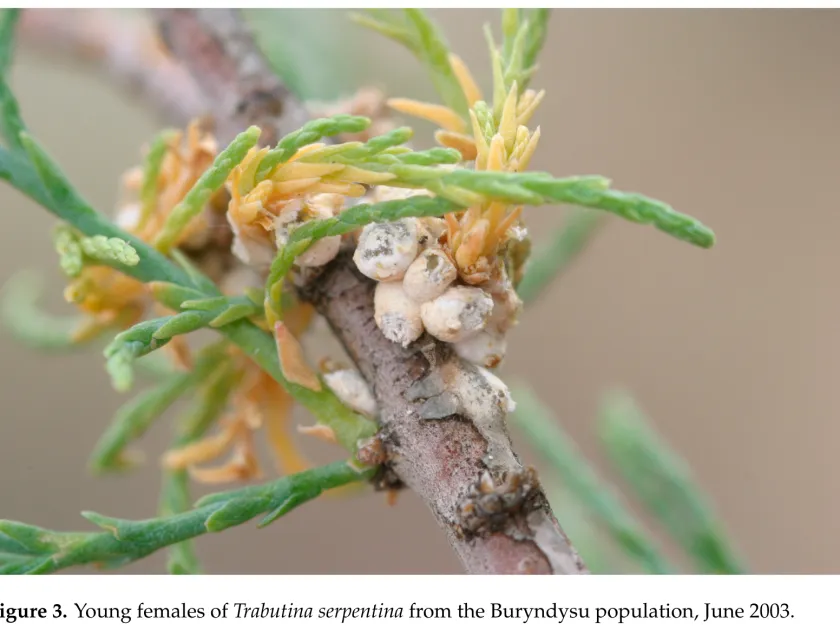
Adult females are typically oval-shaped, sessile, and covered by a thick, white, waxy secretion that protects them from environmental stress and predators.
The insect is highly specialized, having evolved to thrive exclusively on the harsh, saline conditions where tamarisk trees are commonly found.
The life cycle involves a dispersal stage known as "crawlers," which are the only mobile stage and are responsible for spreading the infestation to new branches.
Because they are sedentary in their adult form, their presence is often localized, but they can quickly cover entire branches if environmental conditions are favorable.
What it damages
The pest primarily infests the twigs and small branches of the tamarisk plant, where it inserts its piercing-sucking mouthparts into the phloem.
By constantly extracting plant sap, the scale insect weakens the host plant, leading to stunted growth and loss of vigor in infested sections.
Heavy infestations can result in the dieback of branches, as the plant's vascular system is compromised by the relentless feeding activity of the colony.
The production of honeydew as a metabolic byproduct creates an additional burden on the plant, often leading to secondary infections by sooty mold fungi.
Under severe stress, the cumulative damage can lead to the death of the entire plant, especially if the tree is already stressed by drought or high salinity.
When it appears
The activity of Trabutina serpentina is synchronized with the vegetative season of its host plant, beginning as temperatures rise in the early spring.
Multiple generations occur throughout the growing season, allowing the population to build up rapidly during the warm and dry summer months.
Late summer often represents the peak of the infestation, when the density of the waxy white patches on the branches becomes most visually apparent.
As autumn approaches, the development cycle slows down, and the insects prepare for overwintering in protected crevices of the bark.
Overwintering is successfully managed by cold-hardy nymphs or fertilized females, which remain dormant until the following spring cycles begin.
Signs of infestation
The most distinctive visual indicator is the presence of white, cotton-like masses on the stems and twigs of the tamarisk shrub.
A sticky, shiny residue on the foliage is a telltale sign of honeydew secretion, which often appears before the scale insects themselves become highly visible.
The presence of ants patrolling the branches is another common sign, as they are frequently attracted to the sugary honeydew produced by the scales.
Yellowing, premature wilting, and thinning of the scale-like leaves are common symptoms of an established infestation on the plant.
In advanced stages of the infestation, the affected branches may look gray or black due to the accumulation of sooty mold growing on the sticky exudates.
Control measures
Chemical control is effective when using systemic insecticides, which are absorbed by the plant tissues and provide long-lasting protection against the pests.
Timing is critical: applications should be performed during the crawler stage, as these young nymphs are much more susceptible to contact treatments.
Horticultural oils can be used to suffocate the overwintering stages before the spring growth starts, providing a safer alternative in sensitive areas.
Biological control, using natural predators like ladybird beetles, can significantly reduce scale populations in wild or undisturbed settings.
- Monitor plants frequently during early spring.
- Prune and destroy heavily infested branches to reduce local populations.
- Ensure plants are well-hydrated to handle minor infestations.
Taxonomy
- Latin name
- Trabutina serpentina
- Order
- Hemiptera (bugs, aphids, leafhoppers)
- Family
- Pseudococcidae
- EPPO code
- NAIASE
Discussion
No discussions yet — be the first.