
Trabutina
Trabutina
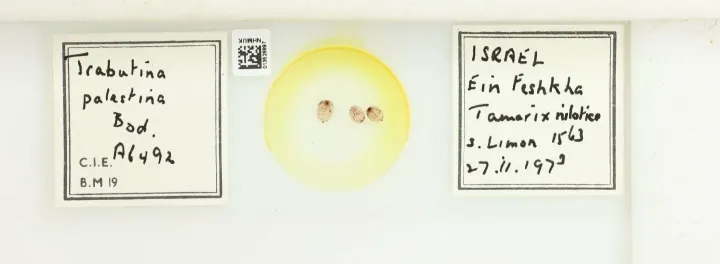
Description
How to identify
Trabutina is a genus of insects belonging to the family Pseudococcidae, commonly known as mealybugs. These are tiny sap-sucking pests that often go unnoticed until they cause visible stress to the host plant.
The insects are covered in a characteristic white waxy powder or filaments, which provides significant protection against environmental moisture and standard insecticide treatments. Adults are typically sedentary, while nymphs are more mobile.
The biology of Trabutina is highly specialized, with species being adapted to feed on specific plant hosts, such as those in the Tamaricaceae family. They congregate in colonies, forming white cottony masses that are easily identified upon close inspection.
Reproduction involves laying eggs inside a protective ovisac, often composed of waxy secretions. This structure safeguards the next generation from external threats and allows for high survival rates during the breeding season.
Microscopic examination is often required to distinguish between specific species within this genus. Their ability to remain hidden in bark crevices or under foliage makes early detection a critical challenge for growers.
What it damages
Trabutina primarily affects woody plants, particularly tamarisks, by piercing their tissues with specialized mouthparts. They drain plant sap, which serves as their primary source of nutrition and moisture.
The infestation leads to severe depletion of the host plant's energy reserves. In high populations, this results in stunted growth, failure to thrive, and overall physiological weakening of the tree or shrub.
A major indirect impact of Trabutina is the secretion of honeydew. This sticky substance covers the leaves and branches, creating a perfect substrate for sooty mold to grow, which further hinders the plant's ability to photosynthesize.
Severe infestations cause defoliation, twig dieback, and general chlorosis. The presence of these pests also attracts ants, which protect the mealybugs from natural predators, further complicating the problem.
In ornamental landscaping, the cosmetic damage caused by sooty mold and distorted growth significantly reduces the value of the plants. Weakened trees also become more susceptible to secondary environmental stresses and diseases.
When it appears
The lifecycle of Trabutina is highly synchronized with seasonal temperatures. Activity typically begins in early spring, as nymphs emerge from overwintering sites in response to warmer weather.
Summer is the peak period for reproduction, characterized by high population growth and the development of multiple generations. During this time, the number of insects on a single host can increase exponentially.
As autumn approaches, the metabolic activity of the pests begins to decline. Females prepare for the winter by laying eggs in sheltered crevices on the bark, ensuring the population survives the cold season.
Weather patterns, particularly warm and dry springs, often facilitate rapid population growth. In contrast, heavy rain and cold snaps can sometimes suppress the emergence of new nymphs.
Monitoring should be conducted consistently from the moment of bud break. Early intervention during the first generation is the most effective way to prevent widespread infestation throughout the summer months.
Signs of infestation
The most evident sign of Trabutina is the appearance of white, cotton-like masses on the bark or leaf junctions. These spots indicate active colonies where feeding and egg-laying are taking place.
Sticky, shiny foliage caused by honeydew is a primary indicator of a mealybug presence. This often appears before the white colonies become visible, making it an early warning sign for diligent observers.
The development of a black, powdery coating known as sooty mold on leaves confirms that the infestation has reached an advanced stage. This condition creates a distinct contrast with the healthy parts of the plant.
Deformed, curled, or stunted shoots are a common reaction to the toxins injected by the insects during feeding. The plant's architecture may become noticeably irregular as a result of sustained tissue damage.
Yellowing or premature leaf drop is a late-stage symptom of critical sap loss. Checking the undersides of branches and deep bark cracks is essential for identifying early outbreaks before these signs become widespread.
Control measures
Effective management of Trabutina requires an integrated approach that includes cultural practices and chemical interventions. Pruning and removing heavily infested branches helps significantly reduce the population density.
Systemic insecticides are generally the most effective chemical option, as they are translocated throughout the plant's vascular system. Application timing must coincide with the crawler stage, which is the most vulnerable point in their lifecycle.
Biological control, such as releasing predatory ladybeetles or lacewings, can be highly effective in maintaining the pest population below economic damage thresholds in sustainable landscape settings.
Horticultural oils or insecticidal soaps can be used for direct contact control. These substances coat the pests and disrupt their respiration, providing a less toxic alternative for managing localized outbreaks.
- Perform regular visual inspections during the growing season.
- Maintain plant vigor through proper irrigation and balanced fertilization.
- Scrub bark surfaces if possible to dislodge colonies.
- Rotate different modes of action when applying chemical pesticides.
Taxonomy
- Latin name
- Trabutina
- Order
- Hemiptera (bugs, aphids, leafhoppers)
- Family
- Pseudococcidae
- EPPO code
- TRABSP
Discussion
No discussions yet — be the first.