
Stem and bulb nematode
Torpedo
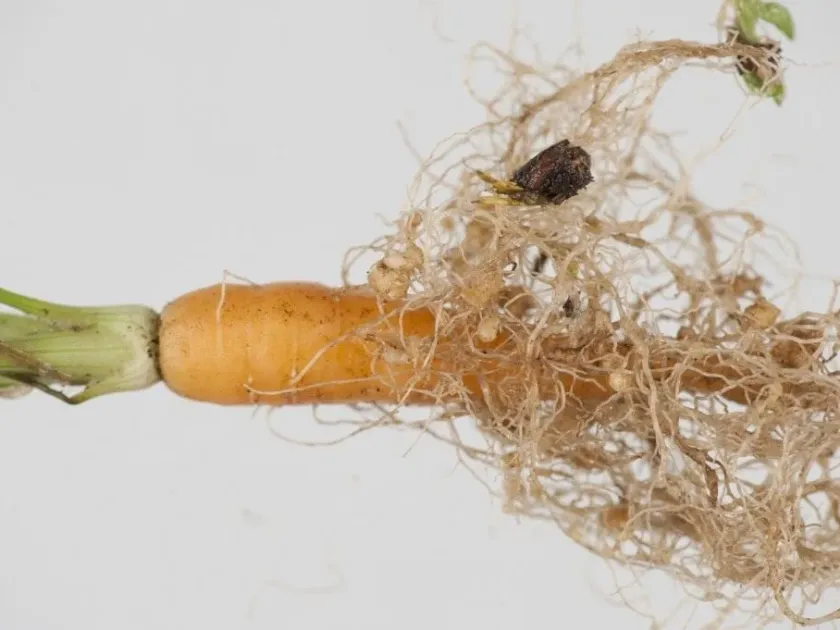
Description
How to identify
The stem and bulb nematode (Ditylenchus dipsaci) is a microscopic worm belonging to the Anguinidae family. It is a slender, transparent organism with a thread-like body measuring about 1.5 mm in length.
Due to its tiny size, this pest cannot be seen with the naked eye in the field. Accurate identification requires laboratory phytopathological analysis of plant tissue samples under a microscope.
The life cycle of the nematode is highly dependent on environmental moisture. In dry or harsh conditions, it can enter a state of dormancy, surviving for several years in soil or dried plant debris.
Reproduction occurs within the plant tissue. A single female can produce hundreds of eggs, and the larvae quickly invade adjacent healthy plants, spreading the infection rapidly.
Dissemination is primarily facilitated through infested seeds, bulbs, contaminated soil, water runoff, and dirty agricultural tools used across different fields.
What it damages
This nematode has a very wide host range, attacking various vegetable crops like onions, garlic, and potatoes, as well as strawberries and many ornamental flowering plants.
The nematode enters the plant through natural openings or mechanical wounds, then begins to feed on cell sap while secreting enzymes that disrupt normal metabolic processes.
As a result, the infected plant exhibits significant growth retardation, stunted stems, and twisted or malformed leaves, significantly reducing overall plant vigor.
Bulbs and tubers are particularly susceptible. The tissue becomes spongy, necrotic, and eventually rots, rendering the harvest unmarketable and unsuitable for storage.
In cases of heavy infestation, the nematode can cause devastating losses, potentially destroying nearly the entire crop yield in fields where moist conditions favor its activity.
Signs of infestation
A classic symptom of stem nematode attack is the severe twisting and curling of foliage, with leaves often appearing puffy, distorted, and chlorotic.
In infected onion bulbs, the internal scales become loose and greyish, often leading to the separation of scales and the complete decay of the basal plate.
Cross-sections of infested tubers or bulbs often reveal distinct browning and dark necrotic rings that clearly delineate the area colonised by the nematode.
The presence of secondary bacterial and fungal infections is common, as the lesions caused by nematodes provide an entry point for other opportunistic plant pathogens.
Fields infested with the stem nematode exhibit scattered patches of underdeveloped, yellowing, and weak plants, which grow increasingly larger throughout the growing season.
Control measures
The cornerstone of management is strict crop rotation, ensuring that susceptible hosts are not replanted in infested areas for at least four to five years.
Using certified, nematode-free planting material is essential. Hot water treatment of seeds and bulbs before planting is an effective physical method to eliminate internal infestations.
Good agricultural practices, such as removing all post-harvest plant debris and rigorous weed control, are vital to eliminate alternative hosts and reduce nematode survival.
Biological control agents, particularly specific fungi that parasitize nematodes, can be used to suppress nematode populations in the soil without resorting to harsh chemicals.
Regular disinfection of all farming equipment and maintaining proper soil drainage helps minimize the movement and establishment of the nematode in new areas.
Taxonomy
- Latin name
- Torpedo
- Family
- Torpedinidae
- EPPO code
- TORPSP
Discussion
No discussions yet — be the first.