
Spotted Crane Fly
Tipula scripta
Description
How to identify
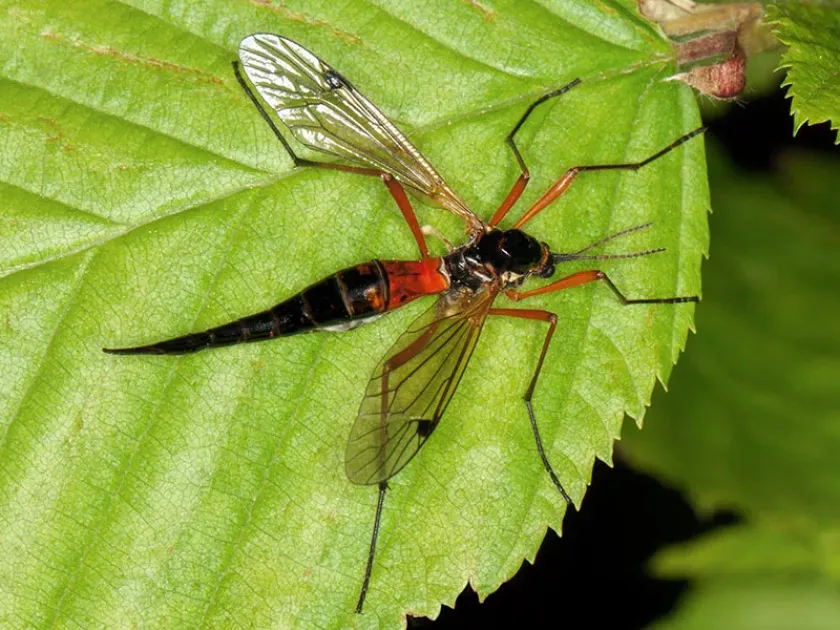
The spotted crane fly (Tipula scripta) belongs to the order Diptera, family Tipulidae. Adults are large, fragile-looking insects that resemble oversized mosquitoes with long, spindly legs.
The adult body is slender and yellowish-brown with distinct dark stripes on the thorax, which is a characteristic feature of this species. Wingspan can reach 30 to 40 millimeters.
The larvae, often called leatherjackets, are cylindrical, grayish-brown, and wrinkled. They are legless and possess a robust chewing mouthpart used for feeding on plant tissues underground.
Adult crane flies are harmless to humans and do not bite. Their primary function in the ecosystem is reproduction, while the larvae are the stage responsible for agricultural damage.
The life cycle undergoes complete metamorphosis, including egg, multiple larval instars, pupa, and adult stages. The cycle generally completes within one year.
What it damages
Larvae of the spotted crane fly are polyphagous, causing significant damage to various crops, including cereals, vegetables like carrots and potatoes, and seedlings in nurseries.
The damage is most severe in moist soil conditions, where the larvae thrive and feed voraciously on the underground roots and tubers of host plants.
In turf management, these larvae are particularly destructive, as they feed on the roots of grasses, leading to dead patches and the collapse of the lawn structure.
Infested plants show signs of nutrient deficiency, wilt, and eventually die due to the destruction of their root systems by the soil-dwelling larvae.
High population densities in fields can lead to significant yield losses and may necessitate the replanting of damaged agricultural areas.
When it appears
Adult emergence typically occurs during the summer months, primarily June and July, when mating and egg-laying take place in favorable habitats.
Females deposit eggs in moist topsoil or dense vegetation, ensuring that the next generation has immediate access to humidity and food sources.
Larval activity begins in late summer and continues throughout the autumn, as they feed actively to store energy for the winter months.
Overwintering occurs in the soil, and as spring temperatures rise, the larvae resume feeding, often causing the most damage to young, developing crops.
Pupation takes place in the soil in late spring or early summer, leading to the emergence of the next generation of adults and completing the seasonal cycle.
Signs of infestation
A major symptom of infestation is the appearance of thin or bare patches in fields or lawns where vegetation turns yellow and dies unexpectedly.
Examining the root zone of affected plants usually reveals chewed roots or severed stems near the soil line, often with larvae present nearby.
Plants affected by larval feeding can be easily pulled out of the soil because their root anchorage has been severely compromised by the pest.
During calm, cloudy days or evenings, adults may be observed flying low over the vegetation or resting on leaves, which indicates a local population presence.
Excavating the top few centimeters of soil in suspect areas often reveals the presence of grayish, legless larvae that curl up when disturbed.
Control measures
Deep autumn plowing is a highly effective cultural practice that exposes larvae to natural predators and harsh environmental conditions, significantly reducing their population.
Improving field drainage is critical, as the spotted crane fly prefers damp soil environments for reproduction; reducing soil moisture discourages infestation.
Implementing crop rotation helps break the life cycle of the pest by preventing the continuous availability of preferred host plants in the same area.
- Seed treatment with systemic insecticides to protect germinating crops.
- Application of soil-based insecticides in heavily infested spots.
- Monitoring larval density using soil sampling to determine the need for intervention.
Biological control methods, such as the use of entomopathogenic nematodes, are becoming increasingly popular for eco-friendly management of leatherjackets in professional turf and gardens.
Taxonomy
- Latin name
- Tipula scripta
- Order
- Diptera (flies)
- Family
- Tipulidae
- EPPO code
- TIPUSC
Discussion
No discussions yet — be the first.