
Marsh Crane Fly
Tipula marginata
Description
How to identify
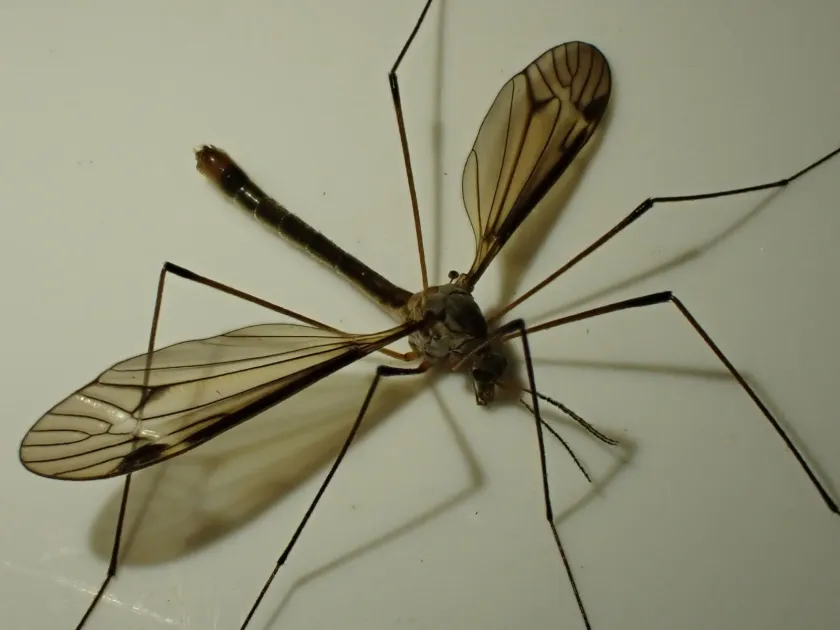
The Marsh Crane Fly (Tipula marginata) is a member of the Tipulidae family within the order Diptera. Adults look like oversized mosquitoes with long, fragile legs, but they do not pose any harm to plants or humans.
The species is distinguished by a specific dark margin on its wings, which serves as a key identification feature compared to other members of the crane fly family.
The larval stage is the one responsible for damage. These larvae are legless, cylindrical, and have a dull grayish-brown color, which provides excellent camouflage within the soil environment.
Their skin is tough and wrinkled, which allows them to withstand various soil conditions, including fluctuations in moisture levels and temperature changes.
The life cycle undergoes complete metamorphosis, including egg, larva, pupa, and adult stages. The larval phase is the longest and most significant in agricultural terms.
What it damages
Larvae primarily inhabit the upper soil layers rich in organic matter. They feed aggressively on the root systems of various crops and turfgrass, causing severe weakening of the plants.
Cereals, vegetables, and young nursery stock are particularly vulnerable. By severing the roots, larvae prevent plants from absorbing necessary water and nutrients.
Turfgrass and pastures often suffer from widespread patches of dead grass where the roots have been completely destroyed by the feeding activity of the larvae.
Once a plant's root system is compromised, it quickly wilts and dies, leading to significant yield losses in agricultural fields and damage to landscaping.
High moisture levels in the spring often amplify the harmful effect, as the larvae remain near the surface where the roots of young crops are actively growing.
When it appears
Adults typically emerge during mid-summer. During this time, they mate and lay eggs directly into the soil or onto the surface of moist organic debris.
Larvae actively feed throughout the autumn, accumulating energy before moving deeper into the soil profile to survive the winter months.
In the spring, as temperatures rise, the larvae move back toward the surface and resume feeding, coinciding with the germination and early growth stages of many crops.
The period of most intense damage usually occurs during the moist spring months, when young, tender roots are plentiful and easily accessible to the larvae.
Pupation occurs in the soil, usually as the season progresses toward early summer, completing the life cycle and allowing the next generation to emerge.
Signs of infestation
The first indicator of an infestation is often unexplained wilting of plants despite adequate soil moisture, suggesting root damage below the surface.
Inspecting the soil around the base of affected plants, especially early in the morning or after rainfall, often reveals the presence of the larvae.
On lawns, the presence of these pests is indicated by areas of turf that can be easily pulled away from the soil like a carpet, as the root anchor has been destroyed.
A high density of foraging birds, such as starlings or crows, on a field in early spring is a strong sign that the soil is populated by crane fly larvae.
Areas of the field with poorly drained, heavy soil and significant organic accumulation are the primary hotspots for larval activity.
Control measures
Cultural control involves thorough soil cultivation, which exposes larvae to predators like birds and desiccates them by bringing them to the dry surface.
Improving drainage in waterlogged areas of the field or garden is a proactive strategy to reduce the suitability of the habitat for the larvae.
Chemical control can be achieved through the targeted application of soil insecticides during the peak feeding period of the larval stage, following local safety guidelines.
- Improve soil drainage and aeration.
- Use entomopathogenic nematodes as a biological control agent.
- Regularly monitor fields for adult activity in summer.
- Ensure proper weed management to reduce egg-laying sites.
Taxonomy
- Latin name
- Tipula marginata
- Order
- Diptera (flies)
- Family
- Tipulidae
- EPPO code
- TIPUMA
Discussion
No discussions yet — be the first.