
Two-colored crane fly
Tipula duplex
Description
How to identify
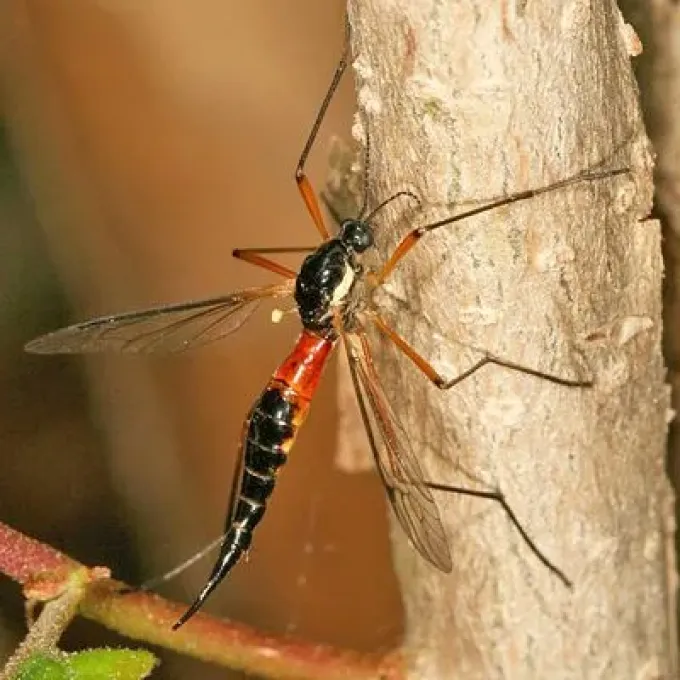
The two-colored crane fly (Tipula duplex) is a member of the Diptera order and the Tipulidae family. Adult specimens are large, mosquito-like insects characterized by extremely long, fragile legs and a slender body.
Adults typically exhibit a brownish-yellow coloration with distinct dark longitudinal stripes on the thorax. Their body length ranges from 20 to 25 mm, with a wingspan that can reach 40 mm, making them quite conspicuous during the flight period.
The larvae, commonly referred to as "leatherjackets," are legless and possess a cylindrical, tough, leathery skin that is grayish or brownish in color. They lack a defined head capsule, which is a key diagnostic feature for the larvae of this family.
The life cycle consists of a single generation per year. Development occurs primarily within the soil, where larvae remain active throughout the winter months, provided the temperature stays above the freezing point of the soil.
Proper species identification usually requires professional examination of the male genitalia. In the field, agronomists typically identify the presence of the genus Tipula based on the adult's morphology and the pattern of larval damage.
What it damages
Tipula duplex larvae are polyphagous and known to cause significant damage to a wide range of agricultural crops, including cereals, maize, sugar beets, and various pasture grasses.
The damage is caused by the larvae feeding on the roots and underground stems of seedlings. This destruction of the root system often leads to plant wilting, stunted growth, and in severe cases, the complete death of the seedling.
The pest tends to thrive in moist or poorly drained soils. Consequently, crops planted in low-lying areas of the field are at a much higher risk of suffering from larval infestation compared to those in well-drained soils.
High larval densities can result in patchy crop emergence and significant thinning of the stand. This reduces the overall yield potential and often necessitates expensive replanting operations in the affected areas.
The damage is most severe during cool, wet spring seasons. These conditions are ideal for larval development, as moisture is essential for their survival and activity in the upper soil layers.
Signs of infestation
The most evident sign of a crane fly infestation is the presence of uneven, thinning plant stands. Affected seedlings often appear chlorotic and wilted, with clear signs of mechanical damage to the base of the stems.
A closer inspection of the soil around the damaged plants usually reveals the presence of leatherjackets. These larvae remain hidden in the top 2-5 cm of soil during the day and feed on the surface or near the surface at night.
Damaged stems often show jagged, shredded edges below the soil level. When pulled gently, damaged plants easily detach from the root system, which is usually partially consumed or completely missing.
Large numbers of adult crane flies observed in late spring or early summer serve as an early warning for potential larval issues in the upcoming season. Monitoring flight activity helps in predicting infestation risks.
Infestation is often mistaken for nutrient deficiencies or fungal root rots. However, the presence of physical cavities and the shredded nature of the plant tissue distinguish this pest damage from biological diseases.
Control measures
The most effective management strategy involves cultural control practices. Improving field drainage is crucial for reducing the moisture levels that crane fly larvae prefer for their development and survival.
Deep autumn plowing is a highly effective mechanical measure. This practice exposes larvae to harsh environmental conditions and natural predators, significantly reducing the population density for the next growing season.
Crop rotation plays a significant role in population control. Avoiding planting susceptible crops directly after permanent grasslands or pastures minimizes the risk, as these areas are favored by adults for egg-laying.
Chemical control is generally reserved for situations exceeding economic thresholds. In such cases, soil-applied granular insecticides or seed treatments containing appropriate active ingredients are the primary methods used.
- Improved drainage systems
- Deep autumn plowing (tillage)
- Strategic crop rotation
- Use of insecticidal seed treatments
- Weed management to reduce habitat suitability
Taxonomy
- Latin name
- Tipula duplex
- Order
- Diptera (flies)
- Family
- Tipulidae
- EPPO code
- TIPUMI
Discussion
No discussions yet — be the first.