
Mottled umber
Tiliacea
Description
How to identify
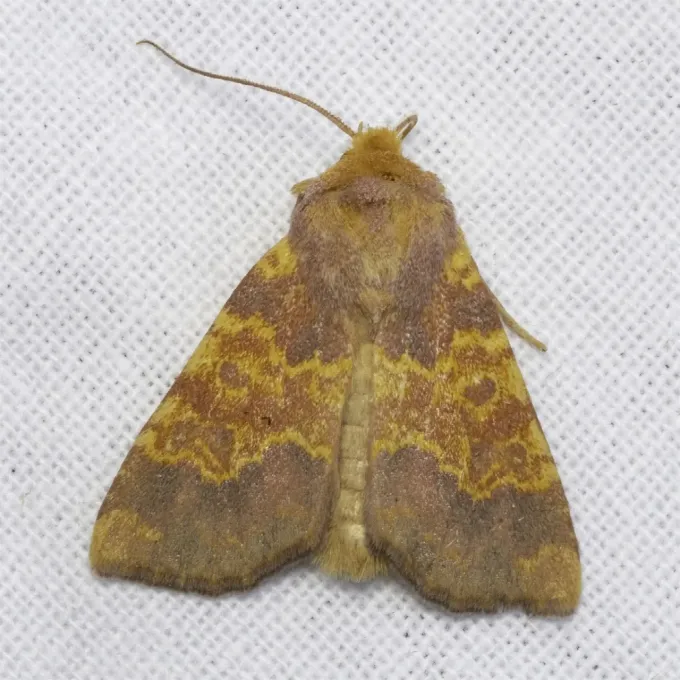
The Mottled umber (Erannis defoliaria) is a moth species belonging to the family Geometridae. The species is characterized by a significant sexual dimorphism: males possess wings with an ochre-yellow pattern and dark speckles, while females are flightless and resemble small spider-like insects.
The larvae, known as loopers or inchworms, grow up to 35 mm in length. They typically exhibit a yellowish-brown body with a wide, dark dorsal stripe and light-colored lateral lines. The head is usually brown, and their movement is characterized by a distinct looping motion, typical for the Geometridae family.
Taxonomically, the species is part of the Lepidoptera order. It is considered a major defoliator in various woodland and garden ecosystems, particularly in temperate regions where it thrives on a wide range of host plants.
The biological strategy of this moth relies on autumn activity. Males fly actively to find flightless females, which, after mating, deposit their eggs into crevices in the tree bark. These eggs remain in this stage throughout the winter, protected by the tree structure.
Identifying this pest in a garden setting requires careful observation of the canopy in the spring. Finding larvae during the bud-burst stage is the most effective way to confirm an infestation before significant damage occurs.
What it damages
The Mottled umber is a polyphagous pest, meaning it feeds on a diverse variety of deciduous trees. Its preferred hosts include linden, oak, birch, beech, and various fruit trees like apple, pear, and plum, making it a significant pest in both forestry and horticulture.
The damage is primarily caused by the larvae, which feed on buds and leaves. Early in the season, they consume the swelling buds, preventing normal foliage development. Later, they skeletonize the leaves, leaving only the major veins intact.
Extensive defoliation is the most harmful effect of an infestation. When a large population is present, entire trees can be stripped of their leaves, severely impacting their photosynthetic capacity, growth, and overall vitality.
If defoliation occurs repeatedly over several consecutive years, it can lead to severe weakening of the tree's immune system. This makes the affected trees highly susceptible to secondary pests, wood-boring insects, and various fungal diseases.
In fruit production, the damage has a direct economic impact. Loss of foliage reduces the tree's ability to supply nutrients to the fruit, resulting in smaller harvests, poor fruit quality, or premature fruit drop, which lowers commercial value.
When it appears
The life cycle of the Mottled umber is highly seasonal. The adult flight period occurs late in the year, typically from late September through November, which distinguishes it from many other moth species active in the summer months.
Eggs overwinter on the bark of host trees. This phase is resistant to cold, allowing the species to survive harsh winter conditions and synchronize their emergence with the food availability in the spring, usually around April or May.
The larval stage lasts for approximately five to seven weeks. This is the peak period of pest activity in the garden, during which the caterpillars undergo five instars and consume large quantities of foliage to support their rapid growth.
After the final instar, the larvae drop to the ground and pupate in the soil. They remain in the pupal stage throughout the summer, shielded from predators and adverse weather by the soil layer, before emerging as adults in the autumn.
Strategic management of this pest should focus on these key seasonal transitions. Preventing egg-laying in autumn and targeting young larvae in spring are the most effective windows for controlling the population.
Signs of infestation
The first sign of an infestation is often the presence of damaged, partially consumed buds that fail to unfold properly. This indicates that the larvae are active as soon as the buds begin to swell in early spring.
As the leaves develop, a classic sign of the Mottled umber is the appearance of leaf "lace" or skeletonized patches. The larvae consume the soft tissue between the veins, often spinning fine silken webs to create shelters within folded leaves.
Visible frass (droppings) on the leaves or the ground beneath the canopy is a clear indicator of a significant infestation. A large amount of small, dark pellets suggests a dense population of larvae is currently feeding in the upper branches.
Observing the behavior of the larvae provides further confirmation. If disturbed by shaking the branches, the caterpillars often drop down on thin silk threads, a defensive tactic that is very characteristic of this species.
General tree stress, such as premature yellowing of the canopy or stunted foliage development, can indicate that the infestation has reached a level where significant damage has already occurred, necessitating immediate action.
Control measures
Mechanical control via sticky bands or grease traps applied to the tree trunk in autumn is highly effective. Since females are flightless, these barriers prevent them from climbing up to lay their eggs in the canopy.
Biological control methods involve the application of Bacillus thuringiensis, a natural bacterium that targets caterpillars. This method is highly recommended for organic gardens as it is selective and does not harm beneficial pollinators or birds.
Chemical intervention should be considered only when the pest population exceeds the economic threshold. Insecticides such as pyrethroids or neonics can be used, provided they are applied carefully to minimize impact on non-target species.
Encouraging natural predators is a sustainable long-term solution. By installing nesting boxes for insectivorous birds and maintaining habitats for predatory insects, you can naturally suppress the moth population.
Cultivation of the soil beneath the canopy in late autumn can help disrupt the pupal stage. By turning the soil, you expose the pupae to birds and harsh weather conditions, significantly reducing the number of adults that will emerge the following year.
Taxonomy
- Latin name
- Tiliacea
- Order
- Lepidoptera (butterflies)
- Family
- Noctuidae
- EPPO code
- TILISP
Discussion
No discussions yet — be the first.