
Golden Twin-spot Moth
Thysanoplusia orichalcea
Description
How to identify
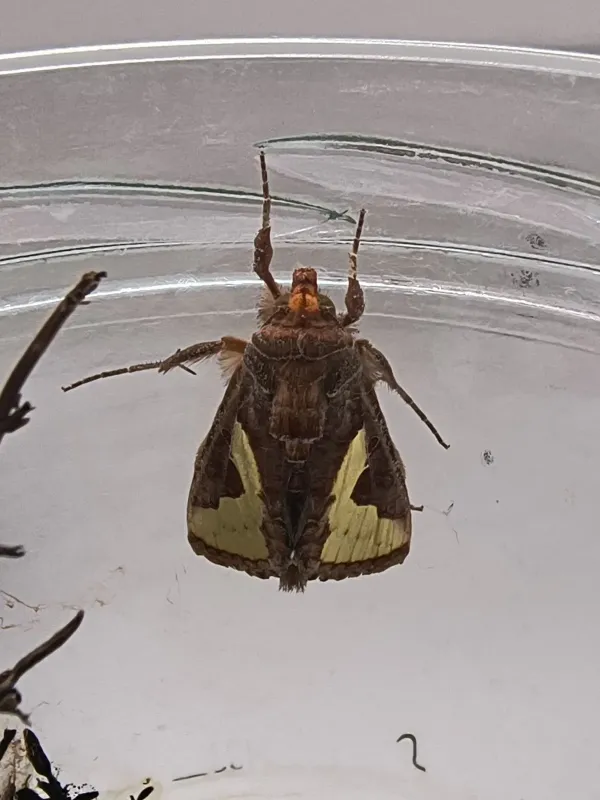
The Golden Twin-spot Moth (Thysanoplusia orichalcea) is a member of the Noctuidae family within the Lepidoptera order. The adult moth is distinguished by a prominent, shiny golden metallic patch on its forewings, which typically forms a triangular or tear-drop shape.
The adult wingspan measures between 35 and 45 mm. The overall wing coloration is a mix of brownish-grey and bronze tones, providing excellent camouflage when the moth rests on stems or leaf litter during the day.
The larvae are bright green, often with thin pale lines along their bodies. They possess fewer prolegs than other noctuid species, resulting in their characteristic looping motion when crawling.
The species undergoes a complete metamorphosis, including egg, larval, pupal, and adult stages. In favorable climatic conditions, it can complete several generations per year, leading to rapid population growth.
Pupation occurs within a light-colored silk cocoon, usually attached to the underside of leaves or within folded leaf edges, protecting the developing insect from environment stressors.
What it damages
This moth is a significant polyphagous pest that attacks a wide array of agricultural crops. It is particularly notorious for causing damage to soybean, pea, alfalfa, sunflower, and various vegetable crops.
The primary damage is caused by the larvae, which feed voraciously on the foliage. Young larvae consume the epidermal tissue, while older larvae skeletonize leaves, leaving only the primary veins intact.
Heavy infestations can lead to substantial leaf area loss, which directly correlates with reduced photosynthesis and lower overall plant vigor, significantly impacting harvest yields.
Feeding damage on young plants and terminal shoots is especially critical, as it can stunt growth and delay the maturation of the crop, sometimes requiring replanting.
The wounds left by the larvae also serve as entry points for various bacterial and fungal pathogens, potentially leading to secondary infections that further diminish the quality of the harvested product.
Signs of infestation
The earliest signs of an infestation are small, irregular holes in the leaves. As the larvae grow, these holes expand into larger, uneven patches, giving the foliage a shredded appearance.
The presence of frass (larval droppings) on the leaves or the soil surface beneath the plants is a clear indicator of recent feeding activity by the caterpillars.
Adult moths are nocturnal and rarely seen during the day; however, monitoring the field at dawn or dusk may reveal their presence, especially during the peak flight season.
Premature yellowing or wilting of the foliage on the lower parts of the plant can also indicate larval feeding, even if the pests themselves are well-hidden from view.
Familiarity with the egg-laying habits is also helpful; clusters of small, pale eggs can often be found on the undersides of leaves during the initial stages of a population outbreak.
Control measures
Cultural control is a cornerstone of management, including deep tillage after harvest to expose and destroy pupae, which helps reduce the overwintering population for the next season.
Field monitoring using pheromone traps is essential to detect the arrival of adult moths and to determine the optimal timing for intervention before the larvae reach older, harder-to-kill stages.
Chemical control options include the use of registered insecticides, such as pyrethroids or insect growth regulators, applied when the economic threshold for the specific crop is exceeded.
- Implementation of crop rotation to break the pest's life cycle.
- Rigorous weed management, as many weeds act as alternative hosts for the larvae.
- Utilization of biological control agents, such as Bacillus thuringiensis, which target larvae without affecting beneficial insects.
Encouraging the presence of natural enemies, including parasitoid wasps and tachinid flies, is a highly effective long-term strategy to maintain the pest at a manageable level.
Taxonomy
- Latin name
- Thysanoplusia orichalcea
- Order
- Lepidoptera (butterflies)
- Family
- Noctuidae
- EPPO code
- PYTOOR
Discussion
No discussions yet — be the first.