
Thripobius
Thripobius
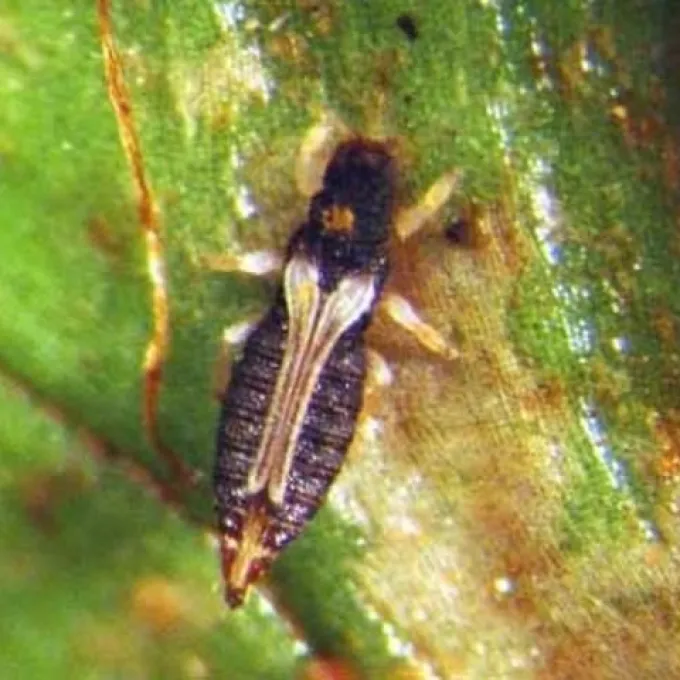
Description
How to identify
It is crucial to clarify that Thripobius is not a plant pest but a genus of beneficial parasitic wasps belonging to the Eulophidae family. These insects act as essential natural enemies of thrips, which are significant agricultural pests.
Adult Thripobius are minute parasitoids, often measuring only 1 to 2 millimeters in length. Due to their extremely small size, they are rarely observed in the field without the aid of specialized equipment or magnifying tools.
These wasps belong to the order Hymenoptera. They have evolved highly specific searching behaviors, allowing them to locate and parasitize thrips larvae, which are detrimental to numerous ornamental and vegetable crops.
The morphology of these wasps is characteristic of the superfamily Chalcidoidea. They possess distinct wing venation and a dark, shiny exoskeleton that helps them navigate the micro-habitats of greenhouse plants.
For professional agronomists, correctly identifying these insects as beneficials is a vital step in implementing Integrated Pest Management (IPM) strategies, moving away from harmful chemical reliance.
What it damages
The genus Thripobius does not cause any damage to plants. They are strictly non-phytophagous, meaning they do not consume plant tissues, sap, or fruits, making them completely safe for commercial crop production.
Instead, they provide substantial agricultural value by controlling thrips populations. Thrips themselves cause severe damage, including leaf scarring, silvering, and fruit deformation, which Thripobius helps to mitigate.
Because these parasitoids specifically target the larval stages of the pest, they directly reduce the damage threshold of the thrips population in environments like glasshouses and nurseries.
Their presence is an indicator of an effective biological control program. Growers who utilize these parasitoids often report improved crop quality and reduced economic losses associated with pest outbreaks.
By preventing the rapid increase of thrips, Thripobius protects plant vigor and yield without leaving any toxic residues, supporting the production of high-quality organic or sustainable produce.
When it appears
The seasonal activity of Thripobius is largely governed by temperature and the availability of host larvae. In greenhouse settings, they can be active throughout the year if the environment is strictly maintained.
Optimal temperatures for their development and searching activity usually range between 20°C and 28°C. Outside this range, their metabolic rate and success in finding hosts may decrease significantly.
In outdoor field conditions, they are most active during the warmer months, typically from late spring to early autumn, aligning with the peak population cycles of their host, the thrips.
The developmental cycle of these wasps is relatively rapid, allowing them to track and suppress rising pest populations effectively. This adaptability is key to their success as a biological control agent.
Monitoring climate patterns and pest activity via yellow sticky traps is recommended for agronomists to determine the best timing for augmenting parasitoid populations if necessary.
Control measures
Because Thripobius is a highly valuable asset, management practices should focus on conservation and population support. Avoid the use of broad-spectrum insecticides that are known to be toxic to parasitoids.
When chemical control against other pests is unavoidable, agronomists should select bio-rational or selective pesticides that have minimal impact on the beneficial insect community.
Maintaining a stable microclimate and avoiding abrupt environmental changes will help preserve the health and reproductive success of the wasp population within the greenhouse ecosystem.
Implementing a regular scouting program is essential to balance the presence of the parasitoids with the pest density, ensuring a sustainable equilibrium is maintained for crop protection.
- Prioritize biological control over chemical applications.
- Use selective chemicals only when absolutely necessary.
- Integrate monitoring systems like sticky traps to track population trends.
Taxonomy
- Latin name
- Thripobius
- Order
- Hymenoptera
- Family
- Eulophidae
- EPPO code
- THRBSP
Discussion
No discussions yet — be the first.