
Feathered Gothic
Tholera popularis
Description
How to identify
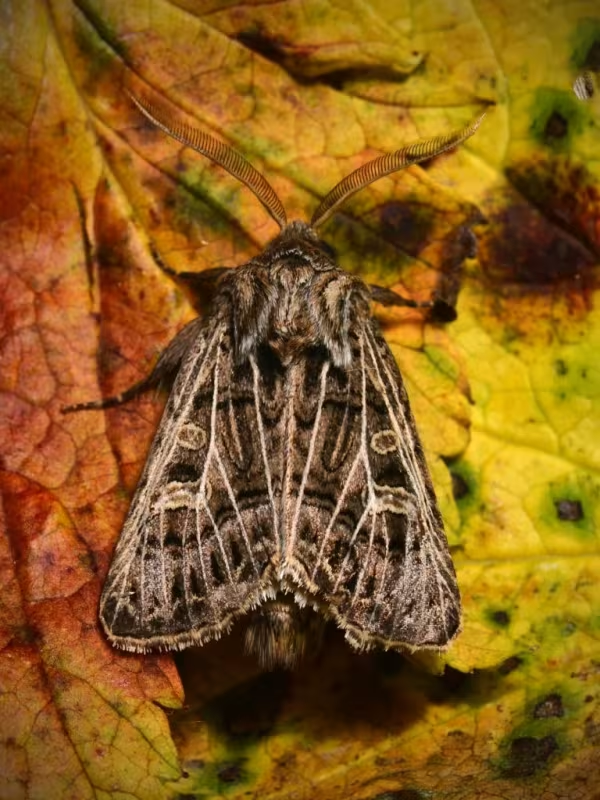
The Feathered Gothic moth (Tholera popularis) belongs to the family Noctuidae within the order Lepidoptera. The adult moth has a wingspan ranging from 35 to 45 mm, with forewings displaying gray-brown tones and characteristic white veins.
The larva, or caterpillar, of this species reaches a length of up to 40–50 mm. Its coloration varies from grayish-green to brown, providing effective camouflage among cereal stalks and soil debris.
The pupae of the insect develop in the soil at shallow depths. This dormant stage allows the pest to successfully overwinter in various temperate climate conditions.
Adult moths are nocturnal and are strongly attracted to artificial light sources, which is a key factor used by agronomists for population monitoring.
The biological cycle of Tholera popularis consists of one generation per year. Adults typically emerge in late summer, with peak activity occurring in August and September.
What it damages
The primary damage is caused by the caterpillars, which exhibit polyphagous feeding habits but show a strong preference for cereal crops. They attack both wild grasses and cultivated cereals.
The list of susceptible crops includes wheat, barley, oats, and various perennial grasses grown for fodder or silage.
Damage begins with the consumption of young leaves, which reduces the photosynthetic area of the plant and slows down development during critical growth phases.
During periods of high population density, caterpillars can devastate crops almost entirely, leaving only the tough leaf veins, leading to significant yield losses in grain and biomass.
The pest poses a particular threat during mass outbreaks, where the density of larvae per square meter can far exceed the economic injury level for the affected crop.
When it appears
Eggs overwinter in the soil or at the base of grass clumps. Larval emergence begins in the spring, typically April or May, coinciding with the resumption of cereal growth.
The period of most intensive feeding occurs during May and June. During this time, the larvae are most voracious and cause the most significant damage to cereal fields.
Pupation takes place in the first half of summer, usually in June or July, directly within the top layers of the soil, where the insect remains in diapause until autumn.
Adult moths emerge at the end of summer, starting in August. During this period, the moths mate, and the females lay eggs that will remain dormant throughout the winter.
Climate factors, especially soil moisture, significantly influence the survival of overwintering stages, which determines the pest population dynamics for the following season.
Signs of infestation
The first sign of infestation is the appearance of characteristic "windows" or irregular notches on the edges of leaf blades during the spring period.
The presence of caterpillars is often identified by the accumulation of frass on the soil surface or within the leaf axils, serving as an indicator of active feeding.
In cases of heavy infestation, noticeable thinning of the crop and patches of consumed stems become visible, giving the field a sparse and damaged appearance.
Detecting caterpillars during the day is difficult, as they prefer to hide in the soil or at the base of stalks, showing activity mainly at dusk and at night.
The use of light traps during the moth flight period helps identify the onset of activity, providing a signal to assess the potential threat from the next generation.
Control measures
Agronomic control methods include deep plowing of fields after harvest, which disrupts the soil and promotes the mortality of pupae and larvae located in the ground.
Adherence to crop rotation and the elimination of weeds, particularly wild grasses in fallow fields, deprives the pest of its food source and egg-laying sites.
When economic thresholds are exceeded, insecticidal treatment of crops using authorized systemic or contact-action pesticides is recommended.
It is crucial to perform spraying during evening hours when caterpillars emerge from hiding to feed, which significantly increases the efficacy of the chemical treatment.
- Monitoring adult population density using light traps.
- Regular field scouting during the period of young larva emergence.
- Balanced nitrogen fertilization to accelerate the recovery of damaged plants.
Taxonomy
- Latin name
- Tholera popularis
- Order
- Lepidoptera (butterflies)
- Family
- Noctuidae
- EPPO code
- THOLPO
Discussion
No discussions yet — be the first.