
Tetrastichus venustus
Tetrastichus venustus
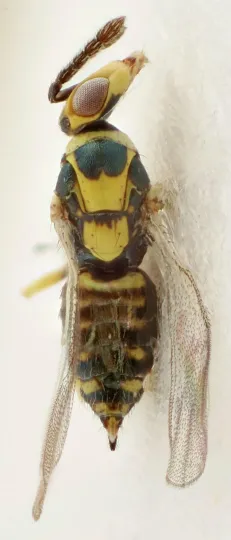
Description
How to identify
Tetrastichus venustus is a member of the Hymenoptera order, specifically belonging to the Eulophidae family. These are tiny parasitic insects that have evolved to exploit specific ecological niches within host plants.
Adult individuals have the morphology typical of small chalcid wasps, characterized by a compact body, well-developed wings with simple venation, and often dark or metallic coloration that provides camouflage.
Due to their microscopic size, identifying them in the field is highly challenging. Accurate identification typically requires microscopic examination of structural features or genetic analysis by entomological experts.
The lifecycle is strictly tied to host plants, where larvae develop within plant tissues. Their survival is greatly enhanced by the protection afforded by the plant structure during the larval stage.
Unlike many other insects, this species is frequently misidentified as a beneficial predator, as the Eulophidae family includes numerous species that act as effective natural biological control agents.
What it damages
This pest primarily affects ornamental and forest trees. The larvae cause significant damage by feeding on internal tissues, which often leads to the formation of galls and plant deformation.
The damage is caused mainly by the larval stage, which consumes the nutrient-rich tissues inside buds or tender young shoots. This disrupts the plant's vascular system, leading to stunted growth.
The aesthetic value of trees and shrubs is significantly reduced, which is a major concern for professional nurseries and botanical gardens. Damaged plants often show signs of structural weakness.
Weakened plants are subsequently more susceptible to secondary infections, such as fungi or bacteria, entering through the sites of tissue damage caused by the insect activity.
In cases of high infestation density, the pest can cause extensive dieback of apical shoots, severely impacting the natural crown structure and overall vigor of the host plant.
When it appears
Activity levels of Tetrastichus venustus are synchronized with the vegetative season of the host plants, beginning in the spring when new growth emerges and buds start to swell.
The species typically overwinters in a state of diapause, residing within plant remnants or pre-existing galls from the previous year. Emergence coincides with the arrival of stable warm spring temperatures.
Multiple generations may occur throughout the summer, depending on local climatic conditions and the availability of succulent growth necessary for the development of the next generation.
The number of generations per season is highly dependent on geographical latitude and the accumulation of degree-days, which directly influences the insect's metabolic rate.
As autumn approaches and day length decreases, the insects prepare for winter, transitioning into their dormant stages to survive the cold season within protected environments.
Signs of infestation
The most visible sign of infestation is the development of abnormal galls or swellings on branches. These structures act as incubation chambers for the developing larvae.
Inhibition of bud development in the spring is a key indicator. Infested buds may appear shriveled, necrotic, or fail to open normally during the early vegetative phase.
Tiny exit holes on the surface of shoots or stems are diagnostic of an established population, indicating that a generation has completed its development within the tissue.
Upon dissecting the affected plant parts, one can typically find internal tunnels and larval remains, confirming the presence of the pest rather than a physiological disorder.
- Abnormal gall formation on stems.
- Stunted or deformed apical growth.
- Premature leaf or bud drop.
- Reduced overall vigor of the host tree.
Control measures
Sanitary pruning is the most effective mechanical control method. By removing and burning infested branches before adult insects emerge, the local population can be significantly reduced.
Systemic insecticides are recommended for chemical control, as they can penetrate the plant tissue and reach the larvae feeding inside the buds or stems where contact poisons fail.
Biological control strategies may include the use of entomopathogenic fungi, which are effective in damp conditions and help suppress populations without harming the environment.
Maintaining high plant health through proper fertilization and irrigation helps the host tree withstand minor infestations and recover more quickly from potential damage.
Monitoring programs using colored sticky traps can help detect the presence of adults early in the season, allowing for precise timing of interventions and increased efficacy.
Taxonomy
- Latin name
- Tetrastichus venustus
- Order
- Hymenoptera
- Family
- Eulophidae
- EPPO code
- TETSVE
Discussion
No discussions yet — be the first.