
Tetrastichus trisulcatus
Tetrastichus trisulcatus
Description
How to identify
Tetrastichus trisulcatus is a species of parasitic wasp belonging to the family Eulophidae. While many members of this family are parasitoids, this specific species is known to induce galls on its host plants.
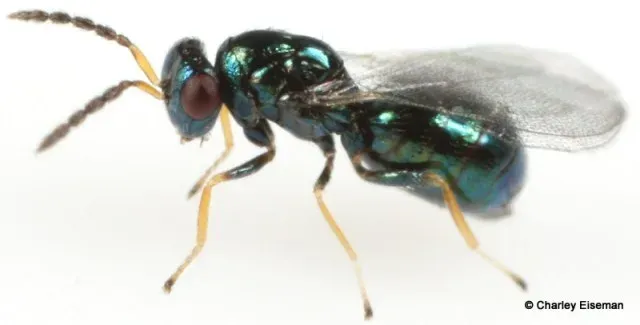
Adult insects are minute, typically measuring 2–3 mm in length. They often possess a dark body, sometimes with a metallic sheen, and transparent wings with distinct venation characteristic of the genus.
The larvae live internally within the plant tissues. They are typically legless, cream-colored, and adapted for survival within the confined space of the gall they inhabit.
The life cycle is tightly synchronized with the phenology of the host plant. Depending on the geographical region and climate, the insect may complete one or several generations per year.
Identification often relies on the morphology of the galls produced on the leaves, as the adult wasps are difficult to distinguish from other related species without microscopic examination.
What it damages
The primary hosts for Tetrastichus trisulcatus are elm trees (Ulmus). The plant responds to the insect's activity by developing localized pathological tissue growths known as galls.
The damage manifests as a significant disruption to the leaf's normal physiology. Heavily infested leaves are less capable of photosynthesis, which weakens the overall health of the tree.
Mass infestations can lead to premature yellowing and leaf fall, significantly reducing the aesthetic value of urban trees, parks, and roadside plantings.
Severe infestations may result in leaf deformation, which makes the tree more susceptible to secondary infections, such as fungi or opportunistic pathogens.
In nursery settings, the presence of this pest can retard the growth of seedlings, negatively impacting their development and overall survival rates after transplantation.
Signs of infestation
The most visible sign of infestation is the presence of small swellings or galls on the elm leaves, which often display a characteristic shape and color depending on the stage of development.
Upon closer inspection, the tissue in the affected areas often shows discoloration, ranging from light green to yellow or reddish tones, reflecting the plant's metabolic stress.
In the early stages, galls may be inconspicuous, but as the larvae grow, the galls expand and cause significant distortion of the leaf lamina and petioles.
When the adult wasps emerge, they leave behind tiny exit holes on the surface of the galls, providing clear evidence that the developmental cycle has been completed.
Another indicator is increased bird activity, as birds often feed on the larvae contained within the galls, leaving behind torn or shredded leaf surfaces.
Control measures
Sanitary pruning is the most effective manual method of control. Removing and destroying infested leaves and twigs before the adults emerge helps to reduce the local population.
Biological control, focusing on the encouragement of natural predators or parasitoids, can be an effective way to manage population levels in an environmentally friendly manner.
In nurseries or high-value landscapes, the application of systemic insecticides during the active growing season can be effective against the adult wasps before they lay eggs.
Maintaining tree vigor through proper irrigation and fertilization is crucial, as healthy, stressed-free trees are generally more resilient to pest attacks.
- Regular monitoring of elm foliage during spring.
- Prompt removal of infested branches and leaves.
- Chemical intervention only when thresholds are exceeded.
Taxonomy
- Latin name
- Tetrastichus trisulcatus
- Order
- Hymenoptera
- Family
- Eulophidae
- EPPO code
- TETSTI
Discussion
No discussions yet — be the first.