
Elm root aphid
Tetraneura nigriabdomonalis
Description
How to identify
The Elm root aphid (Tetraneura nigriabdominalis) is a specialized insect species belonging to the Pemphigidae family. This pest exhibits a complex life cycle, migrating between its primary host, the Elm tree, and its secondary hosts, which include various grasses and cereal crops.
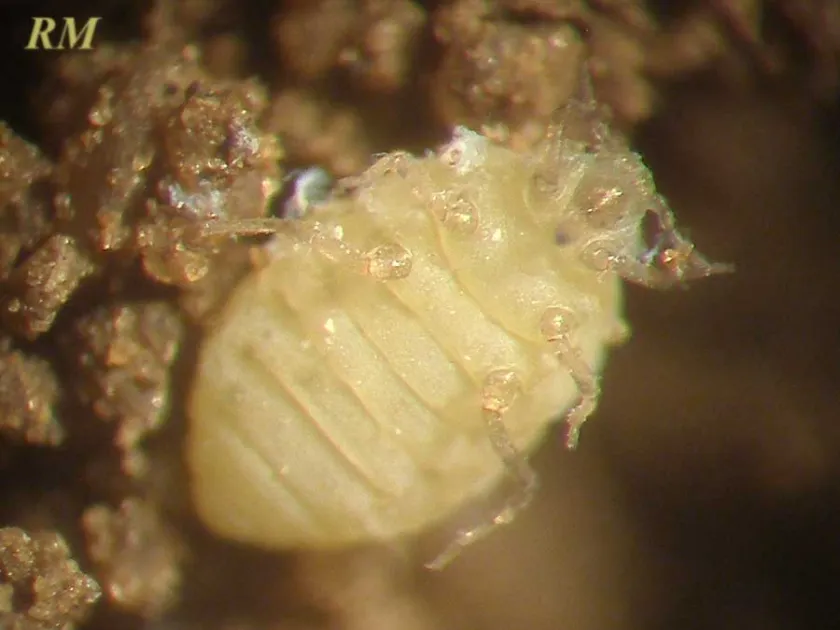
Adult aphids living on roots are characterized by a globular body shape and are often covered with a white waxy secretion. This substance acts as a protective shield against soil moisture and predators within the subterranean environment.
On Elm trees, the aphid induces the formation of distinct leaf galls. These galls appear as curled, pouch-like structures on the foliage, providing a safe habitat for the aphid colonies to develop away from external threats.
The biological cycle involves an alternation of sexual reproduction on trees and asexual, parthenogenetic reproduction on the root systems of graminaceous hosts, facilitating rapid population growth.
Identifying the pest in agricultural fields requires careful excavation of the root system, as the aphids remain hidden within the soil profile for the majority of the growing season.
What it damages
The primary agricultural impact of the Elm root aphid is the damage caused to the root systems of various graminaceous crops. Major hosts include wheat, barley, rice, and several species of wild grasses.
The aphids pierce the fine root tissues and extract cell sap, which disrupts the plant's nutrient and water uptake. This physiological stress is particularly detrimental during periods of drought or intense vegetative growth.
Visible symptoms of heavy infestation include stunted growth, chlorotic yellowing of the foliage, and premature wilting of the plants. The overall biomass production is severely reduced in affected areas.
Furthermore, the feeding sites on the roots create micro-wounds that serve as entry points for soil-borne fungal pathogens, potentially leading to secondary root rot infections and total plant loss.
In terms of economic damage, the infestation leads to reduced grain weight and uneven crop maturation, significantly impacting the final yield and overall quality of the harvested crop.
When it appears
The life cycle begins in early spring when overwintering eggs on the Elm bark hatch. The formation of leaf galls on the Elm tree is a key developmental stage that occurs as the leaves emerge.
During late spring or early summer, winged forms of the aphid migrate from the Elms to their secondary grass hosts. This migration period is critical for the colonization of agricultural fields.
Throughout the summer months, the aphid population multiplies rapidly on the roots of host plants in the soil. Several parthenogenetic generations occur during this phase, sustaining the colony.
As temperatures begin to drop and the autumn season approaches, sexual morphs are produced that migrate back to the Elm trees to lay overwintering eggs, completing the cycle.
Soil temperature and moisture content play a major role in population dynamics. Warm and moderate conditions are ideal for the aphid's subterranean development, while extreme drought or flooding can affect their survival rate.
Signs of infestation
The presence of the Elm root aphid is first indicated by the development of leaf galls on nearby Elm trees. These galls are the most reliable visual indicator of the pest's presence in a specific area.
In the field, infestations appear as patchy areas of stunted, pale plants. These areas often show reduced tillering compared to healthy parts of the field, leading to an irregular crop stand.
Upon inspecting the root system, farmers may notice white, flocculent wax deposits. These deposits are debris from the aphid colonies and are frequently mistaken for fungal mycelium or soil particles.
Severe infestations weaken the root structure, making the plants easily uprooted during field checks. The fine root hairs, which are vital for nutrient uptake, are often missing or severely damaged.
The presence of ant mounds in the field can also signal an aphid infestation, as ants frequently tend to root-feeding aphids to harvest the sweet honeydew they produce, often protecting them from predators.
Control measures
Managing the Elm root aphid requires a multi-faceted approach, emphasizing cultural practices and preventive measures to keep populations below the economic threshold.
Effective control starts with the rigorous removal of grassy weeds in and around the fields, as these act as reservoirs for the aphids during the summer months before they migrate to other hosts.
Seed treatment with systemic insecticides has proven to be an effective barrier, providing protection to young seedlings during the critical initial phases of root development when the plants are most vulnerable.
Deep cultivation following the harvest helps disrupt the soil environment and destroys the aphids residing near the surface, thereby reducing the carry-over population for the next season.
- Implement crop rotation cycles, avoiding continuous planting of susceptible grass species.
- Enhance plant vigor through balanced fertilization to help crops withstand root damage.
- Monitor nearby Elm stands in spring to assess potential migration risk to the fields.
Discussion
No discussions yet — be the first.