
Silky ant
Tetramorium sericeiventre
Description
How to identify
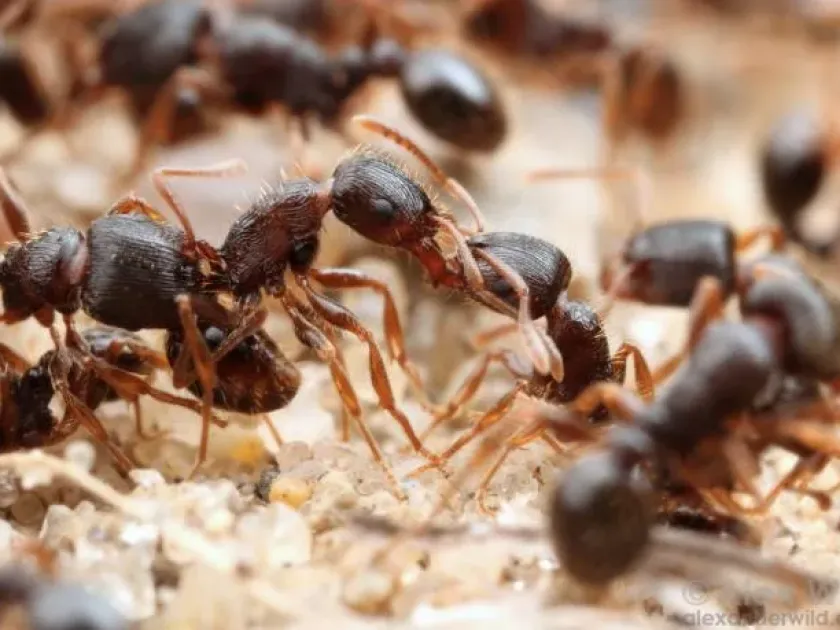
The Silky ant (Tetramorium sericeiventre) belongs to the Formicidae family. It is a small species characterized by a dense layer of hairs on its body, which gives it a distinct silky sheen.
Workers measure approximately 3–4 mm in length and exhibit colors ranging from yellowish-brown to deep dark brown, aiding in their camouflage within soil environments.
This species primarily lives on the ground, constructing nests in soil, often under debris, rocks, or near the base of various agricultural plants.
They possess a complex social structure and are highly adaptive to disturbed habitats, making them common in agricultural areas where they can thrive alongside human-cultivated crops.
Accurate identification requires professional entomological assessment, as the species shares many morphological features with other ants within the Tetramorium genus.
What it damages
The primary agricultural impact of the Silky ant is its mutualistic relationship with honeydew-producing insects, such as aphids, mealybugs, and scale insects.
By protecting these sap-sucking pests from natural predators like ladybugs and lacewings, the ants facilitate massive infestations that severely drain plant vigor.
Plants infested by aphids fostered by these ants often show stunted growth, leaf curling, and overall yield reduction due to the loss of plant sap.
In addition to fostering secondary pests, Silky ants can act as vectors, mechanically spreading fungal or bacterial pathogens from one plant to another while patrolling.
In extreme cases, high nest density around the root zone can alter soil structure, potentially impeding water uptake and nutrient absorption for seedlings.
When it appears
Activity begins in early spring as soil temperatures rise, prompting worker ants to emerge from their subterranean nests to forage for food.
Peak activity occurs during the summer months, aligning with the highest reproductive rates of the aphids and other honeydew-secreting pests they tend to.
As autumn approaches, the colony prepares for winter, moving their activity deeper into the soil to ensure the safety of the queen and developing larvae.
The daily foraging cycle is highly dependent on ambient temperature, with peaks typically occurring during cooler morning and evening hours in warmer climates.
Overwintering occurs in deep soil galleries, allowing the colony to survive freezing surface temperatures and restart their activity rapidly when spring returns.
Signs of infestation
The most prominent sign of infestation is the consistent presence of ant trails leading to plants that are heavily covered in aphids or mealybugs.
Leaves and stems often show a sticky residue known as honeydew, which is a clear byproduct of the insect-ant symbiosis and a visual indicator of pest presence.
Visible nest entrances appearing around the base of vegetable plants or orchard trees indicate that a established colony is operating in the vicinity.
Wilting of new growth or young shoots, combined with high ant traffic on these specific plant parts, suggests significant damage to the plant's vascular health.
A noticeable absence of beneficial predatory insects on plants that are otherwise suitable for them usually indicates that ants are aggressively patrolling and defending the area.
Control measures
Effective management requires a multi-pronged approach that targets the ant colony and simultaneously suppresses the aphid populations they are protecting.
- Deploying slow-acting bait stations containing insecticides that workers carry back to the queen and larvae, eventually eliminating the colony.
- Applying sticky mechanical barriers or Tanglefoot around tree trunks to prevent ants from reaching the canopy where aphids reside.
- Frequent mechanical cultivation of the soil around crops to disrupt galleries and stress the ant population by destroying their established structures.
- Using targeted systemic insecticides to eliminate sap-sucking insects, which removes the ants' primary source of food and forces them to relocate.
- Enhancing biological control by introducing or attracting natural enemies that can overcome the ants' defensive tactics, such as specific parasitic wasps.
Taxonomy
- Latin name
- Tetramorium sericeiventre
- Order
- Hymenoptera
- Family
- Formicidae
- EPPO code
- TETMSE
Discussion
No discussions yet — be the first.