
Spur-thighed tortoise
Testudo graeca
Description
How to identify
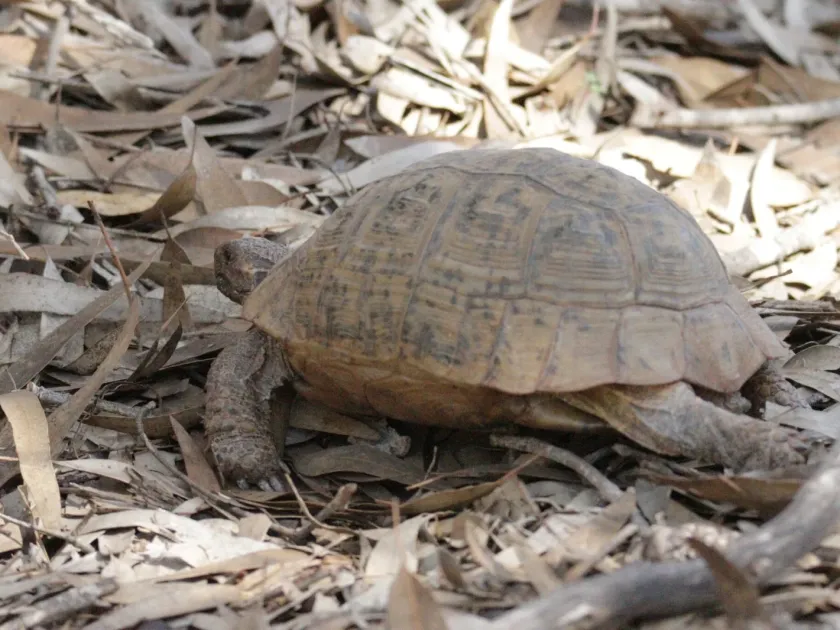
The Spur-thighed tortoise (Testudo graeca), also known as the Greek tortoise, belongs to the Testudinidae family. It is a robust reptile with a high, domed shell, typically olive or yellow-gray in color with dark markings on the scutes.
Adults can reach a shell length of up to 30 centimeters. A key identification feature is the presence of conical spurs on the thighs, which distinguishes them from other tortoise species in the region.
They are primarily diurnal and favor open landscapes, hillsides, and cultivated areas where they find abundant vegetation and warm spots for thermoregulation.
Reproduction occurs in the spring, with females digging nests for their eggs. Despite being slow-growing, these tortoises are long-lived, often persisting in the same agricultural territory for many years.
Their strength and ability to climb low obstacles allow them to navigate garden settings efficiently in their search for high-calorie food sources.
What it damages
The primary damage is caused to vegetable crops, seedlings, and soft-stemmed berries. As herbivores, these tortoises consume a wide variety of cultivated garden plants.
They are particularly attracted to lettuce, melon seedlings (watermelons and pumpkins), and the young shoots of grapevines, which can be eaten down to the base.
In orchards and garden plots, tortoises may damage ripening fruits laying on the ground, such as tomatoes, cucumbers, or fallen apples, rendering them unfit for sale or consumption.
Beyond direct feeding, tortoises can damage the structure of garden beds by creating pathways, effectively trampling and crushing delicate seedlings while moving across the area.
Greenhouse crops are at high risk if the structure is not properly sealed, as tortoises can easily squeeze through low gaps to access a concentrated food supply.
When it appears
Activity levels are highly dependent on ambient temperatures. In Mediterranean and temperate regions, the peak feeding period occurs in the spring when plant growth is most vigorous.
During the intense heat of summer, tortoises often enter a state of estivation (summer dormancy) by burrowing into the soil, which temporarily reduces their impact on gardens.
The spring activity window coincides with the planting and germination phase of many crops, making it the most critical time for preventative measures against potential losses.
As autumn approaches, activity may increase again before the tortoises enter hibernation, during which time they may forage on late-season produce and fallen fruits.
Due to shifting climate patterns, tortoises may remain active for longer periods, requiring consistent vigilance from farmers and gardeners throughout the growing season.
Signs of infestation
Tortoise presence is indicated by distinct tracks on soft soil: wide, deep furrows left by the shell and heavy limbs, which are clearly visible following irrigation or rainfall.
Plant leaves exhibit bite marks with irregular, jagged edges, as the tortoise lacks teeth and instead uses sharp, keratinous tomia to tear through vegetation and fruit.
Droppings containing significant amounts of undigested plant fiber are a definitive sign of an established tortoise population within the garden or field.
- Defoliation of the lower parts of vegetable crops.
- Destruction of young seedlings in greenhouse beds.
- Damage to fruits located at ground level.
- Characteristic deep trails through garden soil.
- Snapped young shoots of berry-producing shrubs.
Shelter sites, often found under piles of garden debris, rocks, or loose building materials, are frequent locations where tortoises rest during the hottest parts of the day.
Control measures
The most effective strategy is the installation of physical barriers: mesh fencing at least 30-40 cm high, which must be buried deep into the ground to prevent the tortoise from digging underneath.
Maintaining a clean garden environment by removing clutter, organic debris, and piles of rock significantly reduces the number of suitable hiding spots for these animals.
Implementing crop rotation and favoring plant species that are less palatable to tortoises can help reduce the attractiveness of a specific garden plot.
If a large number of individuals are present, humane relocation to wild habitats far from cultivated farmland is the recommended approach to managing the population.
Because the Spur-thighed tortoise is protected in many jurisdictions, all control methods must be limited to non-lethal, deterrent-based, and protective measures.
Taxonomy
- Latin name
- Testudo graeca
- Family
- Testudinidae
- EPPO code
- TSTDGR
Discussion
No discussions yet — be the first.