
Taeniopteryx nebulosa
Taeniopteryx nebulosa
Description
How to identify
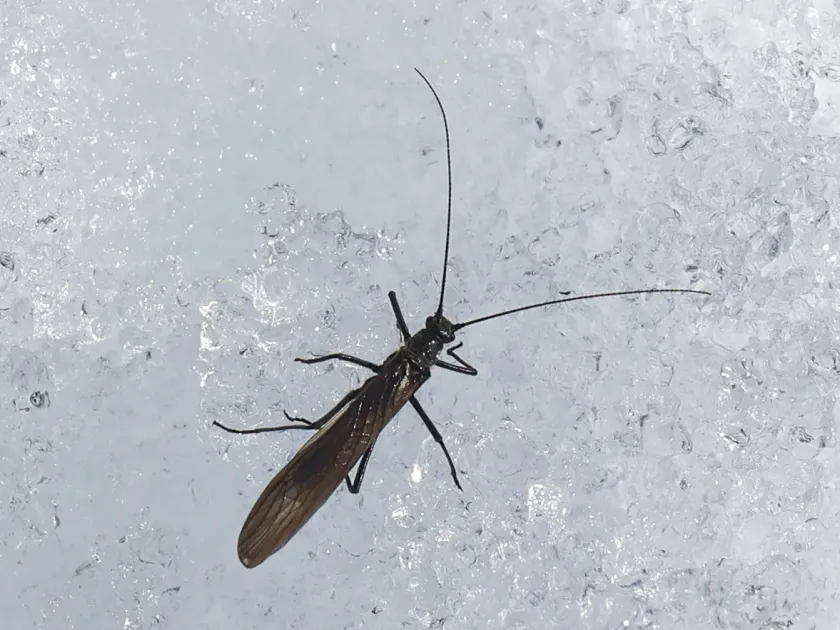
Taeniopteryx nebulosa is a species of stonefly belonging to the family Taeniopterygidae. These insects are characterized by their elongated bodies, usually measuring between 10 and 15 mm in length.
The adults possess two pairs of wings with complex, dark venation, which gives them a smoky appearance. Their body color typically ranges from dark brown to black, aiding in camouflage against tree bark.
Unlike many other insects, stoneflies have a very simple mouthpart structure as adults, as they focus primarily on reproduction during their brief terrestrial life stage.
The larvae are exclusively aquatic and require well-oxygenated, clean running water to develop. They possess distinct gills, which allow them to extract oxygen from their aquatic environment.
Identifying this species in a garden setting is often linked to the presence of nearby water bodies, as the adult insects do not travel far from their breeding sites.
What it damages
Taeniopteryx nebulosa is generally not considered a major agricultural pest. Its impact on cultivated plants is minor and restricted to specific conditions.
During the early spring, high population densities of adults may cause mechanical damage to emerging buds and tender young foliage of fruit trees located near water sources.
This feeding behavior is sporadic and is usually the result of the insects clustering on trees in search of resting spots rather than specifically targeting the crops as a primary food source.
There is no evidence that this species causes systemic damage to plant health, nor does it act as a vector for significant plant pathogens in commercial crops.
The aquatic larval stage is entirely harmless to agriculture, as the larvae feed on detritus, algae, and organic matter found in streams.
When it appears
The adult emergence of Taeniopteryx nebulosa occurs in late winter and early spring, often while temperatures are still relatively low.
The timing of their appearance is highly dependent on local climatic conditions and the temperature of the water bodies where the larvae reside.
The larval stage is the longest part of their life cycle, lasting for a year or more as they undergo multiple molts to reach maturity.
Adult activity is highest during sunny spells in the early spring, when individuals move onto nearby vegetation to bask and find mates.
Once the reproductive cycle is complete and eggs have been deposited back into the water, the adult life stage ends quickly, leaving the vegetation clear of these insects.
Control measures
Due to the negligible economic impact of Taeniopteryx nebulosa, chemical pest control measures are typically unnecessary and not recommended.
If insects are observed in high numbers causing concern for young or sensitive plants, mechanical removal or gentle shaking of branches is sufficient to manage them.
Cultural practices, such as maintaining garden hygiene and protecting the quality of nearby water sources, ensure that the ecosystem remains balanced.
Integrated pest management protocols do not prioritize this insect, allowing for the focus to remain on more serious agricultural threats.
- Monitor young trees in early spring for physical signs of presence.
- Avoid broad-spectrum pesticide application near natural water sources.
- Encourage natural predators such as birds and spiders in the garden.
Taxonomy
- Latin name
- Taeniopteryx nebulosa
- Family
- Taeniopterygidae
- EPPO code
- TAENNE
Discussion
No discussions yet — be the first.