
Taenia crassiceps
Taenia crassiceps
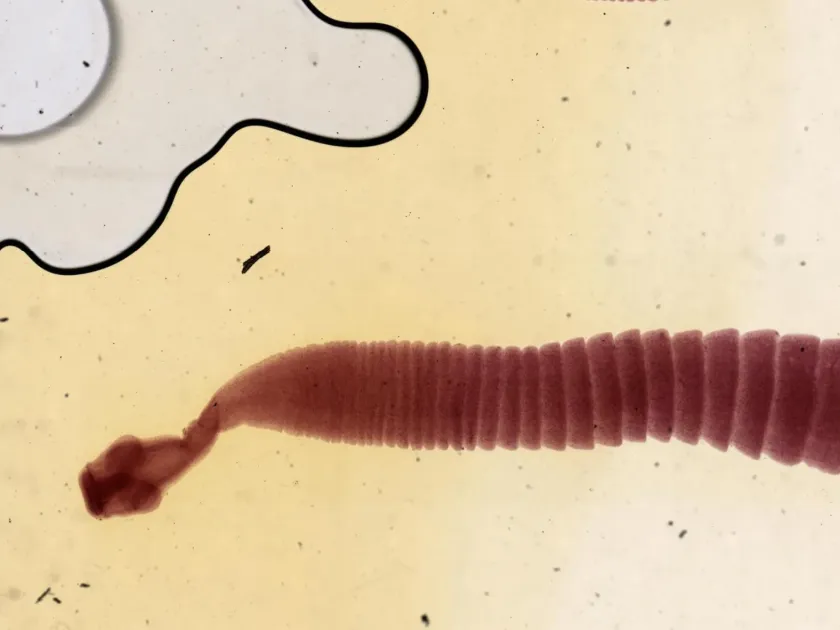
Description
How to identify
Taenia crassiceps is a species of tapeworm belonging to the order Cyclophyllidea and the family Taeniidae. It is strictly an animal parasite and has no biological mechanism to infect or damage plant life.
The life cycle involves canid definitive hosts, such as wolves or foxes, and small mammal intermediate hosts, mainly rodents. The larval stage, the cysticercus, is known for its ability to proliferate asexually.
Morphologically, the larval stages form clusters of cysts within the intermediate host's body cavity. These larvae are highly adaptable and can survive in various rodent species, maintaining the parasite's persistence in the wild.
This organism does not possess specialized mouthparts for feeding on vegetation, nor does it have any physiological traits that allow it to interact with the vascular systems of plants.
In the context of agronomy, Taenia crassiceps is classified as a non-pest and is not relevant to crop protection, field scouting, or phytosanitary regulatory frameworks.
What it damages
There is no evidence of Taenia crassiceps damaging any agricultural or horticultural crops. The parasite’s biological cycle is entirely dependent on animal hosts, meaning it does not feed on roots, foliage, or fruits.
Attempts to categorize this organism as a plant pest are scientifically incorrect. It poses no threat to yields, plant growth, or agricultural production quality in any known farming system.
The economic impact associated with this parasite is confined to the veterinary sector, specifically concerning the health of animals on farms, laboratory rodents, or the risk of zoonotic infection for personnel.
Because the parasite does not inhabit soil as a plant pathogen, it does not necessitate the use of chemicals, fertilizers, or specific agricultural management techniques to mitigate its presence.
Agricultural operations remain unaffected by the presence of this parasite in the wild, as it does not interact with the cultivated landscape in any form.
Control measures
Control efforts are strictly related to veterinary hygiene and rodent management. Maintaining strict control over rodent populations in storage and farming areas is the primary defense against the parasite’s cycle.
Sanitation practices should focus on preventing wildlife from accessing farm buildings and feed storage. Ensuring that domestic animals do not consume infected intermediate hosts is key to prevention.
Personnel involved in animal husbandry should adhere to standard hygiene protocols. Proper disposal of animal waste and maintaining a clean environment are essential for preventing the spread of any tapeworm species.
Veterinary oversight for livestock and farm dogs includes routine deworming. This practice is standard in veterinary medicine to prevent the establishment of the parasite within the domestic animal population.
While this is not an agricultural pest, maintaining high standards of biosecurity and integrated pest management (specifically for rodents) contributes to a safer working environment on agricultural sites.
Taxonomy
- Latin name
- Taenia crassiceps
- Family
- Taeniidae
- EPPO code
- TAEICR
Discussion
No discussions yet — be the first.