
Tachinaephagus zealandicus
Tachinaephagus zealandicus
Description
How to identify
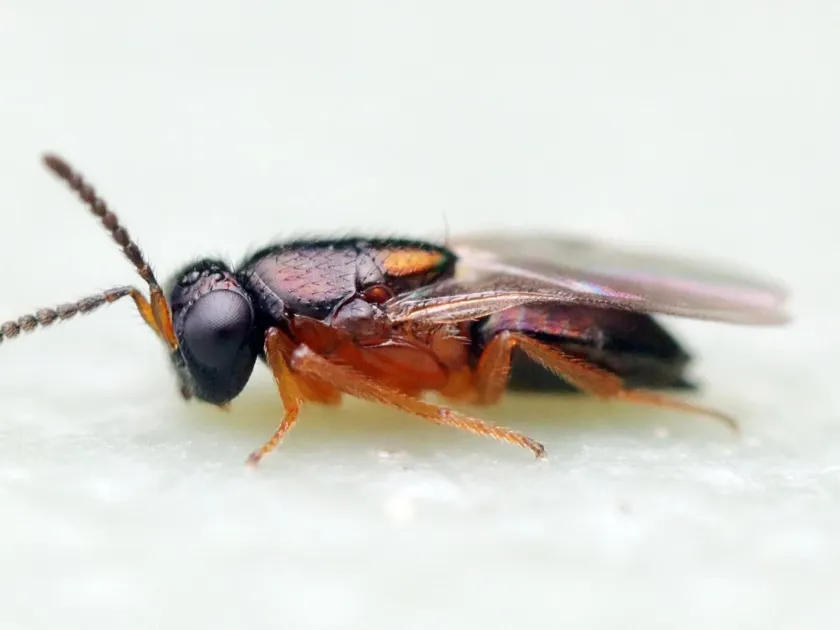
Tachinaephagus zealandicus is a minute wasp belonging to the Encyrtidae family, known for its role as a specialized parasitoid of leafmining insects.
These wasps are tiny, often dark-colored with a slight metallic sheen, making them difficult to detect without magnification in agricultural environments.
The identification of this species is essential for agronomists practicing Integrated Pest Management (IPM), as it represents a natural ally in the greenhouse ecosystem.
Their morphological structure, particularly the ovipositor, is highly adapted to locating the larval stages of leafminers hidden within plant leaf tissues.
Distinguishing this parasitoid from harmful pests is a crucial skill, as mistaking them for pests could lead to unnecessary and harmful chemical applications.
What it damages
The insect itself does not cause any direct damage to crops, as it does not feed on plant tissues, stems, or fruits throughout its lifecycle.
It acts as a biological control agent that suppresses populations of leafminers (such as Liriomyza spp.), which are significant pests of various horticultural crops.
By parasitizing the larvae of the leafminer, Tachinaephagus zealandicus effectively interrupts the pest's reproductive cycle, leading to the death of the host larva.
The presence of this parasitoid helps in maintaining the integrity of the leaf area, ensuring that plants can perform photosynthesis without interference from leafminer damage.
Therefore, its role is strictly beneficial, contributing to higher yield and quality of produce by limiting the physiological stress caused by leaf-tunneling pests.
When it appears
The population dynamics of Tachinaephagus zealandicus are closely tied to the density of the host species and ambient environmental conditions.
Under controlled greenhouse conditions, the wasp can maintain multiple generations throughout the year, provided temperatures remain within an optimal range.
Activity levels are typically highest during the peak infestation periods of leafminers, as the parasitoid requires an adequate supply of hosts to reproduce.
Developmental time for a single generation typically ranges from two to four weeks, allowing for rapid colonization of an affected area.
Seasonal patterns outside of greenhouse environments are strongly influenced by regional climate, with peak parasitism occurring during warmer months.
Control measures
Effective management in greenhouses involves protecting the populations of Tachinaephagus zealandicus from exposure to toxic synthetic pesticides.
Agronomists are encouraged to use IPM strategies, prioritizing biological control and avoiding broad-spectrum insecticides that could wipe out beneficial wasp populations.
If chemical interventions are absolutely necessary, targeted and low-toxicity products should be chosen to minimize adverse impacts on the parasitoid.
Ongoing monitoring of both the pest and the parasitoid population is necessary to determine if natural control is sufficient or if additional introductions are required.
- Maintain greenhouse temperatures between 20°C and 28°C.
- Avoid broad-spectrum chemical insecticides.
- Regularly monitor leafminer damage levels.
- Integrate with other biological control agents where necessary.
Taxonomy
- Latin name
- Tachinaephagus zealandicus
- Order
- Hymenoptera
- Family
- Encyrtidae
- EPPO code
- TACIZE
Discussion
No discussions yet — be the first.