
Poultry feather mite
Syringophilus bipectinatus
Description
How to identify
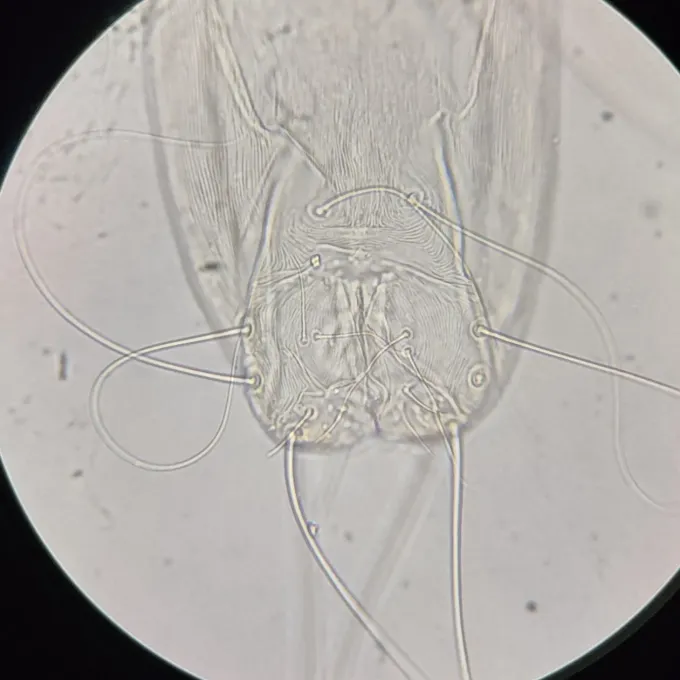
The poultry feather mite (Syringophilus bipectinatus) is a microscopic parasite belonging to the family Syringophilidae. It is an endoparasite that lives exclusively inside the quill (shaft) of the bird's feathers.
These mites have an elongated, worm-like body, which is a structural adaptation for moving through the narrow lumen of the feather shaft. Being very small, ranging from 0.5 to 1 mm, they are nearly invisible to the naked eye.
Their life cycle takes place entirely within the quill. They feed on the feather pulp and epithelial cells. This secluded lifestyle makes them difficult to eliminate using standard surface treatments.
The reproduction cycle is completed within the feather, where females lay eggs. Development from egg to adult takes approximately two to three weeks, depending on the environmental conditions of the poultry house.
Transmission occurs through direct bird-to-bird contact. Mites can also be spread by contaminated equipment, nesting materials, or personnel moving between different pens.
What it damages
While primarily affecting chickens, this mite can infest various avian species. The infestation disrupts the normal development and maintenance of plumage, causing significant health problems for the birds.
The mites feed on the inner contents of the quill, which leads to the structural destruction of the feather shaft. Affected feathers become brittle, deformed, and eventually break off or fall out prematurely.
Although they are not blood-feeders in the traditional sense, the constant irritation and damage to the tissues within the quill cause intense itching and discomfort for the bird.
The economic impact is significant: infested flocks suffer from decreased egg production, poor weight gain in broilers, and general lethargy due to the stress caused by the parasitic infestation.
Severe infestations often result in visible bald spots, leaving the bird's skin exposed to cold temperatures and making it susceptible to secondary bacterial infections or cannibalism by other flock members.
Signs of infestation
The first signs of infestation are related to the state of the plumage. The feathers lose their luster, appear frayed or broken, and show signs of poor grooming as the bird struggles to manage the discomfort.
Upon closer inspection, particularly of plucked feathers, one might see a powdery white residue inside the broken quill, which consists of mites, eggs, and organic debris.
Birds infested with these mites are visibly restless. They spend excessive time preening, pecking at their wings, and showing signs of constant irritation or itching.
In addition to behavior, patchy feather loss is a hallmark symptom. These bald areas are most commonly found on the back, wings, and tail, where the density of large feathers is highest.
Definitive diagnosis requires the professional examination of feather shafts under a microscope to confirm the presence of Syringophilus bipectinatus life stages.
Control measures
Controlling the poultry feather mite requires a multi-pronged approach involving individual bird treatment and rigorous environmental sanitation of the housing facility.
Systemic acaricidal treatments are generally the most effective. These agents are often administered orally or topically to ensure the active ingredients reach the mite's habitat inside the feather shaft.
Prevention is vital. Implementing strict biosecurity protocols, such as quarantining new birds before introducing them to the main flock, helps prevent the introduction of the parasite.
Maintaining a clean, dry environment in the coop is crucial. Regularly cleaning nesting boxes and replacing bedding reduces the chances of mites surviving outside the host.
- Regular monitoring of the flock's plumage condition.
- Administration of systemic acaricides as prescribed by a veterinarian.
- Quarantine procedures for all new flock additions.
- Deep cleaning and disinfection of poultry housing between production cycles.
Taxonomy
- Latin name
- Syringophilus bipectinatus
- Order
- Mites
- Family
- Syringophilidae
- EPPO code
- SYGPBI
Discussion
No discussions yet — be the first.