
Sycon
Sycon
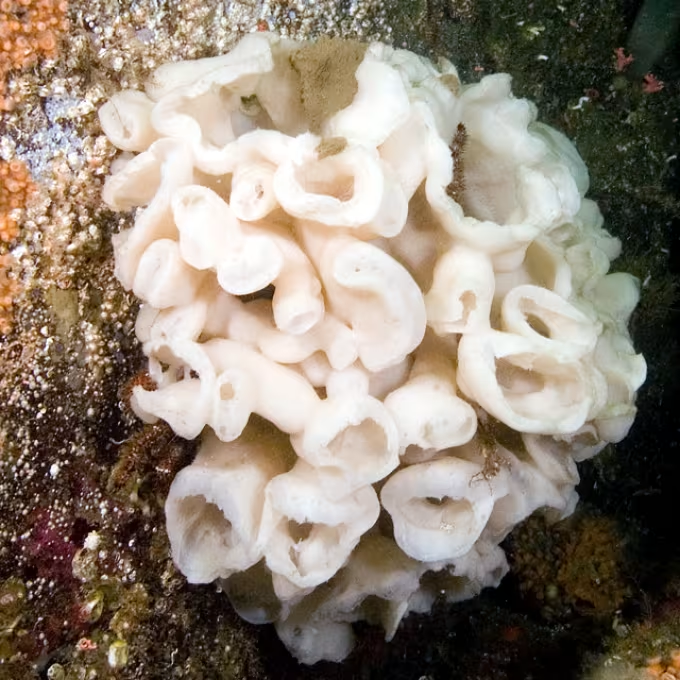
Description
How to identify
Sycon is a specialized genus of insects belonging to the family Cecidomyiidae (gall midges) within the order Diptera. Adult individuals are minute midges characterized by a fragile physique, long legs, and distinct wing venation.
Larvae of Sycon are legless and typically have a spindle-shaped or cylindrical body, often pale, yellowish, or orange in color. Their mouthparts are highly reduced, which is common among gall midges that live hidden inside plant tissues.
Identification of this pest is often challenging due to their microscopic size and cryptic lifestyle. Morphological analysis of adults performed by an entomologist using high-precision optical equipment remains the primary method for species-level identification.
The biology of the species is closely linked to its development within specific plant structures known as galls. Galls formed by Sycon serve as a protective capsule for the larvae and act as a nutritional source throughout their development cycle.
The life cycle of the insect includes complete metamorphosis: egg, larva, pupa, and adult. Depending on environmental conditions, the pest can produce several generations during a single growing season, which complicates management efforts.
What it damages
Sycon primarily attacks various types of herbaceous plants, including certain forage and wild-growing crops. The main damage occurs to the generative organs of plants, where infestation hotspots are established.
By feeding on plant sap within the galls, larvae induce pathological tissue growth. This leads to the deformation of buds, flower buds, or shoots, significantly reducing the overall productivity of the crop.
As a result of the pest's activity, the plant's natural development is disrupted, the growth of affected organs is stunted, and premature wilting or necrosis occurs, which critically affects the quality of marketable produce.
Mass outbreaks of Sycon can lead to the loss of a significant portion of the harvest in a given agroecosystem. The pest poses a specific threat to seed production fields, where flower damage prevents proper fruit or seed set.
Infested plant tissues become susceptible to secondary infections, such as fungal or bacterial pathogens, which penetrate through micro-cracks in the galls, further compromising the plant's natural immunity.
When it appears
The appearance of the pest corresponds to the active plant growth phase in spring and early summer. During this time, adult emergence occurs, and they begin searching for suitable plant organs for oviposition.
The period of peak harmfulness coincides with the budding and flowering phases of most host plants. During this stage, larvae consume nutrients most actively, developing rapidly within the formed galls.
Temperature plays a decisive role in population development. Favorable conditions include stable warmth and sufficient humidity, which accelerate metamorphosis and increase the number of pest generations per year.
The second half of summer is often characterized by larvae entering diapause or pupation. During this period, visual signs of infestation become most apparent due to the formation of mature, dry galls on plant parts.
Pest population monitoring is recommended before the flowering phase to timely assess the threat and prevent widespread infestation, which typically occurs when population levels exceed economic thresholds.
Signs of infestation
The primary sign of infestation is the formation of characteristic outgrowths on stems, buds, or flowers, known as galls. These may have a specific shape, size, and color depending on the host plant and the specific Sycon species.
When inspecting fields, agronomists may notice deformed plant parts that appear unnaturally swollen. Stunted growth of individual branches or underdeveloped inflorescences compared to healthy plants is also a frequent observation.
Early-stage detection is difficult because galls may be hidden inside leaf axils. However, cutting into a suspicious plant part often reveals small larvae, confirming the presence of an active infestation site.
An indirect sign is the change in tissue pigmentation in the affected areas, with yellowing or reddening of the zone surrounding the gall often observed. This is a plant response to the enzymes and metabolic products released by the larvae.
In cases of severe infestation, bud drop or flower sterility is noted, which serves as a critical signal of lost generative potential and the urgent need for a comprehensive phytosanitary survey.
Control measures
The protection strategy against Sycon should be based on a complex of agrotechnical measures aimed at reducing the pest population in its overwintering sites within the soil or plant debris.
Deep autumn plowing is an effective technique, as it contributes to the mortality of pupae and larvae residing in crop residues. Strict adherence to crop rotation is essential, avoiding the planting of susceptible crops on the same field for at least three years.
Chemical control requires precise timing of application. Systemic insecticides are most effective during the adult flight period, before the larvae penetrate deep into plant tissues where they become inaccessible.
Biological control involves the use of natural enemies and entomophages, which can significantly reduce Sycon population density. Maintaining biodiversity along field edges helps attract beneficial predatory insects.
Regular monitoring of crop health using pheromone or sticky color traps is necessary. Once a threshold number of adults is detected, a decision must be made regarding protective treatments using authorized insecticides for the specific crop.
Taxonomy
- Latin name
- Sycon
- Family
- Sycettidae
- EPPO code
- SYCOSP
Discussion
No discussions yet — be the first.