
Suberites
Suberites
Description
How to identify
The genus Suberites belongs to the phylum Porifera, class Demospongiae, and family Suberitidae. These are marine organisms commonly known as sponges, which inhabit deep-sea environments.
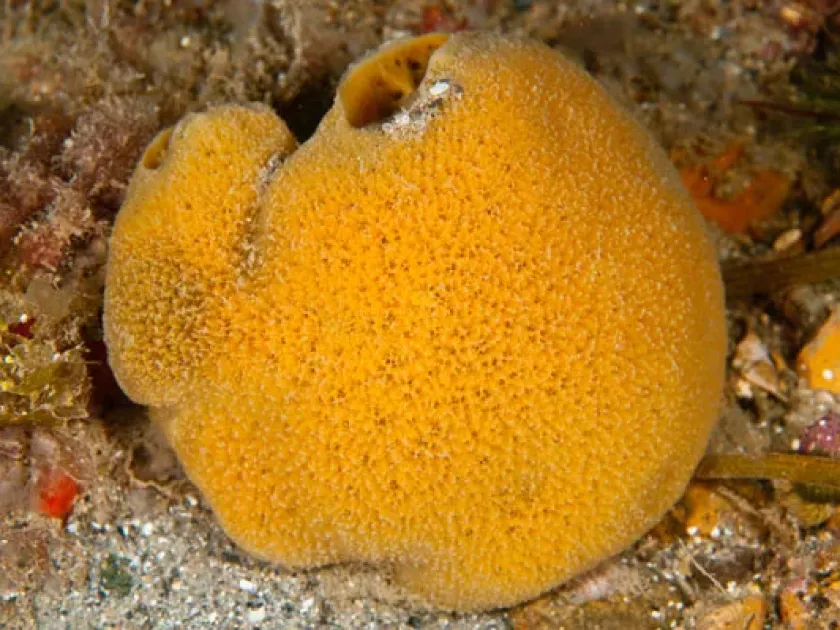
They are characterized by a firm, cork-like consistency and a variety of shapes ranging from crust-like to lobate forms. They are sessile organisms, meaning they remain fixed to one spot on the seabed.
These sponges are filter feeders, pumping water through their canal systems to capture microscopic nutrients. They possess a simple biological structure devoid of organs, limbs, or sensory systems found in terrestrial pests.
Taxonomically, they are far removed from any insects, nematodes, or fungi that typically pose a threat to plant growth. Their entire life cycle depends on salt water and specific marine conditions.
It is crucial to distinguish these organisms from soil-dwelling pests or plant pathogens to avoid confusion in agricultural diagnostics.
What it damages
The Suberites genus is not an agricultural pest. They have no ability to survive, feed, or reproduce on land or in soil environments suitable for crop cultivation.
They cannot damage plant tissues because they lack the necessary anatomy for chewing, piercing, or absorbing plant nutrients. They are strictly confined to aquatic habitats.
There is no evidence or biological potential for sponges to act as parasites on crops. They do not interact with garden plants, orchards, or field crops in any capacity.
Agricultural operations remain unaffected by these sponges. They do not consume leaves, roots, or seeds, nor do they carry viruses or bacteria that might harm crops.
In fact, their presence in marine research is significant for pharmaceutical studies, but they represent zero impact on the global agricultural supply chain.
Control measures
No control measures are necessary for Suberites as they do not constitute a threat to agriculture. They should not be targeted by any pesticides, herbicides, or biological controls.
Efforts should be directed toward identifying and controlling real terrestrial pests such as aphids, spider mites, or soil-borne pathogens that actually compromise plant vitality.
If you encounter information labeling Suberites as a threat to plants, verify the context, as it is likely a misidentification or an error in scientific communication.
Maintain healthy field conditions through standard agronomic practices such as crop rotation, soil aeration, and balanced fertilization to prevent common pest outbreaks.
The agronom.info portal confirms that this organism is not an agricultural hazard and requires no monitoring or intervention in any farming environment.
Taxonomy
- Latin name
- Suberites
- Family
- Suberitidae
- EPPO code
- SUBESP
Discussion
No discussions yet — be the first.