
Strongyloides stercoralis
Strongyloides stercoralis
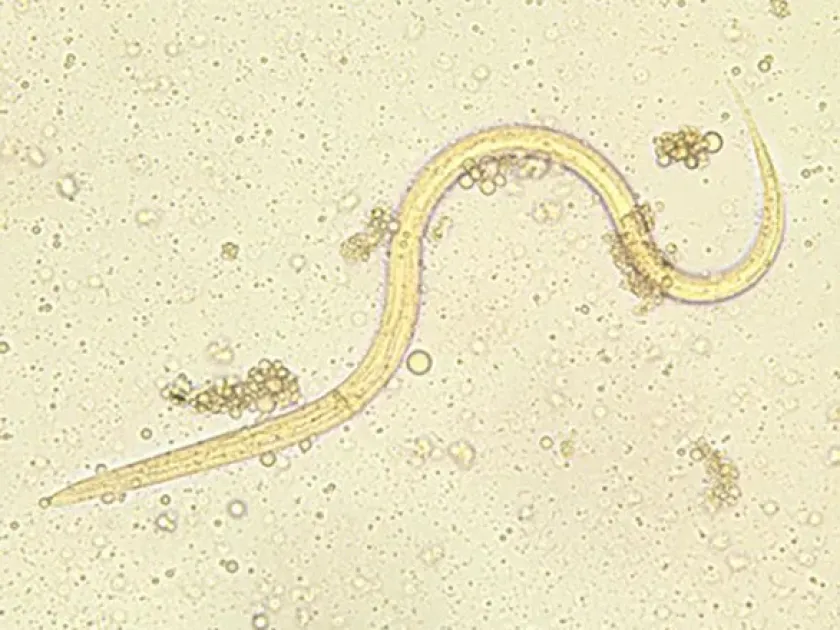
Description
How to identify
Strongyloides stercoralis, commonly known as the intestinal threadworm, belongs to the phylum Nematoda, order Rhabditida, and family Strongyloididae. It is a complex parasite capable of alternating between free-living and parasitic life cycles.
The adult parasitic female is a minute, thread-like worm measuring approximately 2 mm in length. Its morphology includes a rhabditoid esophagus, which is a key diagnostic feature for identification under a microscope.
In the environment, the larvae can survive in moist soil and decaying organic matter. They possess a high degree of adaptability, allowing them to switch modes of reproduction based on environmental stressors.
Laboratory identification requires stool or soil examination using techniques like the Baermann method, which relies on the active migration of larvae from the substrate into a liquid medium.
The biological complexity of this species makes it a persistent challenge, as it can adapt its reproductive strategy to ensure survival across various soil conditions and temperatures.
What it damages
While primarily a medical concern, Strongyloides stercoralis poses risks in agriculture through the contamination of soil with organic waste or fecal matter. Improperly managed fertilizers are the primary vectors for introducing these nematodes into greenhouse systems.
The damage to crops is largely indirect, as the presence of high nematode concentrations in the rhizosphere can inhibit root development and create entry points for secondary pathogens like fungi and bacteria.
Affected plants often show symptoms of nutrient deficiency and stunted growth, as the nematode infestation disrupts the efficient uptake of water and essential minerals from the soil.
In intensive greenhouse environments, these parasites can persist in the soil for long periods, leading to gradual depletion of soil health and reduced agricultural productivity over time.
The cumulative effect of soil infestation manifests as decreased crop quality and lower yield, requiring significant remediation efforts to restore the health of the cultivation medium.
When it appears
This nematode thrives in warm, humid conditions, with an optimal temperature range of +20 to +30 degrees Celsius. High moisture content in the soil is crucial for the survival and movement of the larvae.
In controlled greenhouse environments, the lifecycle can proceed year-round without a period of dormancy, provided that moisture and warmth are consistently maintained in the substrate.
During colder months, populations may decline significantly unless protected in deep soil layers or in organic-rich piles where heat is generated through decomposition.
Peak activity is typically observed during spring and summer months when irrigation is frequent and environmental temperatures align with the organism’s biological requirements.
Sudden spikes in population density often follow periods of excessive watering or mismanagement of contaminated water sources, which facilitate the dispersal of larvae within the growing area.
Signs of infestation
Visual identification of Strongyloides stercoralis on plants is difficult as there are no distinct markers. Instead, the presence of the parasite is usually inferred from the poor health of the crop.
Key indicators include general chlorosis, reduced foliage size, and wilting, which are common signs of root system stress caused by invasive soil microorganisms.
In severe cases, root necrosis or signs of decay may be present, indicating that the nematode's presence has facilitated infection by other opportunistic soil-borne pathogens.
Because these signs mimic other common root diseases, laboratory testing is the only definitive method to confirm the presence of this nematode in a specific field or greenhouse plot.
Consistent monitoring of soil health and plant vigor is essential to detect infestation early, especially in systems that utilize manure-based or compost-based fertilization methods.
Control measures
The primary control measure is the thermal treatment of soil or growing media. Steam sterilization effectively eliminates all life stages of the nematode, preventing further infestation.
The use of uncomposted or raw manure must be strictly avoided. Only fully composted organic materials, processed at high temperatures, should be used in agricultural operations.
Biocontrol agents, such as nematode-trapping fungi, offer a sustainable method to suppress nematode populations in the soil without relying on synthetic chemicals.
Strict sanitation protocols, including the disinfection of tools, equipment, and irrigation systems, are vital to preventing the spread of the parasite between different cultivation zones.
- Thermal sterilization of soil substrates.
- Application of nematode-trapping fungi.
- Rigorous hygiene for farm personnel.
- Use of fully processed compost only.
- Regular soil analysis and diagnostics.
Taxonomy
- Latin name
- Strongyloides stercoralis
- Order
- Nematodes
- Family
- Strongyloididae
- EPPO code
- STGYST
Discussion
No discussions yet — be the first.