
Western bean cutworm
Striacosta albicosta
Description
How to identify
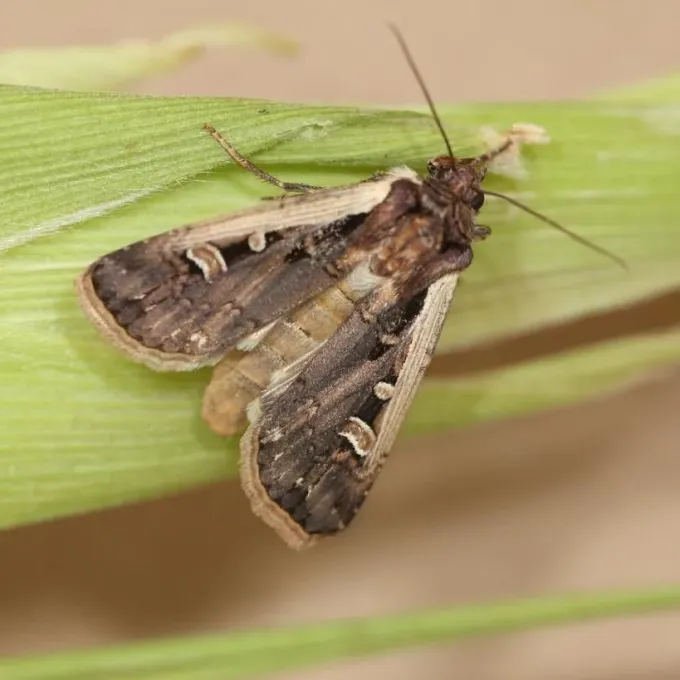
The Western bean cutworm (Striacosta albicosta) is a member of the Noctuidae family. It is a nocturnal moth that can be identified by the distinct white markings on its dark brown forewings.
Adult moths typically have a wingspan of about 35 to 40 mm. They are most active during the summer months, specifically coinciding with the corn silking stage, which makes them a critical threat to grain development.
The larvae progress through six instars. Initially, they are pale, but as they grow, they develop a brownish coloration with distinct longitudinal stripes on their backs, making them easier to distinguish from other cutworm species.
The pupal stage occurs in the soil, where the insects construct small earthen cells. These cells protect the pupae from environmental extremes and enable them to overwinter successfully beneath the frost line.
Understanding the life cycle is crucial for effective management. Since there is typically one generation per year, the timing of moth emergence dictates the strategy for monitoring and intervention.
What it damages
The Western bean cutworm primarily targets corn, though it is also known to infest dry beans. The damage is exclusively caused by the larvae, which feed on the reproductive parts of the plants.
Larvae often migrate from the leaves to the silks and subsequently tunnel into the ears of corn. Once inside, they consume the developing kernels, causing significant yield losses and reducing grain quality.
Feeding damage creates entry points for fungal pathogens. Infection by fungi such as Fusarium is common in ears infested with cutworms, which further complicates the economic impact on the crop.
While a few larvae might cause minor localized damage, high population densities can destroy a large percentage of kernels in a single ear, leading to substantial yield reductions across the field.
In dry beans, the larvae can damage the pods directly, affecting both the yield and the market value of the harvested crop, particularly if they penetrate the developing beans within the pods.
Signs of infestation
Egg masses are the first indicator of an impending infestation. These are typically laid on the upper surfaces of corn leaves, appearing as dome-shaped clusters that change color before hatching.
Entrance holes in the husks of the ears are a telltale sign of larval presence. These holes are often surrounded by granular frass (excrement), indicating that the larvae are active inside the ear.
Kernel damage is characterized by uneven feeding patterns. When husks are peeled back, the ears may show missing kernels, deformed grain development, or signs of mold growth resulting from the larval feeding.
Premature wilting of the ear tip or silk, or the presence of mold under the husk, can signal that larvae have been feeding within the ear for an extended period, requiring immediate assessment.
Moth activity can be monitored using light traps or pheromone lures placed in the field. High trap counts serve as an early warning system to signal the need for scouting and potential control measures.
Control measures
Integrated Pest Management (IPM) is essential for controlling this pest. Regular scouting during the peak egg-laying period allows for timely interventions before larvae penetrate the corn husks.
Chemical control is most effective when applied against early-stage larvae before they enter the ear. Once the larvae are inside, they become protected from contact insecticides, rendering treatments less effective.
Cultural practices, such as tillage, can disrupt the pupal stages in the soil. By destroying the overwintering chambers, farmers can reduce the emergence of the next generation of moths in the following season.
The use of transgenic corn hybrids that express specific insecticidal proteins has become a standard and highly effective method for managing Western bean cutworm populations in commercial agriculture.
- Scout fields weekly during the moth flight period.
- Utilize pheromone traps to track moth activity.
- Apply contact insecticides during the larval hatching phase.
- Select resistant crop varieties to minimize vulnerability.
Taxonomy
- Latin name
- Striacosta albicosta
- Order
- Lepidoptera (butterflies)
- Family
- Noctuidae
- EPPO code
- LOXAAL
Discussion
No discussions yet — be the first.