
Steganacarus magnus
Steganacarus magnus
Description
How to identify
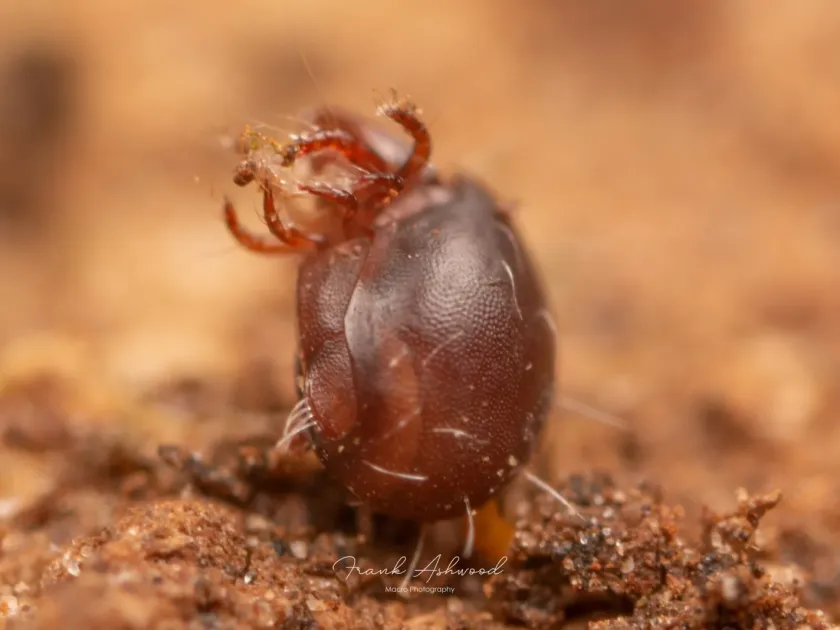
Steganacarus magnus is a species of oribatid mite belonging to the Phthiracaridae family. These mites are characterized by their ability to retract their legs and head into a spherical shell, a protective strategy against predators and environmental stress.
Adults exhibit a dark, sclerotized cuticle, which provides significant protection. They typically measure between 1 mm and 1.5 mm, making them relatively large compared to other soil microarthropods.
The life stages include larvae, nymphs, and adults, all of which prefer high-humidity environments found in leaf litter, organic debris, and upper soil horizons.
These mites are mostly cryptic and are often found in shaded, moist areas where organic decomposition is active. They are rarely visible on the surface of foliage.
Detection usually requires professional soil sampling methods, such as the use of Berlese funnels to extract the mites from soil or organic matter samples.
What it damages
While Steganacarus magnus primarily feeds on decaying plant material, it can occasionally damage the root systems of sensitive seedlings under greenhouse conditions.
The mites cause mechanical damage to root hairs, which impairs the plant's ability to uptake water and nutrients, leading to stunted growth and yellowing leaves.
The presence of high mite populations often correlates with poor soil aeration and excessive humidity, which also invites fungal pathogens to attack the weakened plant roots.
Furthermore, these mites can act as vectors for fungal spores, facilitating the spread of root rot diseases within nursery trays or pots.
In ornamental plant production, the economic damage is observed through lost vitality and the reduced aesthetic value of the affected crops.
When it appears
The activity of Steganacarus magnus is highly seasonal in nature, peaking during spring and autumn when soil moisture levels are consistently high.
In climate-controlled environments like greenhouses, their life cycle is continuous, meaning they can pose a threat at any time if environmental conditions are favorable.
Extreme summer heat or winter cold forces these mites to retreat deeper into the soil profile, where they remain in a dormant state until moisture levels recover.
Populations are generally stable but can grow rapidly when organic substrate material is poorly sterilized before use in horticulture.
The dispersal of the species across a site is generally slow, but it can be accelerated by human activities such as the movement of equipment or contaminated pots.
Control measures
Effective management begins with strict sanitation practices, including the sterilization of growing media and the removal of decaying organic material from production areas.
Regulating irrigation is crucial; avoiding stagnant water and overly wet substrates helps maintain unfavorable conditions for mite proliferation.
Chemical control involving acaricides should be targeted towards soil and media treatments, ensuring that products are safe for the specific plants being grown.
Biological control, such as the use of predatory mites or insect-pathogenic fungi, can be an effective sustainable option to keep populations below the damage threshold.
- Regular sterilization of substrate batches.
- Monitoring soil moisture levels in greenhouses.
- Proper disposal of crop residues to avoid nesting sites.
Taxonomy
- Latin name
- Steganacarus magnus
- Order
- Mites
- Family
- Phthiracaridae
- EPPO code
- STGAMA
Discussion
No discussions yet — be the first.