
Oilbird
Steatornis caripensis
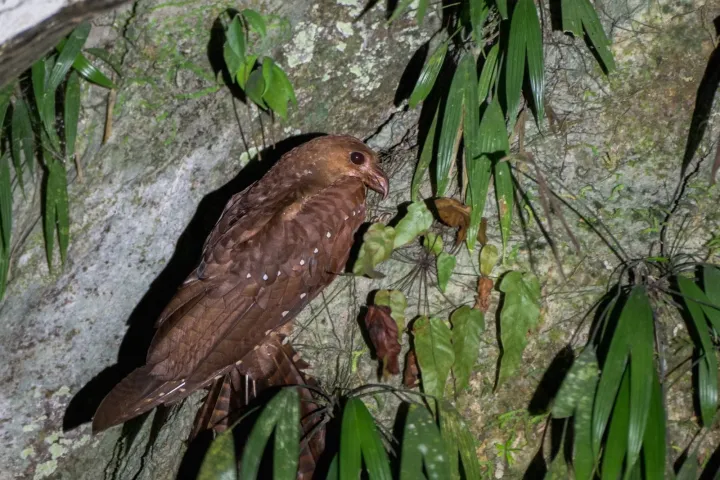
Description
How to identify
The Oilbird (Steatornis caripensis) is the sole member of the family Steatornithidae, belonging to the order Caprimulgiformes. It is a unique nocturnal bird primarily found in the tropical regions of South America, residing in deep caves.
The bird is distinguished by its hooked beak, which is adapted for plucking fruits. Its plumage is reddish-brown with white spots, providing excellent camouflage within the dark rocky environments where they form large colonies.
Oilbirds are notable for being one of the few birds that utilize echolocation for navigation. This adaptation allows them to travel through caves in total darkness, an essential trait for their survival in cavernous habitats.
Their life cycle revolves around the availability of their primary food sources—the fruits of specific palm trees and laurel species found in the surrounding tropical forests.
From an agronomic perspective, the species is considered a forest inhabitant rather than a pest. They play a critical role in the environment as primary seed dispersers for numerous tree species.
What it damages
The Oilbird does not pose a threat to commercial agricultural crops. There are no recorded instances of these birds causing damage to grain, vegetable, or fruit plantations managed for human consumption.
The diet of the Oilbird is strictly specialized, consisting of high-lipid fruits from wild palms and trees. They are not opportunistic foragers and show no interest in standard agricultural commodities.
While their habitats may overlap with agricultural fringes, their foraging behavior is concentrated within mature, undisturbed tropical forests. They serve an ecological role by spreading seeds, which benefits the ecosystem.
Because they do not interfere with food production, there is no economic damage associated with their presence. They do not compete with human harvests or damage irrigation systems or farm infrastructure.
Consequently, no pest control measures are required. Efforts in regions where they occur should focus on habitat conservation rather than mitigation of agricultural impact.
Taxonomy
- Latin name
- Steatornis caripensis
- Family
- Steatornithidae
- EPPO code
- STTOCA
Discussion
No discussions yet — be the first.