
Toilet sponge
Spongia officinalis
Description
How to identify
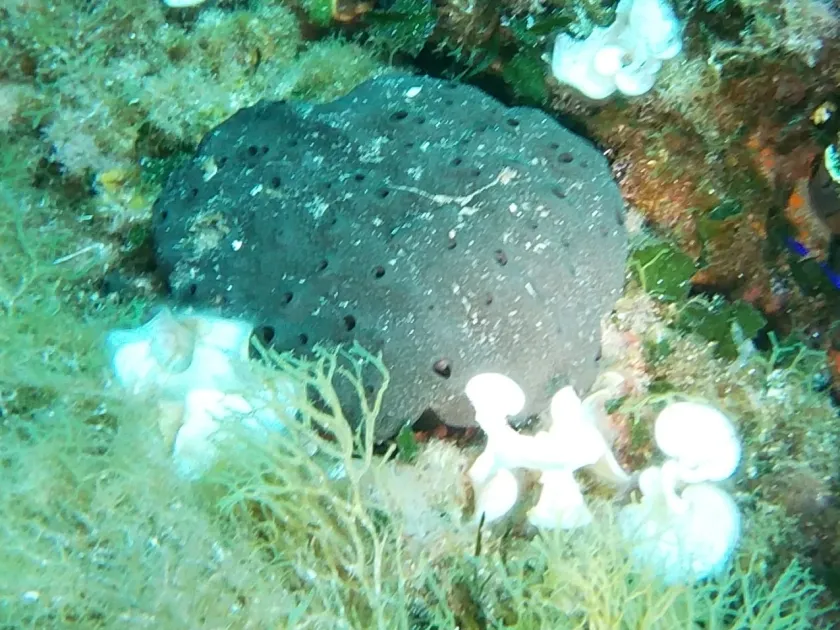
The toilet sponge, scientifically known as Spongia officinalis, is a marine organism belonging to the phylum Porifera. It is a sessile invertebrate that lives on the seabed and has no relation to agricultural pest species.
The organism is composed of a fibrous skeleton made of spongin, which allows it to filter water in marine environments. It lacks any of the appendages, mouthparts, or digestive systems that characterize plant-eating pests.
Categorizing this organism as a plant pest is scientifically incorrect and biologically impossible. It requires a constant saline marine environment to survive and function as a filter feeder.
The anatomy and physiology of a marine sponge are completely incompatible with the terrestrial environment where agricultural crops grow. It possesses no traits associated with phytophagy.
Any mention of this species as a threat to plants is a result of a classification error or a misunderstanding of agricultural terminology, as it belongs strictly to marine zoology.
What it damages
Spongia officinalis does not cause any damage to crops, vegetables, fruits, or ornamental plants. It lacks the biological capability to infest or feed upon the tissues of land-based flora.
There are no recorded instances of this marine organism impacting agricultural yield, as it is physiologically incapable of surviving outside of ocean waters.
The organism does not produce any toxins that could harm plants, nor does it have the ability to penetrate plant cell walls or consume plant matter for nutrients.
Damage to plants is typically caused by insects, mites, nematodes, or fungi, none of which share the biological characteristics of a marine sponge.
Agricultural researchers focus their efforts on true pests, as the toilet sponge presents zero risk to global or local agricultural production systems.
Control measures
No protection measures are required against the toilet sponge, as it poses absolutely no threat to agricultural or horticultural systems. Control efforts are entirely unnecessary.
Farmers and agronomists should focus on identifying real biological threats to their crops through systematic monitoring and professional diagnostic services.
Ignoring false information about marine organisms acting as pests is essential for effective farm management. Focus on scientifically validated integrated pest management strategies.
Protecting your crops involves managing weeds, insects, and soil pathogens; therefore, resources should be allocated to combatting actual verified threats to agricultural productivity.
Stay informed through verified agricultural portals to avoid the misinformation that often arises from misinterpreting biological terms in literature.
Taxonomy
- Latin name
- Spongia officinalis
- Family
- Spongiidae
- EPPO code
- SONGOF
Discussion
No discussions yet — be the first.