
African grass moth
Spodoptera triturata
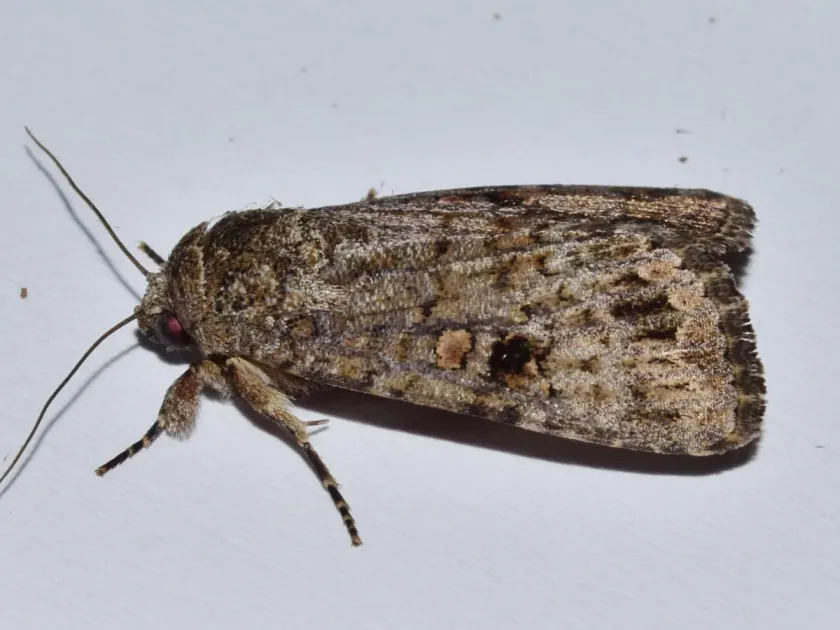
Description
How to identify
The African grass moth (Spodoptera triturata) belongs to the order Lepidoptera and the family Noctuidae. It is a significant pest known for its destructive potential in various agricultural systems across African regions, sharing characteristics with other armyworm species.
Adult moths are medium-sized, with a wingspan of approximately 30–35 mm. Their forewings feature complex greyish-brown patterns, providing excellent camouflage against soil and plant surfaces, which makes them difficult to spot during the day.
The larval stage passes through several instars, with caterpillars changing their coloration from light green to darker brown as they mature. Distinctive longitudinal stripes along the body and a dark head capsule are key morphological features for identification.
The life cycle encompasses the egg, larva, pupa, and adult stages. Under optimal tropical conditions, a full generation can be completed within a month, allowing for rapid population explosions when environmental conditions are favourable for the species.
Females deposit eggs in clusters on the undersides of leaves, covering them with specialized scales from their abdomen. This protective layer ensures high survival rates for the eggs against desiccation and natural environmental stressors.
What it damages
The larvae cause the primary damage by feeding voraciously on the foliage of host plants. Their preferred hosts include cereal crops such as wheat, maize, sorghum, and various grass species, making them a threat to staple food production.
Early-stage larvae typically skeletonize leaves, consuming soft tissues while leaving the veins intact. As they progress to later instars, they consume the entire leaf blade, often leading to rapid defoliation of the crop canopy in infested fields.
Massive infestations can result in complete crop failure within a short period. Feeding damage on the apical meristems or growth points of young plants frequently stunts development, prevents grain formation, or leads to the death of the crop.
Beyond direct biomass loss, feeding wounds provide entry points for secondary plant pathogens, including bacteria and fungi, which can exacerbate the damage and further reduce the overall yield potential of the crop.
Economic damage thresholds are critical in managing this pest. Since the larvae can destroy significant portions of a crop in a matter of days, regular monitoring is essential to detect early infestations before they reach uncontrollable levels.
When it appears
The seasonal occurrence and activity of the African grass moth are heavily influenced by temperature and moisture levels. Peak population outbreaks often correlate with wet seasons or periods of high humidity following rainfall or irrigation.
Adults are nocturnal, spending the daylight hours concealed within vegetation or beneath debris. Pheromone and light traps are the most reliable methods for tracking the arrival and flight activity of moths in agricultural fields throughout the growing season.
This species is highly migratory, allowing it to colonize new areas rapidly. In stable, warm climates, the moth does not enter true diapause, enabling continuous breeding cycles throughout the year if host plants remain available.
Crop monitoring should be constant, from germination until the grain maturation phase. While dry periods may temporarily suppress populations, a return to moist conditions often triggers an immediate and intense surge in larval numbers.
Alternative wild grass hosts serve as crucial reservoirs for the moth during the off-season. These wild areas sustain the population until agricultural crops become available, making field borders and fallow lands important areas for monitoring.
Signs of infestation
Early signs of infestation include the appearance of small "windows" or skeletonized patches on leaves. As the larvae grow larger, the damage becomes more pronounced, with irregular, ragged edges appearing along the leaf margins.
The presence of larval frass, appearing as small dark pellets on leaves or the soil surface, is a definitive indicator of an active infestation. These deposits often accumulate in leaf axils, marking the recent feeding sites of the larvae.
During early morning or evening inspections, larvae can be observed in the lower canopy or near the base of the plant. Young larvae often feed in groups, while older instars disperse to different parts of the plant to feed independently.
Wilting of individual leaves or distorted growth can indicate that larvae have bored into the stem or damaged the plant crown. Such injury restricts nutrient flow, leading to chlorosis and potential collapse of the affected stalks.
Feeding damage on reproductive structures, such as maize tassels or wheat heads, is a critical sign that requires immediate action. Such damage directly impacts pollination and grain fill, leading to significant reductions in harvest quality and quantity.
Control measures
Cultural control strategies include implementing crop rotation to break the pest's life cycle and rigorous weed management to remove alternative hosts that harbor the larvae between planting seasons.
Deep plowing after the harvest is highly effective at disturbing the pupae hidden in the soil, exposing them to desiccation and natural predators. Proper sanitation of field remnants reduces the available cover for the pest.
Biological control options involve the use of natural enemies, such as egg parasitoids, and the application of microbial insecticides containing Bacillus thuringiensis, which provide targeted control of young larvae while preserving beneficial insect populations.
Chemical control should be applied based on scouting data and economic thresholds. Contact and systemic insecticides are most effective when applied in the evening, aligning with the nocturnal feeding behavior of the caterpillars.
- Regular monitoring using pheromone-baited traps for adults.
- Prompt application of registered insecticides upon reaching threshold levels.
- Seed treatment with systemic insecticides for early-stage protection.
- Strategic planting times to avoid peak moth migration periods.
Taxonomy
- Latin name
- Spodoptera triturata
- Order
- Lepidoptera (butterflies)
- Family
- Noctuidae
- EPPO code
- SPODTR
Discussion
No discussions yet — be the first.