
Western yellow-striped armyworm
Spodoptera praefica
Description
How to identify
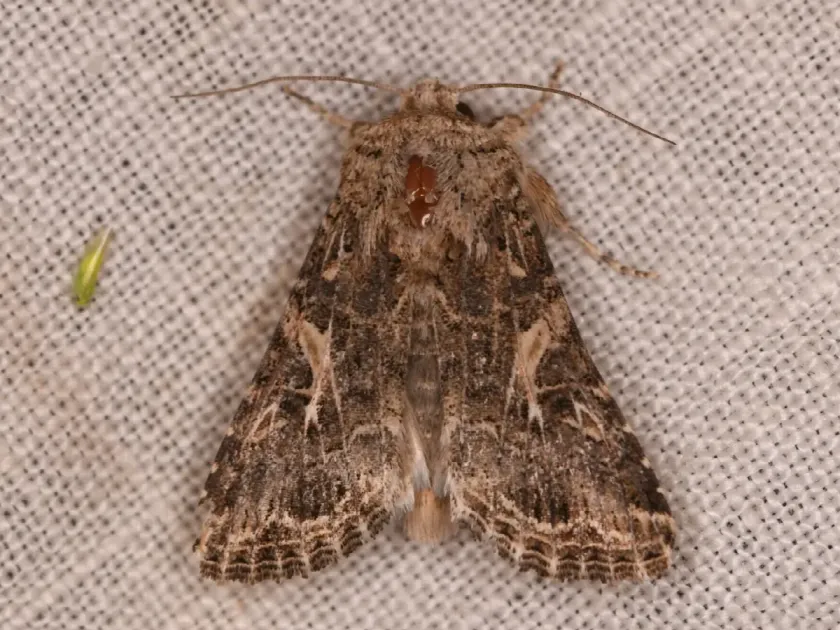
The Western yellow-striped armyworm (Spodoptera praefica) belongs to the family Noctuidae, order Lepidoptera. Adult moths have a wingspan of up to 40 mm, with gray-brown forewings featuring a characteristic mottled pattern and translucent hindwings with dark margins.
Larvae (caterpillars) go through several instars, reaching a length of about 40 mm. Their body color varies from dark brown to nearly black, marked by distinct yellow longitudinal stripes along the sides, which gives the species its common name.
Eggs are deposited by females in clusters covered with hair-like scales from the female's abdomen, protecting them from adverse weather and natural enemies. Pupation occurs in the soil at shallow depths.
The biological cycle of this pest is closely linked to the climatic conditions of Western North American regions, where it is a highly active and invasive species.
This species is characterized by high fecundity and a strong capability for migration over long distances to find new feeding grounds, complicating population monitoring efforts.
What it damages
This pest is a polyphage, causing significant damage to a wide range of agricultural crops. Legumes, including alfalfa and beans, are particularly susceptible to infestations.
Other crops at risk include tomatoes, sugar beets, potatoes, corn, and various types of cabbage. The pest will also feed on various grains and common weed species.
Early-instar larvae feed primarily on the leaf epidermis, creating skeletonized patches that inhibit photosynthesis and eventually cause the affected leaf tissue to wither.
Later-stage caterpillars consume entire leaves, leaving only the major veins, and can also inflict damage on reproductive organs and fruits, significantly impacting yields.
Mass outbreaks in alfalfa fields lead to complete defoliation, which drastically reduces the nutritional value of the hay and impairs the productivity of the crop stand for the following season.
When it appears
Insect activity begins with the arrival of consistently warm spring temperatures. In southern parts of its range, the species can complete multiple generations within a single growing season.
The population peak for larvae usually occurs in mid-summer, coinciding with favorable weather conditions and the active growth stages of most agricultural crops.
Pupation typically takes place within the soil layer, where the pest can survive periods of drought or temporary temperature drops, making it difficult to predict moth emergence.
Adult migratory activity often intensifies during evening and night hours, as these moths are predominantly nocturnal and are strongly attracted to light sources.
The population gradually declines in the autumn, although in mild climates, the cycle may extend to affect late-season vegetable plantings.
Signs of infestation
The first visual sign of infestation is the appearance of light, transparent spots on leaves—these are skeletonization marks left by young larvae, which typically congregate in groups.
The presence of frass (droppings) on the leaf surface or under the plant indicates active feeding by later-stage larvae, which may hide in the soil or at the base of plants during the day.
In alfalfa fields, characteristic signs include patches of bare or severely eaten foliage that expand rapidly as the colony of larvae moves across the field.
When fruits such as tomatoes are damaged, deep and irregular cavities are visible, as the caterpillar often burrows part of its body inside to feed on the pulp.
During the night, adult moths can be spotted in the fields, exhibiting high activity as they fly between plants to locate sites for oviposition.
Control measures
Effective control requires an integrated approach, starting with monitoring moth populations using pheromone traps to determine the optimal timing for interventions.
Cultural control methods include regular weed eradication to remove off-season reservoirs and deep tillage to disrupt pupation sites within the soil.
Biological control options involve the use of entomopathogenic fungi, viruses, or formulations containing Bacillus thuringiensis, which are most effective against early-instar larvae.
Chemical protection should be applied using contact-stomach insecticides when the economic threshold is exceeded, while strictly adhering to pre-harvest intervals.
It is crucial to rotate insecticides from different chemical classes to prevent the development of resistance, as Spodoptera praefica is known for its ability to adapt to toxins quickly.
Taxonomy
- Latin name
- Spodoptera praefica
- Order
- Lepidoptera (butterflies)
- Family
- Noctuidae
- EPPO code
- PRODPR
Discussion
No discussions yet — be the first.