
Peruvian moth
Spodoptera peruviana
Description
How to identify
The Peruvian moth (Spodoptera peruviana) belongs to the Noctuidae family within the Lepidoptera order. This nocturnal pest is primarily active at night, making it difficult to detect during daylight hours.
Adult moths are medium-sized with greyish-brown wings, which provide excellent camouflage against soil surfaces and plant debris. This cryptic coloration makes them nearly invisible to predators and farmers during the day.
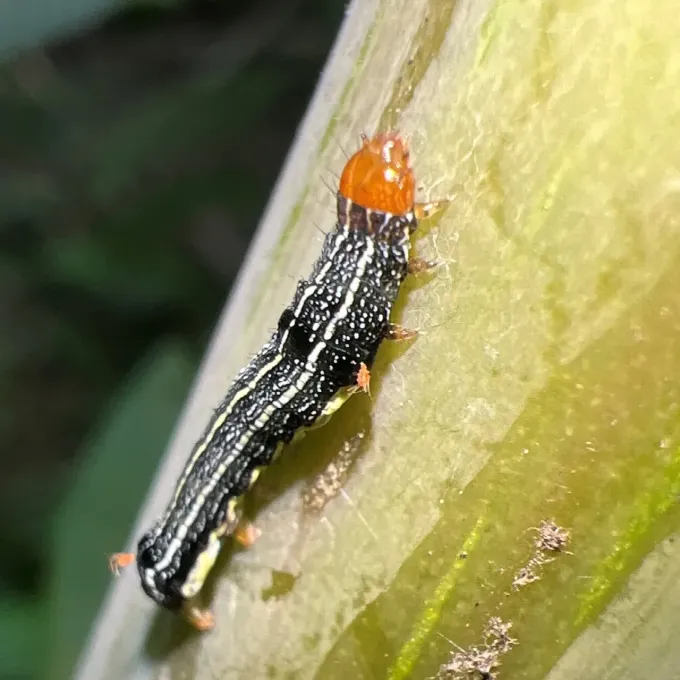
The larvae go through several developmental stages (instars). Their appearance changes as they grow, typically ranging from light green to dark brown or black, often featuring distinct longitudinal stripes.
Pupation occurs mainly in the top layers of the soil. The depth at which the pupae reside depends on soil texture, moisture levels, and the presence of organic cover on the field.
The lifespan and the number of generations per season depend heavily on regional climate and food availability. In suitable conditions, the species can produce multiple generations annually.
What it damages
The larvae (caterpillars) are responsible for the damage, characterized by voracious feeding habits and a wide range of host plants. They can affect various agricultural crops, including cereals, vegetables, and legumes.
Commonly attacked crops include corn, soybeans, and tomatoes. The caterpillars feed on both foliage and reproductive structures, causing severe damage to the plant's growth and development.
At the seedling stage, larvae can completely destroy a crop by severing the stems at the base. This results in significant stand reduction and often necessitates reseeding of the affected areas.
In later stages, the caterpillars cause irregular holes or skeletal damage to the leaves. This destruction significantly reduces the plant's photosynthetic capacity and potential yield.
Furthermore, larvae can burrow into fruit, rendering the harvest unmarketable. The resulting wounds also create pathways for secondary fungal and bacterial infections.
Signs of infestation
The presence of small, pellet-like frass (droppings) on the ground or leaves is one of the first indicators of an infestation. A rapid increase in frass indicates an active and growing caterpillar population.
Characteristic signs include ragged leaf edges or irregular holes in the canopy. Mass infestations can lead to rapid defoliation of the crop if left unmanaged.
Nighttime observation is the most reliable way to spot active larvae. During the day, they typically hide in the soil near the base of the plant or under dense leaf cover.
Wilting and dried-out plants are common signs that the stems have been severed or damaged by feeding. Such plants can usually be pulled from the soil with little resistance.
Monitoring adult moths using pheromone traps is essential for timely detection. Farmers should also check the undersides of leaves for egg masses, which are typically laid in groups covered with scales.
Control measures
Integrated pest management (IPM) is the most effective approach, focusing on early monitoring and intervention. It is critical to target younger larvae, as they are significantly more susceptible to control measures.
Cultural control practices, such as deep plowing, can disrupt the pupation process and expose overwintering pupae to harsh weather or natural predators like birds.
Biological control, such as using Bacillus thuringiensis-based insecticides, offers an environmentally friendly way to suppress caterpillar populations when infestation levels are below the economic threshold.
Chemical control is necessary during high infestations using appropriate insecticides (pyrethroids, organophosphates, or insect growth regulators). Rotation of chemicals with different modes of action is vital to prevent resistance.
Sanitation practices, including the removal of weeds that serve as alternative hosts between seasons, are essential to minimize the risk of Peruvian moth outbreaks.
Taxonomy
- Latin name
- Spodoptera peruviana
- Order
- Lepidoptera (butterflies)
- Family
- Noctuidae
- EPPO code
- PRODPV
Discussion
No discussions yet — be the first.