
Yellow-striped armyworm
Spodoptera ornithogalli
Description
How to identify
The yellow-striped armyworm is a moth species belonging to the family Noctuidae, characterized by its nocturnal behavior and destructive larval stage.
Adult moths typically have a wingspan of about 35-40 mm, with forewings displaying a complex pattern of grey, brown, and black markings for camouflage.
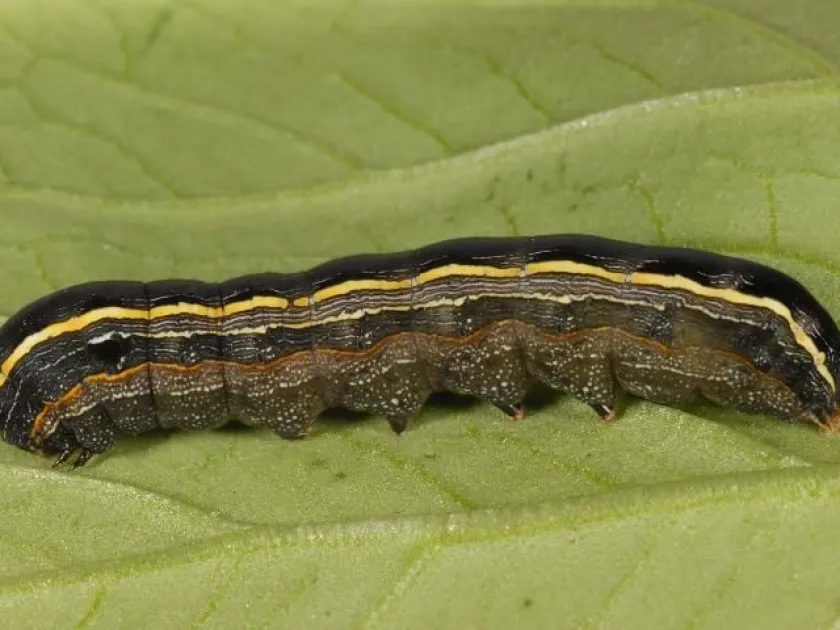
Larvae, commonly known as armyworms, exhibit significant color variation, often showing distinct yellow stripes along the sides of their bodies.
A diagnostic feature for identification is a dark, inverted Y-shaped mark on the head capsule of the larvae, visible under close inspection.
These insects overwinter as pupae buried in the soil, making them a recurring threat in agricultural landscapes with suitable temperature profiles.
What it damages
The species is a generalist feeder that impacts a wide range of crops, including cotton, soybeans, corn, and various vegetable crops like tomatoes.
Young larvae feed gregariously, skeletonizing leaves by consuming the tissue between veins, which causes the foliage to wither and eventually fall off.
As the larvae mature, they become solitary and increase their consumption rate, devouring entire leaves and causing significant defoliation to plants.
Feeding damage often extends to buds, flowers, and developing fruits, which can result in reduced yield and compromised market quality of the harvest.
Heavy infestations can lead to stunted plant growth and in severe cases, the complete destruction of the crop stand if not monitored effectively.
When it appears
The activity of this pest is highly dependent on spring temperatures, which trigger the emergence of moths from overwintering pupae in the soil.
Multiple generations can occur throughout the growing season, particularly in warmer climates, leading to overlapping life cycles and persistent pressure.
Peak larval activity generally occurs during mid-to-late summer, coinciding with the most critical growth stages of many agricultural crops.
Adult moths are strong fliers and can migrate quickly into new fields, necessitating consistent monitoring throughout the entire summer season.
With the onset of autumn, larvae complete their development and pupate in the soil to survive the winter, waiting for favorable conditions to emerge.
Signs of infestation
The earliest signs of infestation are small, irregular holes or "windowpane" marks on leaves where larvae have grazed on the surface tissue.
The presence of large, dark fecal pellets (frass) on the ground under the plant canopy is a strong indicator of established, mature larval populations.
Plants may show symptoms of sudden defoliation, with only the midribs and main veins of leaves remaining after severe feeding activity.
Flowers and immature fruits often drop prematurely due to direct damage from the larvae, which can be mistaken for other environmental stress factors.
- Skeletonized leaf patches.
- Ragged holes in foliage.
- Damaged or hollowed-out fruit.
- Presence of larvae in the plant canopy.
Control measures
Pheromone traps are essential tools for monitoring moth populations, helping to determine the precise timing for intervention before larval hatch.
Tillage practices, such as deep fall plowing, are highly effective as they disturb and destroy pupae, significantly reducing the overwintering survival rate.
Biological control using microbial insecticides based on Bacillus thuringiensis is recommended for managing early-stage larvae without harming beneficial insects.
Chemical control should be implemented only when scouting reports indicate that the population has reached or exceeded the economic threshold.
It is vital to rotate insecticides with different modes of action to mitigate the risk of the armyworm population developing pesticide resistance.
Taxonomy
- Latin name
- Spodoptera ornithogalli
- Order
- Lepidoptera (butterflies)
- Family
- Noctuidae
- EPPO code
- PRODOR
Discussion
No discussions yet — be the first.