
Lawn armyworm
Spodoptera mauritia
Description
How to identify
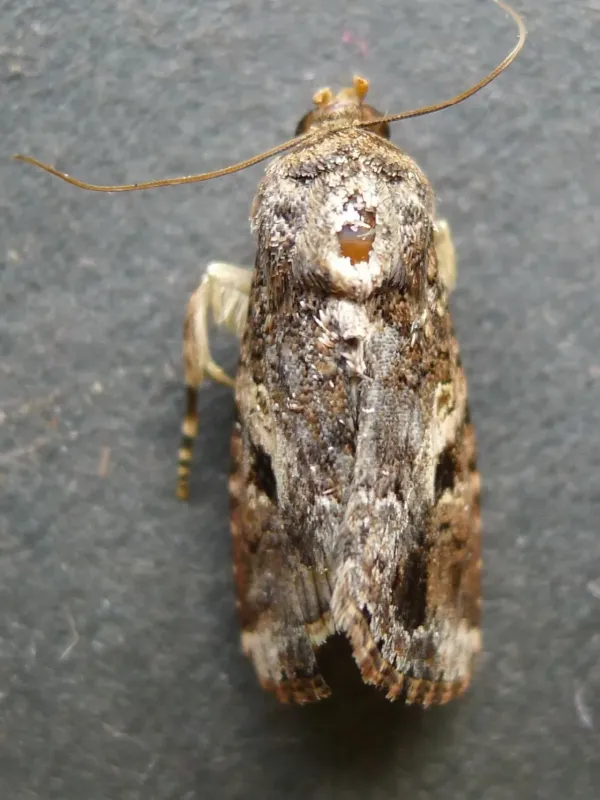
The lawn armyworm (Spodoptera mauritia) is a moth species belonging to the order Lepidoptera and the family Noctuidae. The adult moth has a wingspan of approximately 40 mm and features greyish-brown forewings with distinct markings.
The larvae, or caterpillars, go through several developmental instars. They start as pale green and gradually darken to a brownish-black color with longitudinal stripes along their body, which is a key identification feature for field scouts.
Pupation typically occurs in the soil, where the pupae, which are reddish-brown and smooth, remain until the adult moths emerge. This stage is crucial for understanding the pest's overwintering habits in temperate or tropical regions.
The life cycle of the lawn armyworm is highly dependent on ambient temperature and rainfall patterns. In optimal conditions, the entire life cycle can be completed in just over a month, leading to multiple overlapping generations per year.
Females lay hundreds of eggs in clusters, covering them with specialized scales from their abdomens. This protective covering helps the eggs survive fluctuating environmental conditions until the larvae hatch and begin feeding immediately.
What it damages
The lawn armyworm is a significant pest of grasses (Poaceae). It primarily targets crops such as rice, maize, wheat, millet, and various types of pasture grasses used for livestock fodder.
Young larvae initially skeletonize leaves by feeding on the soft tissue while leaving the veins intact. As they mature, they consume entire leaf blades, leading to rapid defoliation and severe stress on the host plants.
Under outbreak conditions, large groups of larvae move across fields, consuming all available green vegetation. This behavior, characteristic of "armyworms," can decimate entire fields within a very short timeframe if left untreated.
Feeding on the growing points of young cereal plants often results in plant death or stunted development. Furthermore, feeding wounds provide entry points for secondary pathogens, which can exacerbate the overall crop damage.
Damage is usually most severe following heavy rain events that follow a dry period, as these conditions are highly favorable for both egg survival and rapid larval development across the plantation area.
Control measures
Effective management of the lawn armyworm requires an integrated approach that focuses on both cultural practices and targeted chemical interventions to minimize yield loss.
Cultural control measures, such as deep plowing, can help disrupt the life cycle by exposing pupae in the soil to predators and environmental stress. Additionally, keeping fields free from grassy weeds reduces the habitat available for early-stage larvae.
Chemical control should be implemented when scouting indicates that larval populations have exceeded the economic injury level. Effective insecticides include pyrethroids and organophosphates, applied ideally during late evening hours when larvae are most active.
Light traps are essential tools for monitoring adult moth populations, allowing farmers to predict egg-laying events and time their insecticide applications effectively for maximum impact on younger larval stages.
- Utilize biological control agents, including specialized wasps and bacteria.
- Implement crop rotation cycles to break the pest's life cycle.
- Conduct regular field inspections during the critical stages of crop growth.
- Maintain buffer zones around fields to minimize larval migration.
Taxonomy
- Latin name
- Spodoptera mauritia
- Order
- Lepidoptera (butterflies)
- Family
- Noctuidae
- EPPO code
- SPODMA
Discussion
No discussions yet — be the first.