
Broad-banded moth
Spodoptera latifascia
Description
How to identify
The adult broad-banded moth is a nocturnal insect with a wingspan of approximately 35–45 mm. Its forewings display a complex pattern of greyish-brown and dark shades, with a distinct broad pale band crossing the wing, which serves as a key identifying feature for the species.
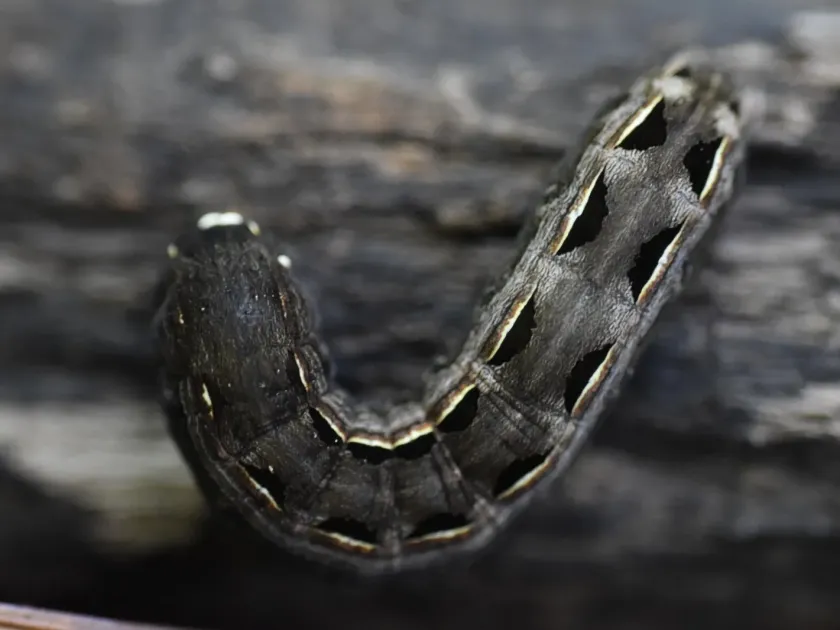
Larvae undergo several instars, varying in color from light green in early stages to dark brown or nearly black as they mature. Their bodies often feature longitudinal light stripes and dark spots or shields on the dorsal side, characteristic of the Spodoptera genus.
Taxonomically, this pest belongs to the order Lepidoptera and the family Noctuidae. It is a highly adaptable species, capable of flourishing in various tropical and subtropical environments, making it a persistent challenge in agricultural production.
Imagines are strictly nocturnal, hiding under leaves or in plant debris during the day. Females lay their eggs in clusters on the underside of leaves, covering them with specialized scales from their abdomen to protect the offspring from desiccation and natural enemies.
Pupation occurs in the soil, where the insect constructs a protective chamber using soil particles and silk. This stage is crucial for surviving unfavorable periods and ensures the rapid resurgence of the population when environmental conditions improve.
What it damages
This moth is a generalist feeder that causes severe damage to a wide range of economically important crops. Preferred hosts include corn, tomatoes, cotton, legumes like beans and soybeans, and various vegetable species.
Early-instar larvae feed on the leaf epidermis, creating small translucent windows on the leaf tissue. As they grow, their feeding becomes more aggressive, leading to irregular holes and eventual skeletonization of the leaves.
Late-instar larvae are particularly destructive, often consuming entire leaves and leaving only the main veins. Massive infestations can result in total defoliation, severely reducing the photosynthetic potential of the crop and delaying plant development.
Beyond the foliage, the larvae also attack reproductive organs, including buds, flowers, and young fruits. This feeding behavior often leads to significant yield losses and reduces the overall quality of the harvested product.
Damaged fruits are highly susceptible to secondary infections by bacteria and fungi. These opportunistic pathogens rot the fruit tissue, rendering it unsuitable for market and potentially causing further losses during storage and transport.
When it appears
The activity of the broad-banded moth is closely linked to temperature and humidity. Warm weather combined with moderate rainfall provides ideal conditions for rapid development, leading to high survival rates and multiple generations per year.
Adult emergence typically begins when temperatures rise. In tropical regions, the insect can remain active throughout the entire growing season, with overlapping generations causing constant pressure on agricultural crops.
The most intense damage occurs during the period of active vegetative growth. Young, succulent tissues are the primary target for newly hatched larvae, which require significant nutrient intake to complete their development.
The full life cycle, from egg to adult, can be completed in as little as 30 to 45 days. This rapid life cycle facilitates a quick buildup of population density, requiring vigilance and proactive management throughout the growing season.
As temperatures drop, the pest enters a diapause state as a pupa within the soil. Assessing the soil for pupae after harvest is an essential step for predicting potential infestation levels for the following season.
Signs of infestation
The first indication of an infestation is the presence of egg masses on the undersides of leaves. These masses often look like velvety or fuzzy patches, indicating a new generation of larvae will soon emerge.
Signs of larval activity include characteristic skeletonized patches on the leaves. As the larvae grow, the damage progresses to large, irregular holes, often accompanied by visible excrement deposits on the leaf surfaces.
A high volume of larval frass (droppings) at the base of the plant or on the foliage is a diagnostic sign of a heavy infestation. This waste material is often the easiest way to detect the presence of older, more destructive caterpillars.
Larvae are typically inactive during the day and can be found hiding in the plant canopy, inside leaf rolls, or near the soil line. They become active at twilight, moving to feed on the tender parts of the plant.
Wilting or damaged growing tips are also critical signs. When a larva burrows into a stem or attacks the apical meristem, the plant may show stunted growth or die back, which is particularly devastating for seedling crops.
Control measures
Successful management of the broad-banded moth relies on an integrated pest management (IPM) approach. Combining cultural, biological, and chemical methods is essential to mitigate crop losses and prevent resistance.
Cultural practices, such as deep plowing after harvest, are effective in disturbing the soil and exposing pupae to predators and adverse environmental conditions, significantly reducing the overwintering population.
Biological control, including the use of B. thuringiensis (Bt) sprays, is highly effective against young larvae. Additionally, pheromone traps are widely used for monitoring adult activity and timing intervention strategies.
Chemical control should be applied while larvae are still in their early instars. It is crucial to rotate insecticides with different modes of action to manage the risk of the pest developing resistance to specific chemical classes.
- Monitor fields regularly using pheromone traps.
- Remove weeds that serve as alternative hosts for the moth.
- Apply selective insecticides during early larval development.
- Conserve natural enemies to provide biological suppression.
- Perform deep soil tillage after crop cycles to destroy pupae.
Taxonomy
- Latin name
- Spodoptera latifascia
- Order
- Lepidoptera (butterflies)
- Family
- Noctuidae
- EPPO code
- SPODLA
Discussion
No discussions yet — be the first.