
Grass moth (Spodoptera cilium)
Spodoptera cilium
Description
How to identify
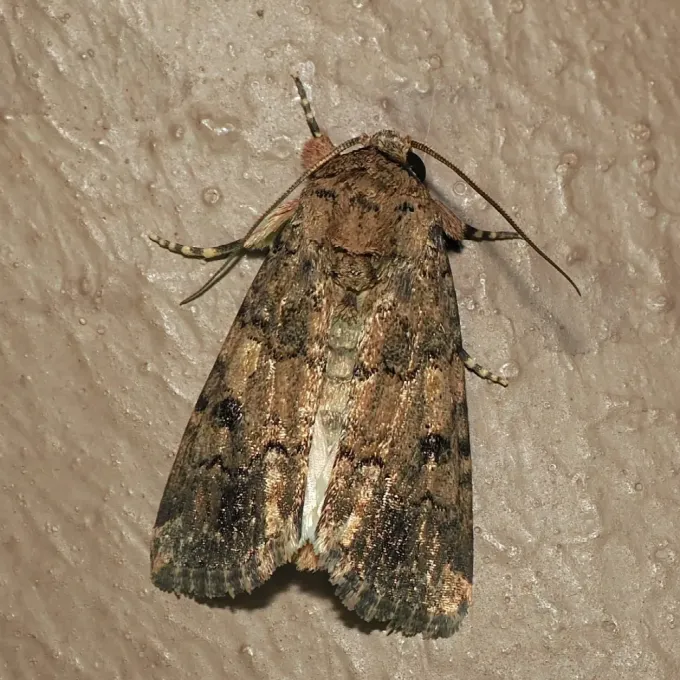
The grass moth Spodoptera cilium is a member of the order Lepidoptera and the family Noctuidae. The adult moth is a medium-sized insect with a wingspan ranging from 25 to 30 mm.
The forewings of the moth are typically grey-brown with a distinctive pattern of light lines and spots. The hindwings are generally paler, often displaying a pearly sheen and dark edges.
Larvae (caterpillars) progress through several instars, shifting in appearance from light green to a brownish tone, often featuring light-colored longitudinal stripes along their bodies.
The pupae of this species are reddish-brown in color with a smooth surface. They typically develop in the soil at a depth of about 5–10 cm, where the transformation from larva to pupa takes place.
Field identification requires close inspection, as the adult moth shares structural similarities with other species within the Spodoptera genus found in various climates.
What it damages
The primary damage is caused by the larval stage. This pest is a known polyphage, meaning it attacks a wide variety of plants, with a strong preference for cereals, maize, rice, and grasses.
Caterpillars feed voraciously on the foliage. Young larvae often skeletonize the leaf surfaces, consuming the tissue between the veins, which significantly reduces the plant's photosynthetic capacity.
As they reach later instars, the larvae perform more aggressive feeding, often consuming entire leaves or large portions thereof. This leads to stunted plant growth and overall crop vigor reduction.
Severe infestations can lead to massive defoliation, causing significant yield losses. In some cases, the larvae also feed on the reproductive parts of the plants, such as the heads or ears.
The economic impact is highest when populations reach high densities, potentially destroying large swathes of pasture or cereal fields in a relatively short period.
When it appears
The life cycle of the grass moth is strongly influenced by temperature. In warmer climates, the pest can complete several generations throughout a single growing season.
Adult flights typically begin in spring as temperatures rise. The moths are primarily nocturnal, remaining active at night and during twilight hours, when mating and egg-laying occur.
Eggs hatch within a few days under favorable weather conditions. The summer generations develop much faster than those in the cooler spring or autumn periods due to higher accumulated heat units.
The presence of the pest usually coincides with the vegetative growth stages of cereals, specifically during the tillering and elongation phases, which are critical for crop development.
Winter is generally spent in the pupal stage within the soil profile, which serves as a protective mechanism against harsh environmental conditions until the following spring.
Signs of infestation
The most common sign of infestation is the presence of "windows" or transparent patches on the leaves, created when larvae feed on the green tissue while leaving the epidermis intact.
As the larvae grow, the leaves will appear ragged with irregular edges. In heavily infested fields, plants may be completely stripped of their leaf blades, leaving only stalks behind.
The presence of frass (larval droppings) on the soil surface or caught in the leaf axils is a reliable indicator that the larvae are actively feeding in the vicinity.
Localized patches of yellowing or withered plants can indicate heavy larval activity and often mark the spots where the population density is highest within the field.
Searching at night with a flashlight often reveals the larvae, as they emerge from the soil or leaf sheaths to feed on the upper parts of the plants during darkness.
Control measures
Effective agrotechnical practices include deep plowing after harvest, which disrupts the soil, exposing pupae to predators and adverse weather, significantly reducing the next generation's size.
Sanitation is key; keeping field margins and surrounding areas free of weeds removes alternative hosts that the larvae use to develop before moving to the main crop.
Using pheromone traps is an essential component of an integrated pest management (IPM) program to monitor the arrival of moths and time control applications precisely.
Chemical control via insecticides is recommended when population numbers exceed the established economic threshold, ensuring that products with different modes of action are rotated.
Biological control using microbial insecticides, such as those based on Bacillus thuringiensis, offers an effective and environmentally friendly solution for managing younger larval stages.
Taxonomy
- Latin name
- Spodoptera cilium
- Order
- Lepidoptera (butterflies)
- Family
- Noctuidae
- EPPO code
- SPODCI
Discussion
No discussions yet — be the first.