
African armyworm (Spodoptera abyssinia)
Spodoptera abyssinia
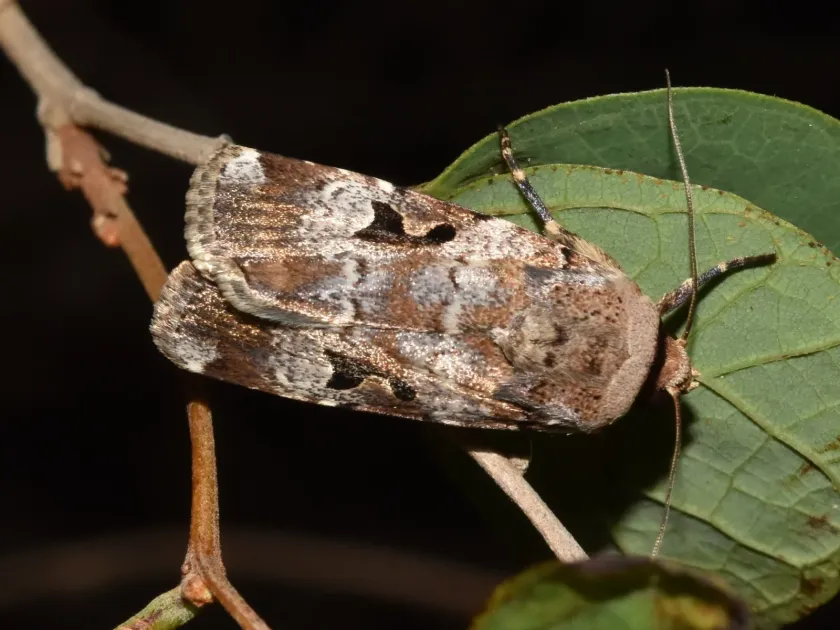
Description
How to identify
Spodoptera abyssinia is a moth species belonging to the Noctuidae family. These insects are classified as significant pests due to their larval stage's voracious feeding habits on various agricultural crops. Adult moths are characterized by their cryptic coloration, which provides effective camouflage during the day.
The larval phase is the primary source of economic damage. These larvae typically have distinct body markings that help in their identification, though accurate diagnosis often requires an entomological assessment. They possess strong mandibles adapted for consuming fibrous plant material efficiently.
What it damages
The species primarily affects members of the Poaceae family, including maize, sorghum, rice, and wheat. The larvae feed on both young leaves and developing stages of the plants, often leading to severe defoliation and a significant reduction in the photosynthetic capacity of the crops.
In addition to cereals, Spodoptera abyssinia can infest a variety of other crops, making it a highly adaptable and dangerous generalist pest. Under favorable conditions, the larvae can migrate in large numbers, stripping fields of green foliage within a short timeframe.
When it appears
The seasonal occurrence of this pest is driven by temperature and precipitation patterns, which regulate the availability of host plants. The cycle begins when adults emerge to mate and lay eggs, usually on the underside of leaves to protect the progeny from environmental stress.
The insect undergoes complete metamorphosis: egg, larva, pupa, and adult. The pupal stage commonly occurs within the soil, where the insects survive unfavorable climate conditions. Successful over-wintering or over-summering in the soil ensures that the population can rebound rapidly when the growing season begins.
Signs of infestation
The most visible signs of an infestation include ragged leaves with irregular edges or completely consumed leaf blades, leaving only the primary veins. Growers should regularly inspect their fields for these symptoms, especially during the early vegetative stages of crop development.
- Holes in the foliage caused by young larvae.
- Accumulation of larval frass on the soil or leaves.
- Wilting of central shoots indicating internal damage to the plant.
- Presence of egg masses on the underside of lower leaves.
Control measures
Integrated Pest Management (IPM) is essential for controlling Spodoptera abyssinia. This includes cultural practices such as regular crop rotation and soil tillage, which physically destroy pupae residing underground, thereby reducing the subsequent generation's population density.
Chemical control involving the use of targeted insecticides remains a common and effective practice. Monitoring programs using pheromone traps allow farmers to detect the arrival of adult moths early, enabling timely intervention before the larval population causes irreversible damage to the harvest.
Taxonomy
- Latin name
- Spodoptera abyssinia
- Order
- Lepidoptera (butterflies)
- Family
- Noctuidae
- EPPO code
- SPODAB
Discussion
No discussions yet — be the first.