
Sequoia mealybug
Spilococcus sequoiae
Description
How to identify
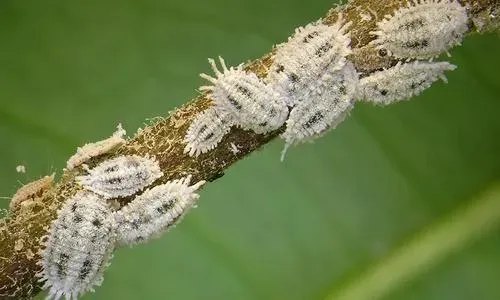
The sequoia mealybug (Spilococcus sequoiae) is a small insect belonging to the family Pseudococcidae. It is characterized by a white, waxy, cotton-like substance that covers its body, providing protection from the elements.
Adult females are oval-shaped and typically lodge themselves in the crevices of bark or the base of needles, making them notoriously difficult to spot during early stages of infestation.
Males are winged and significantly different in appearance, though they are rarely seen as their sole purpose is reproduction. The crawler stage, or first-instar nymphs, are the primary dispersers of the species.
This species is specifically adapted to feed on conifers, particularly members of the Cupressaceae family. Its life cycle is synchronized with the physiological patterns of its host trees.
Early detection usually requires close inspection with a magnifying glass to identify the white, woolly egg sacs tucked into the foliage or bark fissures.
What it damages
The primary hosts for this pest include sequoias, arborvitae (Thuja), junipers, and cypresses. Infestations are common in both nursery environments and ornamental landscapes.
Mealybugs feed by sucking sap from the foliage and twigs, which drains the plant's resources. This can result in significant stunted growth and overall decline in tree health.
A major symptom of their feeding is the production of honeydew, a sugary byproduct. This substance fosters the growth of sooty mold, which coats the foliage in a black, powdery layer that blocks photosynthesis.
Severe infestations lead to the yellowing and premature shedding of needles. In advanced cases, branches may become deformed, leading to poor tree architecture and aesthetic degradation.
Without intervention, prolonged stress caused by these insects can leave the tree vulnerable to secondary pathogens, eventually causing branch dieback or total mortality.
When it appears
Activity usually begins in the spring when rising temperatures trigger the emergence of nymphs. This is when the insects move from their overwintering sites to find suitable feeding spots.
Peak population levels typically occur during mid-summer. The life cycle can be continuous in warmer climates, leading to overlapping generations and a constant presence throughout the growing season.
As autumn approaches, activity slows down, and the insects begin seeking sheltered areas under bark or deep within needle clusters to survive the winter months.
In colder regions, the cold can limit the population, but in mild climates, the sequoia mealybug remains a persistent threat that requires year-round vigilance.
Monitoring should be most intense during the late spring and summer months when crawler activity is at its highest and the insects are most exposed.
Signs of infestation
The presence of white, cottony masses in the needle axils or on twigs is the most reliable indicator of an active mealybug population.
Sticky honeydew on the foliage or beneath the tree canopy is a clear sign of sucking insects. This stickiness often attracts ants, which can also be an indicator of an infestation.
A black, sooty coating on the branches suggests that the infestation has been present long enough for mold to colonize the honeydew deposits.
The foliage may appear chlorotic (yellowed) or exhibit signs of desiccation. In extreme cases, the overall health of the tree appears to decline rapidly.
- White, fluffy waxy masses on foliage
- Sticky residue on branches and needles
- Black sooty mold growth
- Needle yellowing and premature drop
- General lack of vigor and stunted growth
Control measures
Pruning and disposing of heavily infested branches is an effective mechanical control method to reduce the total number of insects in the canopy.
Systemic insecticides are generally the most effective way to manage mealybugs, as they move through the tree's vascular system to kill the pests while they feed.
Timing is critical: applications should be made during the crawler stage, as these young nymphs are far less protected by their waxy secretions than adult females.
Horticultural oils can be used to coat and suffocate the insects. This approach is more environmentally friendly but requires thorough coverage to ensure all insects are reached.
Maintaining tree vigor through proper irrigation and balanced fertilization helps the plant build natural defenses, reducing its susceptibility to mealybug outbreaks.
Taxonomy
- Latin name
- Spilococcus sequoiae
- Order
- Hemiptera (bugs, aphids, leafhoppers)
- Family
- Pseudococcidae
- EPPO code
- PSECSQ
Discussion
No discussions yet — be the first.