
Cactus mealybug
Spilococcus mamillariae
Description
How to identify
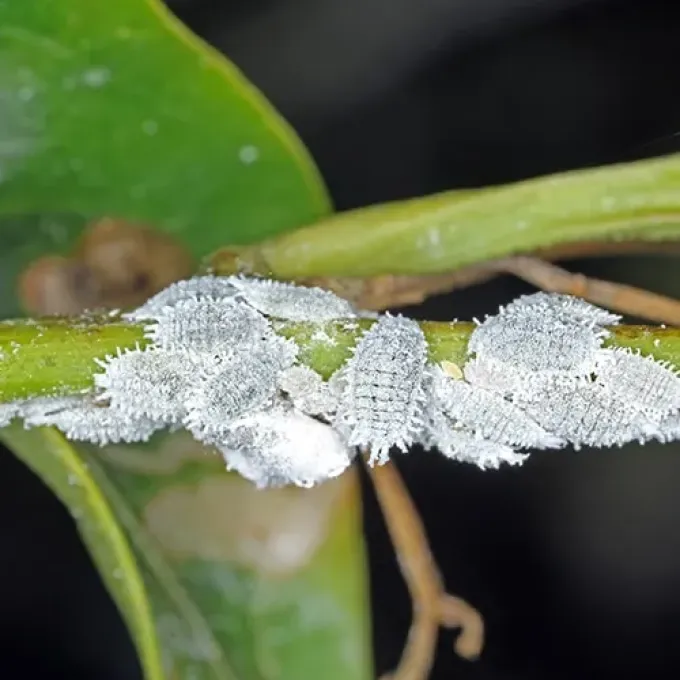
The cactus mealybug (Spilococcus mamillariae) is a member of the Pseudococcidae family. These small, sap-sucking insects are characterized by a white, powdery, or cottony wax covering their oval-shaped bodies, which can reach 3–4 mm in length.
Adult females are typically sedentary, often hiding in the deep recesses of the cactus anatomy, such as the areoles, base of spines, or the root collar, where they are protected from environmental factors.
Reproduction involves the production of white, cotton-like ovisacs by the female, which contain numerous eggs. These ovisacs act as a protective barrier, making the insect resilient to contact-based treatments.
The first-instar nymphs, known as crawlers, are the primary dispersal stage. They are highly mobile and can crawl onto other healthy plants in the collection, leading to rapid spread if not controlled early.
Visual identification is often assisted by using a hand lens to detect the fine waxy threads and the distinctive clusters of cottony material that indicate an active infestation within the plant colony.
What it damages
This pest specifically targets various succulent species, especially those within the Cactaceae family, such as Mammillaria, Echinocactus, and Astrophytum, causing significant stress to the host.
By piercing the epidermis with their stylets, mealybugs feed on the plant's cell sap. This feeding process depletes the cactus of essential nutrients and disrupts its metabolic functions.
Root infestations are particularly dangerous because they occur out of sight and can cause a rapid decline in plant health, leading to wilting, stunted growth, or even root rot if secondary infections take hold.
The accumulation of honeydew, a sticky excretion produced by the mealybugs, promotes the growth of sooty mold, which clogs the plant's stomata and reduces the efficiency of photosynthesis.
Long-term damage manifests as chlorosis, deformation of the stem, and loss of vigor, eventually making the cactus highly susceptible to environmental stress and opportunistic pathogens.
When it appears
Under indoor conditions, such as greenhouses or home collections, the cactus mealybug can reproduce throughout the year, provided temperatures remain consistent and favorable for their life cycle.
Their activity peaks during the spring and summer seasons when the plants are in active growth, providing an abundant supply of nutrients that accelerates the development of new generations.
During the winter, when cacti typically enter a dormant phase in cooler conditions, the mealybug's life cycle slows down, but they do not disappear and can survive in protected crevices until conditions improve.
The speed of generation turnover is strictly dependent on temperature; higher temperatures significantly reduce the time between life stages, causing the population to explode in a very short time.
New arrivals in a collection are the most common source of infestation. Introducing a plant that has not undergone a proper quarantine period often leads to the rapid contamination of the entire collection.
Signs of infestation
The most prominent sign of an infestation is the presence of white, cottony masses in the areoles or between the ribs of the cactus, which are easily disturbed by physical touch.
Visible yellow or brown lesions on the epidermis indicate the areas where the pests have been feeding, which may also show signs of physical scarring after the insects are removed.
Sticky residue or a shiny coating on the stem or the surrounding surface of the pot indicates the presence of honeydew, a hallmark symptom of a sap-sucking insect infestation.
Stunted plant growth, sudden loss of turgor, and the failure of flower buds to develop correctly are strong indicators that the plant is suffering from the internal stress caused by the pests.
Close inspection of the root zone and the internal walls of the planting container may reveal white, waxy deposits that confirm the presence of a soil-dwelling or root-infesting population.
Control measures
Systemic insecticides are the most effective way to control mealybugs, as the plant absorbs the chemical, making the sap toxic to the insects regardless of where they are hiding.
Manual removal of visible insects using a cotton swab soaked in isopropyl alcohol is an effective immediate measure for light infestations, though it must be followed by repeated monitoring.
- Isolate infested plants immediately from the rest of the collection.
- Perform regular inspections of all succulent specimens.
- Use systemic insecticides (such as imidacloprid-based formulas) applied via soil drench.
- Maintain consistent follow-up treatments to catch hatching nymphs.
Due to the protective waxy layer covering the eggs, a single treatment is rarely sufficient; at least 3 to 4 applications spaced 7–10 days apart are necessary to break the pest's reproductive cycle.
When applying treatments, always perform a patch test on a small area of the cactus stem to ensure the chemical does not cause phytotoxicity or permanent scarring to the sensitive epidermis.
Taxonomy
- Latin name
- Spilococcus mamillariae
- Order
- Hemiptera (bugs, aphids, leafhoppers)
- Family
- Pseudococcidae
- EPPO code
- PSECMM
Discussion
No discussions yet — be the first.