
Digger wasps
Sphecidae
Description
How to identify
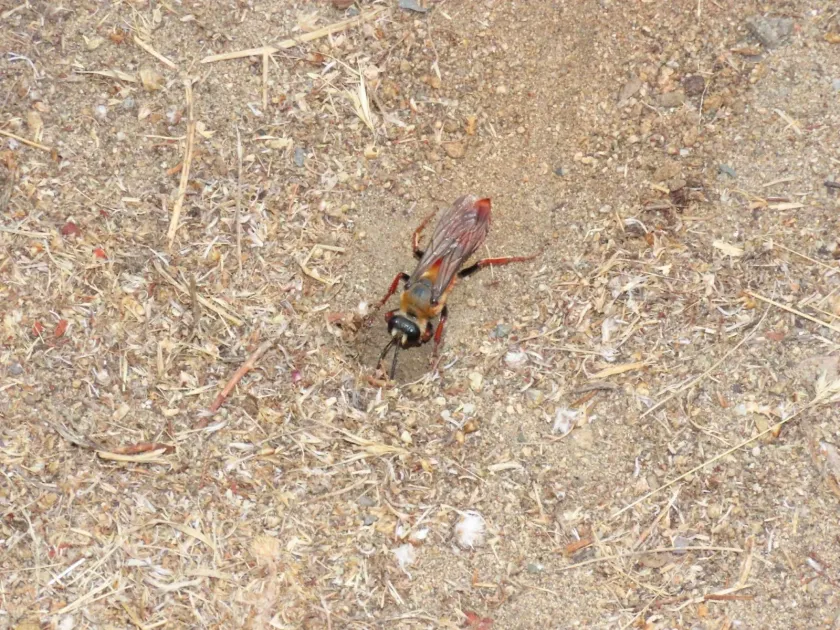
Digger wasps (family Sphecidae) are a diverse group of solitary stinging insects, characterized by a long, thread-like waist between the thorax and the abdomen.
These wasps vary in size and coloration, often displaying black, metallic blue, or contrasting orange and yellow markings that serve as warning signals to potential predators.
Unlike social wasps, digger wasps do not live in colonies; instead, they function individually, focusing on creating nests in soil or pre-existing cavities.
Their flight pattern is usually erratic and fast, as they actively search for prey—typically caterpillars or spiders—to provide food for their developing larvae.
The morphological features of these insects include specialized legs equipped with spines or bristles designed for digging into various soil types.
What it damages
While digger wasps are generally beneficial predators that regulate populations of other insects, they can become a nuisance when nesting near sensitive agricultural crops.
Physical damage occurs when wasps excavate nests in the soft stems or stalks of herbaceous plants, which can cause structural weakness and plant death.
In ornamental gardens, their burrowing activity can disturb the root zone of delicate plants, leading to poor nutrient uptake and increased water loss through damaged soil layers.
Repeated nesting in the same location can lead to secondary infections, as the entrance holes allow pathogens and fungi to penetrate the plant tissue easily.
Although they are not considered primary agricultural pests, their presence in high densities can lead to significant economic loss in nurseries and protected cultivation areas.
When it appears
The life cycle of digger wasps is strictly seasonal, beginning in late spring when temperatures are high enough to support adult flight and soil excavation.
Peak activity typically occurs during the mid-summer months, when females are most dedicated to provisioning their nests with prey for the next generation.
By late summer, the adult population begins to decline, and the next generation remains protected in underground cells until the following spring.
Weather patterns heavily dictate their presence; dry and warm spring conditions facilitate earlier nest establishment and potentially larger population numbers.
Understanding these timeframes allows farmers to implement preventive strategies before the wasps initiate their primary nesting activity in the early summer.
Signs of infestation
Signs of digger wasp presence include small, clean holes in the soil surface, often accompanied by characteristic mounds of excavated particles or soil pellets.
In cases where they utilize plant stems, one might observe mysterious openings in the stalk tissue, often plugged with mud, grass, or plant debris.
Close observation reveals wasps transporting paralyzed prey items back to their burrows, which serves as a definitive indicator of an active nest site.
Plants affected by stem-nesting wasps often show signs of wilting or chlorosis in the upper parts of the affected branch due to obstructed vascular pathways.
In open garden beds, one may notice circular voids in the mulch layer, indicating where a wasp has cleared the area to gain access to the underlying soil.
Control measures
Management of digger wasps focuses on physical disruption and habitat modification to make the environment less attractive for nesting.
Maintaining soil moisture through regular irrigation and compaction can effectively deter wasps from digging burrows in beds or near sensitive roots.
- Applying thick layers of organic mulch to discourage direct access to bare soil.
- Sealing hollow stems of ornamental plants to prevent wasps from using them as nesting cavities.
- Manual destruction of nest entrances during the early stages of the breeding season.
Chemical intervention should be used only as a last resort, as these insects act as natural biological control agents against other harmful pests.
Preventative landscape design, such as covering sandy or exposed soil areas, is the most sustainable approach to minimizing their impact on agricultural production.
Taxonomy
- Latin name
- Sphecidae
- Family
- Sphecidae
- EPPO code
- SPECSP
Discussion
No discussions yet — be the first.