
Sphaerites glabratus
Sphaerites glabratus
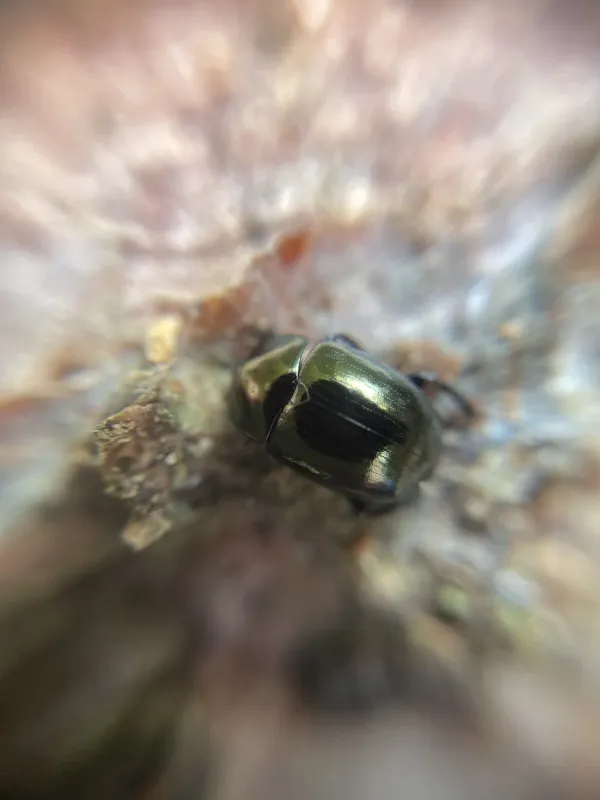
Description
How to identify
Sphaerites glabratus is a unique species of beetle belonging to the family Sphaeritidae within the order Coleoptera. This small insect is known for its smooth, metallic-appearing cuticle.
Adults are typically characterized by an oval, convex body shape with coloration ranging from dark bronze to black, often exhibiting a slight metallic or greenish sheen.
The head is equipped with chewing mouthparts that are highly specialized for feeding on fungal matter and organic debris rather than living plant tissue.
Typically measuring between 5 to 7 mm in length, these beetles are well-adapted to life in humid environments, frequently found under bark or in decaying vegetation.
The larval stage features a morphology adapted for developing within specific micro-habitats where moisture and organic decomposition are present.
What it damages
Sphaerites glabratus is not considered an agricultural pest, as it does not feed on cultivated crops, fruits, or the healthy tissues of living trees.
The beetle acts primarily as a saprophagous organism, playing an ecological role in breaking down decaying organic matter within forest habitats.
Damage caused by this species is negligible and is usually restricted to trees that are already suffering from fungal infections or significant environmental stress.
It does not pose a threat to industrial forestry or commercial fruit production, making it an ecologically beneficial or neutral component of its environment.
In the context of plant protection, the presence of these beetles serves as an indicator of natural decomposition processes rather than a sign of a pest infestation.
When it appears
The adult activity period for Sphaerites glabratus primarily occurs during the spring and summer months when weather conditions support fungal growth.
As a species dependent on moisture, its life cycle is closely synchronized with periods of high humidity, which are essential for the survival of its developmental stages.
The species undergoes a complete metamorphosis, progressing through egg, larva, pupa, and adult stages, which is standard for the suborder Polyphaga.
Adult beetles survive the winter by seeking refuge in forest litter, crevices in tree bark, or other protected areas, remaining inactive until the following spring.
Emergence of the new generation typically concludes by the end of the summer season, leading to the preparation for the upcoming hibernation period.
Signs of infestation
Due to its cryptic lifestyle and dark, non-reflective coloration, Sphaerites glabratus is difficult to spot in its natural environment during standard inspections.
Evidence of their presence can be found by inspecting areas of tree trunks where sap leakage occurs or where wood-decay fungi are actively growing.
The beetles are known to be attracted to chemical signals emitted by fermenting plant matter, which can be utilized by researchers for detection and monitoring purposes.
In field conditions, identification usually involves examining damp logs or stumps where the beetle resides while foraging for its fungal food source.
Since the species does not form large swarms, finding individual specimens often requires specialized entomological surveying techniques.
Control measures
There are no established chemical control measures for Sphaerites glabratus, as the species is not considered harmful to agricultural or silvicultural interests.
Maintaining the overall health and sanitation of forested areas by removing overly decayed wood can naturally limit the availability of its preferred micro-habitats.
Standard orchard management practices that ensure tree vitality effectively prevent the conditions that might otherwise attract such saprophagous insects.
The use of insecticides is strictly discouraged, as it would be unnecessary and could adversely affect beneficial insect populations within the ecosystem.
Monitoring for this species is largely a matter of academic or ecological interest rather than a practical requirement for farm management or crop protection.
Taxonomy
- Latin name
- Sphaerites glabratus
- Order
- Coleoptera (beetles)
- Family
- Sphaeritidae
- EPPO code
- SHRTGL
Discussion
No discussions yet — be the first.