
Spalangia rugosicollis
Spalangia rugosicollis
Description
How to identify
Spalangia rugosicollis is a parasitic wasp belonging to the family Pteromalidae within the order Hymenoptera. It is a tiny insect known for its role as a natural enemy of various fly species.
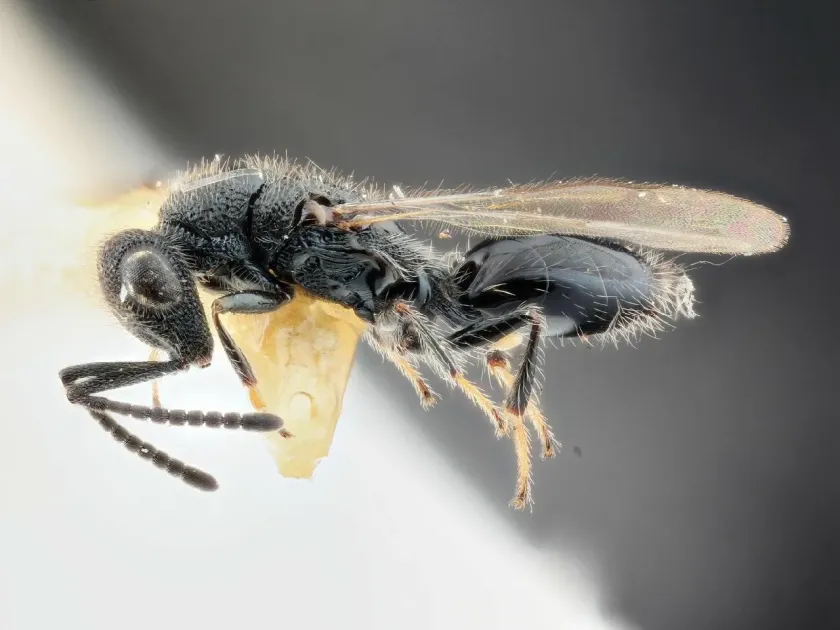
The adult wasp is characterized by a black, shiny body with a specific rugose (wrinkled) texture on the thorax, which is a key identifying feature for this species.
With a body length of approximately 2–3 millimeters, it is relatively difficult to spot in the field. Its wings are clear and possess minimal venation, typical of the Pteromalid family.
As a parasitoid, the wasp relies on the pupae of flies to complete its lifecycle. The adult female locates the host puparium, pierces it, and deposits an egg, which later develops into a larva.
Identifying this species is crucial for specialists in integrated pest management (IPM), as its presence indicates a natural suppression of fly populations in livestock and crop environments.
What it damages
Spalangia rugosicollis is not a plant pest. It is an extremely beneficial insect that functions as a natural regulator of fly populations, including those in the Muscidae and Anthomyiidae families.
By attacking the pupal stage of these flies, the wasp prevents the emergence of adult pests that could otherwise damage crops, disturb livestock, or carry harmful pathogens.
There is no direct damage to agricultural crops or stored products caused by this species. Therefore, it is classified as a biological control agent rather than a crop pest.
In greenhouses and livestock facilities, the presence of these wasps contributes to reducing the overall density of nuisance insects, ultimately benefiting the health of the farm ecosystem.
Because it is a predator of pests, its ecological contribution is significant, helping farmers maintain pest levels below the economic threshold without intensive chemical intervention.
When it appears
The seasonal activity of Spalangia rugosicollis is highly dependent on ambient temperatures and the availability of its fly hosts. They typically emerge in late spring when conditions become warmer.
Summer provides the peak conditions for their development, with higher temperatures leading to faster generation cycles and increased search activity for hosts.
As temperatures decline in autumn, the wasps enter a dormant stage (diapause) as pupae within the host remains, preparing for successful overwintering in protected sites.
In climate-controlled environments like industrial greenhouses, the lifecycle can continue year-round, provided that the temperature remains above the threshold for development.
Understanding these seasonal patterns helps agronomists time their biological control releases to coincide with the periods when fly populations are most vulnerable to parasitism.
Control measures
No control measures are needed for Spalangia rugosicollis, as it is a beneficial organism. The management strategy should instead focus on protecting and promoting its population.
The most important practice is to avoid the indiscriminate use of broad-spectrum insecticides, which are lethal to beneficial parasitoids and can trigger pest outbreaks.
To encourage the proliferation of these wasps, agronomists should implement the following:
- Utilize selective pest control methods that spare natural enemies.
- Maintain sanitation in farm areas to manage host availability sustainably.
- Promote biodiversity within the agricultural setting to provide refugia for the wasps.
Many modern farms incorporate the artificial release of Spalangia species as a core component of their integrated pest management programs to reduce reliance on chemicals.
By fostering an environment that supports these parasitic wasps, producers can achieve healthier crop growth and higher safety standards for their final agricultural products.
Taxonomy
- Latin name
- Spalangia rugosicollis
- Order
- Hymenoptera
- Family
- Pteromalidae
- EPPO code
- SPALRU
Discussion
No discussions yet — be the first.