
Dark Sword-grass
Spaelotis ravida
Description
How to identify
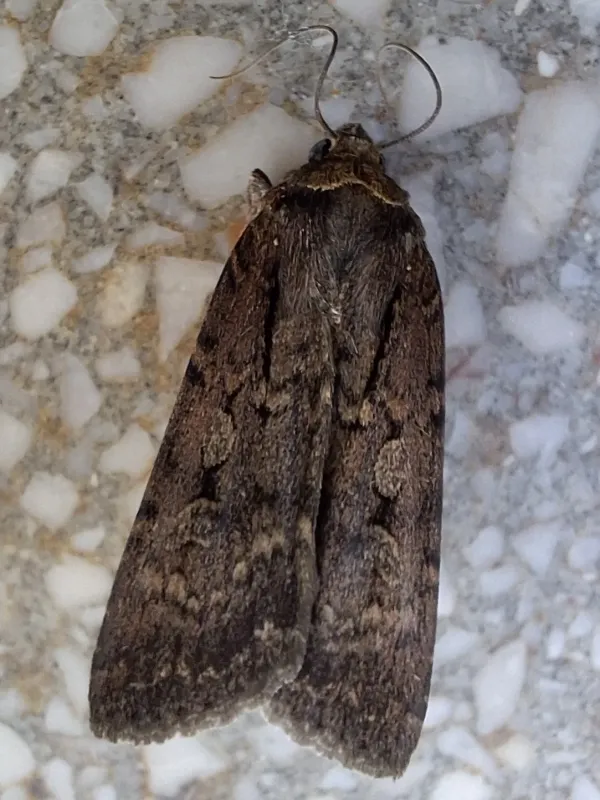
The Dark Sword-grass (Spaelotis ravida) is a nocturnal moth belonging to the family Noctuidae. It is a common insect pest that thrives in temperate regions across Eurasia.
Adult moths possess a wingspan ranging from 40 to 50 mm. The forewings display a cryptic, grayish-brown to dark-brown pattern, which provides excellent camouflage against tree bark or soil surfaces.
The larvae, known as cutworms, are the primary cause of damage. They are cylindrical, relatively smooth, and feature earth-toned colors that blend perfectly with the soil, making them difficult to detect.
Taxonomically, the species is part of the order Lepidoptera. Its life cycle is finely tuned to the thermal conditions of the soil, which serves as both a winter refuge and a nursery for its offspring.
Identification of the moth can be facilitated by the use of light traps during the summer flight season, allowing farmers to track population spikes and prepare mitigation measures.
What it damages
This pest is notorious for its cutworm behavior, where larvae sever the stems of young plants just above or below the soil line. This activity is most devastating during the early seedling stages.
A wide range of crops is susceptible to damage, including cereals, potatoes, sugar beets, and various vegetable crops. In severe infestations, large patches of crops can be completely decimated.
Beyond cutting stems, larvae frequently chew holes into roots and tubers. These wounds serve as entry points for soil-borne pathogens, leading to secondary infections such as rot and fungal diseases.
The damage often occurs in localized spots or patches. Since the larvae are nocturnal feeders, the sudden death of plants can sometimes be misattributed to water stress or nutrient deficiency.
Crop loss due to Spaelotis ravida is a significant economic risk, especially in years where mild winters lead to higher larval survival rates, resulting in early-season outbreaks.
When it appears
The species follows an annual generation cycle. Larvae overwinter in the soil at various larval stages, residing safely underground in protective cells until the following spring.
As soil temperatures rise in the spring, the larvae resume feeding, targeting the fresh shoots of newly planted crops. This period is critical for protecting early-stage seedlings.
Moth activity typically occurs from June through August. After mating, females deposit eggs in the soil or on the undersides of leaves near their preferred host plants.
The autumn months are crucial for the development of the next generation. The young larvae feed extensively to store enough energy reserves to survive the upcoming winter months underground.
Environmental factors, particularly soil moisture and the presence of vegetative cover, play a key role in the larval survival rate and the overall population density throughout the year.
Signs of infestation
The most diagnostic sign of an infestation is the sudden wilting of previously healthy plants. Upon closer inspection, these plants can be easily pulled from the soil due to severed roots or stems.
During the day, small, irregular holes in the stems near the base are clear indicators. Carefully digging around the base of affected plants often reveals the larvae resting just beneath the surface.
Stunted growth or missing segments in the foliage of root crops can also suggest cutworm presence, although this is often secondary to stem cutting in early spring.
The presence of weeds within the field provides shelter and alternative food for the larvae. Fields with poor weed management are significantly more attractive to egg-laying moths.
Using pheromone traps or systematic scouting for moth flights during the night provides a reliable warning system for farmers to anticipate potential larval damage in the coming weeks.
Control measures
Effective management begins with thorough soil tillage. Deep plowing in late autumn or early spring helps expose overwintering larvae to predators and unfavorable weather conditions.
Maintaining a clean field free of weeds is essential, as vegetation provides the necessary environment for moth oviposition and larval development during the early stages.
When economic thresholds are reached, the application of registered insecticides is recommended. The timing should be adjusted to coincide with the nocturnal feeding peak of the larvae.
Biological control, including the release of beneficial insects or the use of entomopathogenic nematodes, can provide sustainable control of larval populations without chemical side effects.
Integrated Pest Management (IPM) strategies, which combine crop rotation, mechanical control, and selective pesticide use, are the most reliable methods for maintaining long-term field safety.
Taxonomy
- Latin name
- Spaelotis ravida
- Order
- Lepidoptera (butterflies)
- Family
- Noctuidae
- EPPO code
- SPAERA
Discussion
No discussions yet — be the first.