
Black imported fire ant
Solenopsis richteri
Description
How to identify
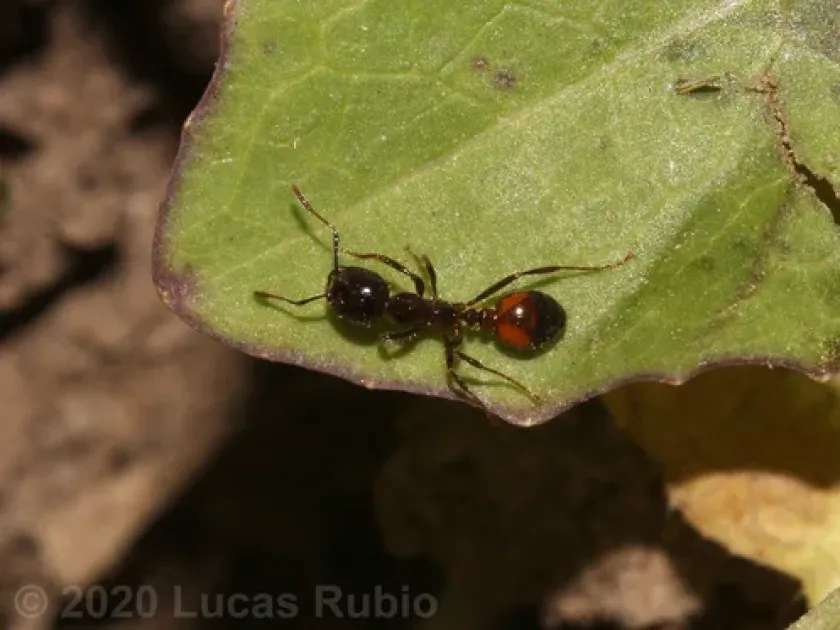
The black imported fire ant (Solenopsis richteri) is a member of the Formicidae family, known for its status as a significant invasive pest. These ants are generally dark brown to black in color, which helps distinguish them from some lighter-colored related species.
Workers are polymorphic, ranging from 2.5 to 6 mm in length. Their colonies are highly organized and can grow to include hundreds of thousands of individuals, making them incredibly difficult to eradicate once established.
A primary identifier is their nesting habit: they construct distinctive soil mounds in open areas. These mounds are often dome-shaped, lack a central opening on the surface, and can be easily identified in agricultural fields.
The ants possess a stinger that delivers a potent venom. When the mound is disturbed, the colony reacts aggressively, swarming the intruder and inflicting painful, burning stings that create white pustules.
Their reproduction involves nuptial flights where queens mate and establish new colonies. A single queen can produce a thriving nest, contributing to the species' rapid expansion and colonization of new agricultural land.
What it damages
The black imported fire ant is a major agricultural pest that feeds on a variety of crops, including corn, soybeans, sorghum, and potatoes. They cause direct damage by feeding on seeds, causing poor stands and economic loss.
By attacking newly emerged seedlings, these ants can destroy entire patches of crops. This often necessitates expensive replanting and increases the overall cost of production for farmers.
These ants have a mutualistic relationship with aphids and other honeydew-producing insects. They protect these pests from predators, leading to increased aphid populations that further damage crops through sap-sucking and virus transmission.
The extensive tunnel systems built by colonies in the soil disrupt the root systems of young plants. This causes stunting, wilting, and increased susceptibility to secondary soil-borne pathogens.
Furthermore, the physical mounds create significant operational challenges. They interfere with harvesting and cultivation machinery, causing damage to equipment and slowing down field operations.
When it appears
Fire ant activity is largely dictated by soil temperature and moisture. They are most active during the warmer months of the year, which coincides with crucial periods for planting and early crop development.
In the spring, as temperatures rise, the ants increase their foraging activity to support the growing colony. This is the period when they are most likely to feed on newly planted seeds and young seedlings.
During the summer, while they may reduce surface activity during the hottest parts of the day to avoid desiccation, they remain highly active in the morning, evening, and during cooler weather conditions.
Autumn remains a period of significant activity as the colony prepares for the winter months. They continue to forage and expand their tunnels, potentially affecting winter wheat or other cover crops.
Winter months are spent in the deeper sections of their mounds, where the soil maintains a warmer, more stable temperature. This allows the colony to survive freezing weather and quickly resume activity in the spring.
Signs of infestation
The most visible sign of an infestation is the presence of mounds in the field. These soil domes can be seen clearly after rainfall or during cultivation when the soil is overturned.
Patches of dead or stunted seedlings often indicate a colony located directly beneath or adjacent to the plants. Inspection of the root area usually reveals tunnels and the presence of worker ants.
The presence of high populations of aphids on crops, where natural predators like ladybugs are absent, is a strong indicator of ant presence. The ants actively herd and protect these pests.
When disturbing the soil or the base of a plant, the rapid emergence of aggressive black ants from the ground is a definitive confirmation of the species' presence in the area.
Uneven crop height and missing plants in specific rows can reveal the location of hidden colonies. Farmers often notice these gaps during regular field scouting and monitoring tasks.
Control measures
Effective control of Solenopsis richteri relies on a combination of baiting and integrated management. Bait products, when properly applied, are collected by foragers and carried deep into the mound to reach the queen.
Individual mound treatments using contact insecticides can be effective for smaller, isolated populations. These should be applied carefully to ensure the active ingredient penetrates the tunnel structure.
Cultural practices, such as deep tillage, can disrupt mounds but are rarely sufficient to eliminate a colony entirely. Such methods are often combined with chemical treatments for better results.
Monitoring is key to long-term success. Early detection of new mounds prevents them from expanding into large, established colonies that are harder to treat and more damaging to equipment.
Integrated Pest Management (IPM) programs emphasize the need to reduce the ants' primary food sources, such as managing aphid populations, which indirectly helps to decrease the attractiveness of the field for fire ants.
Taxonomy
- Latin name
- Solenopsis richteri
- Order
- Hymenoptera
- Family
- Formicidae
- EPPO code
- SOLERI
Discussion
No discussions yet — be the first.