
Thief ant Pylades
Solenopsis pylades
Description
How to identify
The Thief ant Pylades (Solenopsis pylades) is a small species of the Formicidae family, known for its cryptic and largely subterranean lifestyle. They are frequently overlooked until the infestation reaches a critical level in the fields.
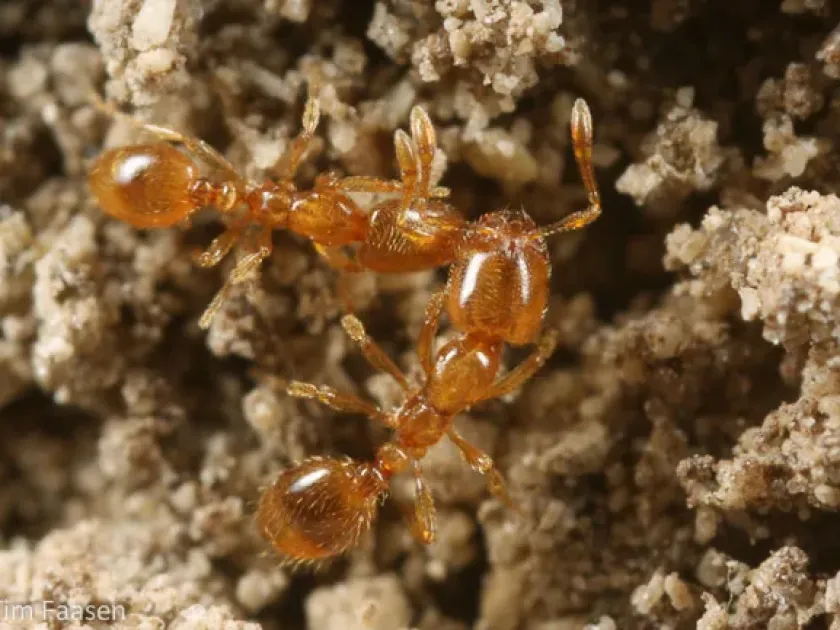
Workers are characterized by their tiny, light yellow to brownish bodies. Their minute size allows them to navigate through small cracks in the soil and establish complex galleries, often surrounding the root zones of their host plants.
This species exhibits a kleptobiotic behavior, frequently nesting near the colonies of larger ant species to steal food and larvae. This strategy provides them with a stable food supply and protection within the micro-environment of larger nests.
Their life cycle consists of egg, larva, pupa, and adult stages, with development occurring deep within the soil. This depth provides protection from environmental fluctuations, allowing the population to thrive in diverse climatic conditions.
Identification of Solenopsis pylades in the field often requires examining behavioral traits and subtle morphological features. Due to their similarity to other species of the genus Solenopsis, microscopic verification is recommended.
What it damages
The primary damage caused by Solenopsis pylades involves feeding on the roots and underground parts of young crops. By gnawing on root systems, they inhibit the plant's ability to absorb essential nutrients and water.
These ants are known to maintain and protect aphid populations on crops. By preventing natural predators from accessing the aphids, they indirectly contribute to the spread of plant viruses and severe aphid infestations.
Vegetable crops and young seedlings are particularly vulnerable to these ants. In greenhouses, where conditions are optimal for the ants' development, they can cause significant stunting and crop mortality within a short period.
Root damage serves as an entry point for various soil-borne pathogens. The resulting secondary infections, such as root rot, often lead to the rapid decline and death of the plant, even if the primary damage from the ants seems minor.
Plants affected by these ants exhibit symptoms of nutritional deficiency and wilting, especially during hot and dry periods. This significant physiological stress leads to reduced harvest yields and poor fruit quality.
Signs of infestation
The most common sign of a Solenopsis pylades infestation is the presence of small, loose soil piles around the base of the plant. The ground may feel unstable or porous due to the excavation of internal galleries.
Visible wilting of plants despite adequate irrigation is a strong indicator of root damage. Upon uprooting a dying plant, one can often find small yellowish ants and traces of feeding on the root tissue.
Chlorosis and leaf deformation on the plant are common signs resulting from the inability of the roots to supply sufficient minerals to the canopy. The plant's growth will appear uneven and stunted compared to healthy individuals.
The presence of aphids on the plant stems, combined with a lack of beneficial insects (like ladybugs), indicates that the ants are actively farming and protecting the aphids from natural predators.
Nighttime observation near the plant stems might reveal trails of tiny ants moving from the soil to the foliage. These foraging trails are a clear indication of a nearby colony and active foraging activity.
Control measures
Effective management of Solenopsis pylades relies on an integrated pest management (IPM) approach that targets the subterranean colony while minimizing chemical exposure.
Regular cultivation and soil turning in the fields disrupt the ants' galleries and force them to relocate, significantly reducing their population density. Eliminating weeds is also crucial as they provide cover and food sources.
The use of targeted insecticidal baits is highly effective. These baits are designed to be collected by workers and brought back to the nest, ensuring the destruction of the queen and the entire brood.
Biological control agents, specifically entomopathogenic fungi, are an environmentally friendly option. These fungi infect the colony and spread through the nest, providing long-term suppression of the ant population.
Barrier methods, such as utilizing physical or chemical deterrents around the base of valuable plants, can help protect them from ant access. This prevents the ants from reaching the aphids and limits their impact on plant health.
Taxonomy
- Latin name
- Solenopsis pylades
- Order
- Hymenoptera
- Family
- Formicidae
- EPPO code
- SOLEPY
Discussion
No discussions yet — be the first.