
Thief ant
Solenopsis molesta
Description
How to identify
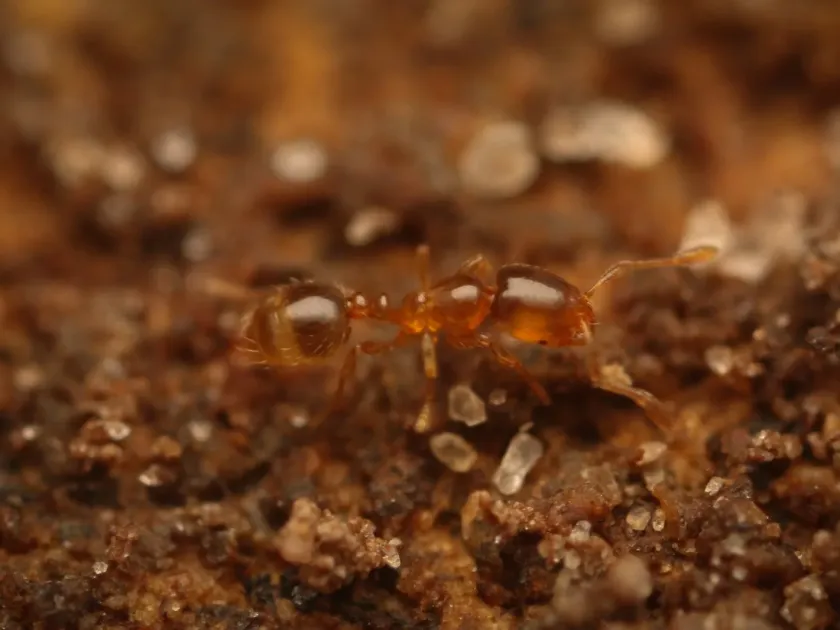
The thief ant (Solenopsis molesta) is a member of the Hymenoptera order, family Formicidae. They are among the smallest ant species, with workers measuring between 1.5 and 2 millimeters in length.
They exhibit a yellowish to light-brown color, which allows them to blend easily with soil and debris. Their morphology is defined by two-segmented antennae with a distinct club at the end.
Thief ants are highly elusive, as they frequently nest deep within the soil or in small cavities near building foundations or under dense vegetation cover.
The colonies are typically polygynous (containing multiple queens), which grants them exceptional resilience and allows for rapid re-establishment even after partial control attempts.
Their life cycle consists of complete metamorphosis. In favorable temperatures, reproduction can occur throughout the year, with mating flights typically peaking during the warmer months.
What it damages
In agriculture, thief ants are considered harmful not only due to their nesting habits but primarily because they act as guardians for honeydew-producing pests like aphids and scale insects.
By protecting these sap-sucking pests from natural predators such as ladybugs and lacewings, the ants cause a significant increase in aphid infestations on crops and fruit trees.
The physical presence of the ants around the root system often causes root disturbance. Constant movement through the soil damages fine root hairs and can lead to desiccation of the root zone.
In greenhouses and nursery beds, thief ants often cause economic damage by disrupting young seedlings, leading to poor plant growth and reduced vigor in sensitive vegetable crops.
Furthermore, they are known to raid seeds planted in the soil, feeding on the nutrient-rich embryos, which directly impacts the field germination rate of many vegetable crops.
Signs of infestation
The primary sign of a thief ant infestation is the presence of heavy aphid or scale populations on plant foliage that seem unusually well-protected by ants.
Tiny soil mounds or clear exit holes around the base of plants indicate that the colony is likely established directly within the crop's root zone.
Visible ant trails running from the base of a plant up to the foliage where aphids are congregating are a common behavioral indicator of this species.
Unexpected wilting or stunted development in young plants despite adequate irrigation and nutrient levels often points to soil-dwelling pests like thief ants.
Finding small, light-colored ants inside potting soil or near irrigation lines during field work confirms the presence of the species and the risk to your agricultural environment.
Control measures
Managing the thief ant requires an integrated approach that targets both the ant colony and the honeydew-producing pests they protect to break the cycle.
The most effective chemical method involves using slow-acting, bait-based insecticides. These baits are carried into the nest, ensuring the destruction of the queen and the entire brood.
- Regular cultivation of soil to disturb nesting sites and galleries.
- Using insecticidal soaps to manage aphid populations.
- Application of biological control agents like entomopathogenic fungi.
- Clearing weeds and debris that serve as harborages for colonies.
- Installing physical barriers like sticky bands on woody stems.
Systemic insecticides should be applied with precision to minimize the impact on non-target beneficial soil insects and to maintain overall soil health.
Preventive measures include maintaining a clean field environment by removing boards, rocks, and old wood, which provide the dark, sheltered spaces these ants prefer for nesting.
Taxonomy
- Latin name
- Solenopsis molesta
- Order
- Hymenoptera
- Family
- Formicidae
- EPPO code
- SOLEMO
Discussion
No discussions yet — be the first.