
Purple stem borer
Sesamia inferens
Description
How to identify
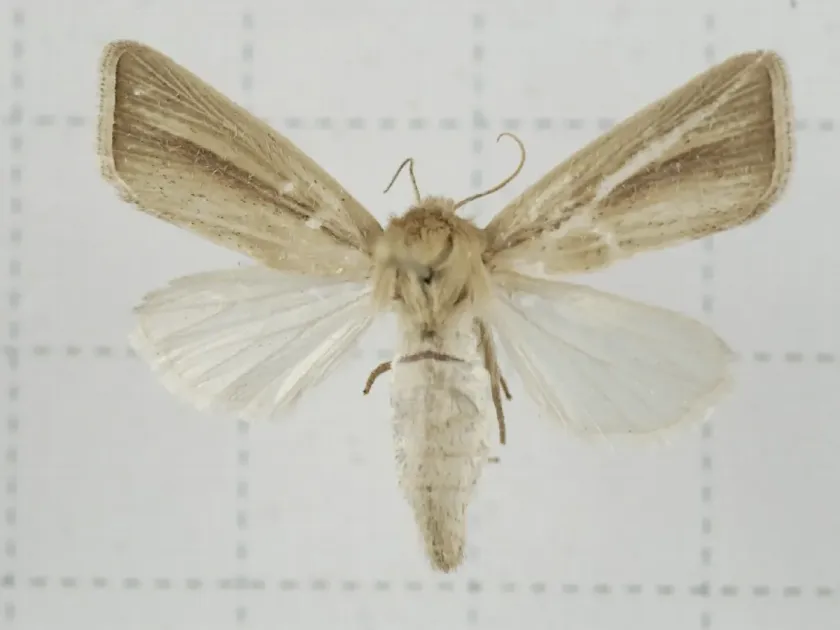
The purple stem borer (Sesamia inferens) belongs to the order Lepidoptera and the Noctuidae family. The adult moth typically has a wingspan of 25–35 mm, with forewings exhibiting a pale yellowish to reddish-brown coloration with a prominent dark central streak.
Larvae, commonly known as stem borers, grow to about 30–40 mm in length. Their bodies are smooth, lacking dense hairs, and appear pinkish or reddish-brown with a distinct dark dorsal line running down the length of the body.
Pupation occurs within the stems of the host plants, and the pupae are characterized by their smooth, reddish-brown appearance. This internal developmental phase provides the insect with significant protection against predators and environmental stressors.
Eggs are laid in batches, typically tucked beneath the leaf sheaths of the host plant. The female protects the egg mass with a secretion that hardens, effectively shielding the eggs from moisture and desiccation.
The lifecycle consists of four distinct stages: egg, larva, pupa, and adult. Depending on the environmental conditions and the specific region, the species can complete multiple generations within a single cropping season.
What it damages
This pest is a significant threat to various graminaceous crops, including rice, maize, wheat, sorghum, and sugarcane. It can also thrive on wild grasses, which often serve as alternative hosts between cropping cycles.
The primary damage is caused by the larvae, which bore into the stems of the host plants. They consume the internal tissues, effectively cutting off the nutrient and water supply to the upper parts of the plant.
In young plants, infestation causes the death of the central shoot, a condition known as "dead heart." This prevents the plant from developing properly and often leads to total loss of the individual tiller.
In mature crops, the infestation results in "white heads," where the panicles become bleached and sterile, failing to produce viable grains. This leads to a substantial reduction in total yield and poor grain quality.
Furthermore, the physical damage to the interior of the stem weakens the plant structure, making it highly susceptible to lodging. The boreholes created by the larvae also serve as entry points for secondary fungal and bacterial infections.
Control measures
Integrated Pest Management (IPM) is essential for controlling this borer. Cultural practices, such as deep plowing and the removal of stubble after harvest, are critical to destroying overwintering larvae and pupae.
Monitoring population dynamics using pheromone traps is highly recommended. This allows farmers to identify peak flight periods and determine the precise timing for insecticide applications to maximize efficacy.
Biological control methods, including the release of egg parasitoids like Trichogramma species, have shown success in suppressing populations. Encouraging natural enemies in the ecosystem helps maintain biological balance.
Chemical control should be applied judiciously, focusing on the early larval stages before they penetrate the stem tissue. Systemic insecticides are generally preferred as they provide longer protection within the plant tissues.
Crop rotation with non-host species and the cultivation of resistant or tolerant varieties are long-term strategies that help manage the pest pressure. Maintaining clean field borders by removing alternate grassy hosts also limits initial infestations.
Taxonomy
- Latin name
- Sesamia inferens
- Order
- Lepidoptera (butterflies)
- Family
- Noctuidae
- EPPO code
- SESAIN
Discussion
No discussions yet — be the first.